
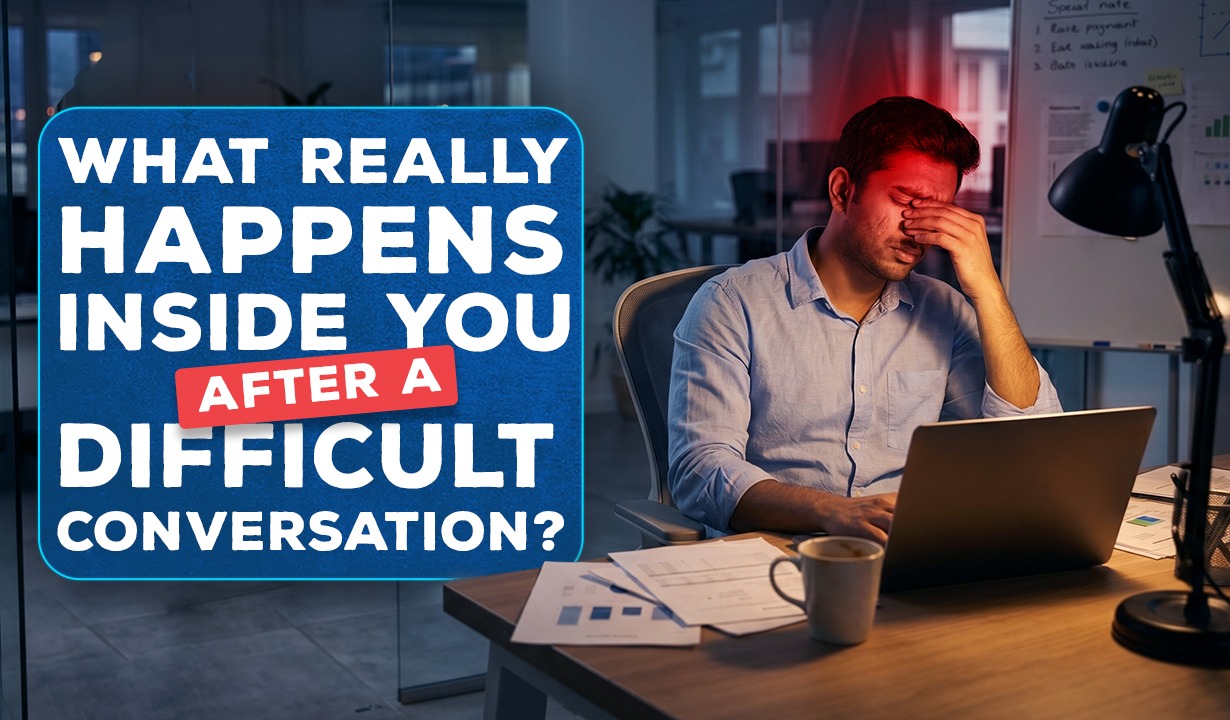
You walked out telling yourself it was fine.
- You kept your voice steady.
- Said the right things.
- Probably even smiled at the end.
Your body didn't believe any of it.
- That tightness in your chest on the walk back.
- The conversation replayed two hours later.
- The irritability at dinner aimed at someone who had nothing to do with it.
- The sleep that won't come because your brain won't let go.
- This isn't a weakness. This isn't you being oversensitive. This is your stress system doing exactly what it was built to do.
The problem is it was built for a very different world.
Your body does not know it was just a meeting.
The moment the corporate conversation turns tense, your brain doesn't file it under "professional disagreement.
" It files it under "threat."
- The HPA axis activates.
- Cortisol floods your system.
- Heart rate climbs.
- Muscles tighten.
- Digestion slows.
- Your prefrontal cortex, the rational part, takes a back seat.
- Your amygdala takes over.
- One job: protect you.
This is the fight-or-flight response.
And in a difficult conversation with your manager, a peer who undermined you, or a review that didn't go your way, it fires just as hard as if the threat were physical.
The difference?
A physical threat ends.
A difficult work conversation doesn't.
Not inside your body.
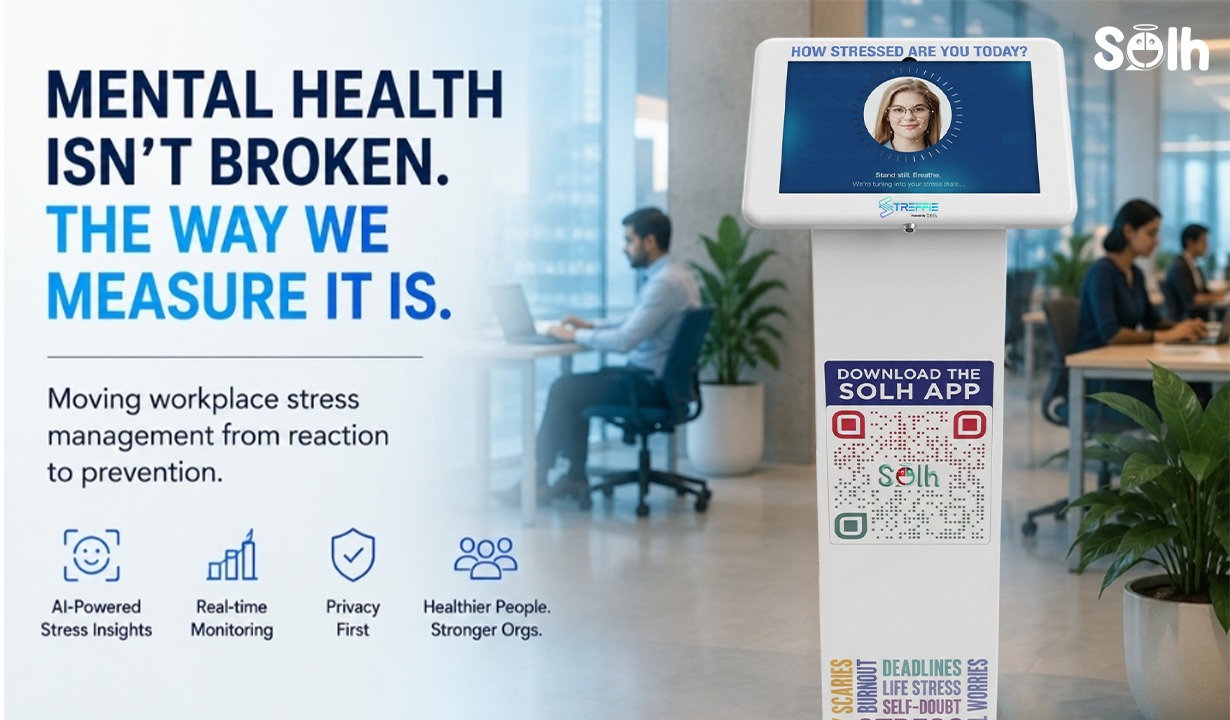
💡 Wondering what your stress levels actually look like after a tough meeting? Streffie on the Solh app reads your stress score in seconds using just your phone camera. Download the app and check right now.
Here's what happens in the three hours after stress after argument at work.
And why it matters more than most people realise.
- First 30 minutes.
- Cortisol is at peak.
- Attention is narrowed.
- You're hypervigilant.
- Decision-making is impaired.
This is the worst possible time to send that email.
- Make that call.
- Have another high-stakes conversation.
- Your brain is not at full capacity.
- And it doesn't feel like it isn't.
- That's the dangerous part.
30 minutes to 2 hours.
- Cortisol should begin to decline.
- Research on workplace conflict stress in Indian IT professionals confirms that workplace stress significantly disrupts cortisol recovery.
- If you're already carrying background stress, that recovery curve flattens further. The system stays activated longer than it should.
2 to 3 hours
- Most people have physically calmed down.
- But now the rumination takes over.
You're replaying the conversation.
Editing what you said.
Scripting what you should have said.
This mental replay actively re-triggers the stress after argument response.
Cortisol stays elevated well after the conversation ended.
The conversation is over.
Your stress system didn't get the memo.
Over 45% of Indian employees experience significant work-related anxiety regularly.
And most of it isn't happening at work.
It's on the commute home.
At the dinner table.
At 2am.
The conversation ended. The body didn't.
Corporate politics makes this worse.
Not every difficult conversation is a clean disagreement.
- The feedback that wasn't really about your work.
- The meeting where you realised your position is less secure than you thought.
- The conversation where someone took credit for something you built.
- The review felt less like assessment and more like corporate politics.
- These are harder to recover from.
- Because there's no clean resolution.
- The threat isn't clearly named.
- So your stress system can't clearly deactivate.
You can't solve politics in corporate world the way you solve a missed deadline.
- So the cortisol keeps cycling.
- The rumination keeps running.
- The body keeps paying for a war it was never formally told it was fighting.
- In India, where hierarchies are deeply embedded and direct disagreement is often discouraged, this dynamic is especially acute.
- Many difficult conversations never happen at all.
- They sit with unspoken tension. Which research consistently shows produces more chronic stress than the conversations that actually occur.
- Silence is not safety.
- It is compressed stress.
💡 The stress from a difficult conversation doesn't just live in your head. It lives in your body. Solh Buddy on the Solh app is available 24/7 to help you process what happened and figure out what to do next. No appointments. No judgment.
A single difficult conversation is recoverable.
- The body is resilient.
- One cortisol spike, properly processed, does not cause lasting damage.
The problem is that for most people in high-pressure Indian workplaces, difficult conversations are not isolated events.
They are a recurring feature of the working week.
Repeated cortisol spikes that don't fully resolve before the next one arrives.
That accumulated.
Poor mental health costs Indian employers an estimated Rs 1.1 lakh crore every year.
A significant part of that is not clinical depression. It is the accumulated weight of hundreds of difficult conversations that were never properly processed.
That kept people up at night.
That slowly eroded their capacity to show up the next morning.
Your body keeps the score.
If you never give it a chance to reset, it will reset on its own terms.
Through burnout.
Through physical illness.
Through a level of disengagement that no performance review will reverse.
What actually helps after a hard conversation?
Not pushing through.
Not performing normality.
A circuit break.
Something small and immediate that interrupts the rumination loop.
Tells your nervous system the threat is over.
A short walk.
Even five minutes.
Movement metabolises cortisol faster than sitting still while your mind races.
Slow extended exhale breathing. Inhale four counts. Exhale six.
This directly activates the parasympathetic nervous system. Brings heart rate down.
Write it out before you replay it.
Externalising the conversation in writing reduces mental load and interrupts the rumination cycle.
Check your actual stress level.
Not "am I okay?"
Because the answer will almost always be "I'm fine."
Get an objective read.
One that doesn't rely on your currently compromised self-assessment.
Understanding stress and well being in the workplace starts here — with small, immediate actions that interrupt the cycle before it compounds. And for those where unresolved stress has fuelled unhealthy coping, stress-linked addiction recovery is a conversation worth having too.
The conversation ended. You don't have to keep having it.
Streffie gives you an objective stress score in seconds after any high-stress event.
68 micro-expressions.
Up to 90% accuracy.
No self-reporting.
No guesswork.
Just a clear read of where your system actually is.
Solh Buddy is there when you need to process what happened.
Right after the meeting.
On the commute home.
At midnight when it's still running on a loop.
📲 Check your stress score on the Solh app after your next tough meeting. Knowing where you are is always the first step to getting somewhere better.
FAQs
Q1. Why do I feel so stressed after a difficult work conversation? When a work conversation turns tense, your brain treats it as a threat and triggers the fight-or-flight response. Cortisol floods your system, keeping you hypervigilant long after the meeting ends. This is your stress system doing exactly what it was built to do in a situation it wasn't designed for.
Q2. How long does stress after an argument at work last? The physical effects can last anywhere from 30 minutes to 3 hours. Cortisol peaks in the first 30 minutes, should decline by 2 hours, but mental rumination after that window actively re-triggers the stress response keeping cortisol elevated well beyond when the conversation ended.
Q3. How does corporate politics make workplace stress worse?
Corporate politics creates stress with no clean resolution. When the threat is ambiguous credit taken, position feeling insecure, feedback with hidden motives the nervous system cannot clearly deactivate, so cortisol keeps cycling far longer than after a straightforward disagreement.
Q4. Why does stress after an argument at work affect sleep?
Rumination mentally replaying and re-scripting the conversation ,re-triggers the stress response into the evening. This keeps cortisol elevated at bedtime, interfering with the body's natural wind-down and making it hard to fall or stay asleep.
Q5. What actually helps after workplace conflict stress?
Three things work: a short walk to metabolise cortisol through movement, slow extended exhale breathing (4 counts in, 6 out) to activate the parasympathetic nervous system, and writing out the conversation to interrupt the rumination loop before it re-escalates.
Q6. How much does unresolved stress and well being in the workplace cost Indian companies?
Poor mental health costs Indian employers an estimated Rs 1.1 lakh crore every year. Most of it isn't clinical and it's the accumulated weight of hundreds of unresolved difficult conversations that slowly erode an employee's ability to perform and show up.
Q7. How can I objectively check my stress levels after a tough meeting?
Self-assessment right after a stressful conversation is unreliable because your prefrontal cortex is impaired during the cortisol peak. Streffie on the Solh app analyses 68 facial micro-expressions to deliver an objective stress score in seconds, no self-reporting, no guesswork needed.