
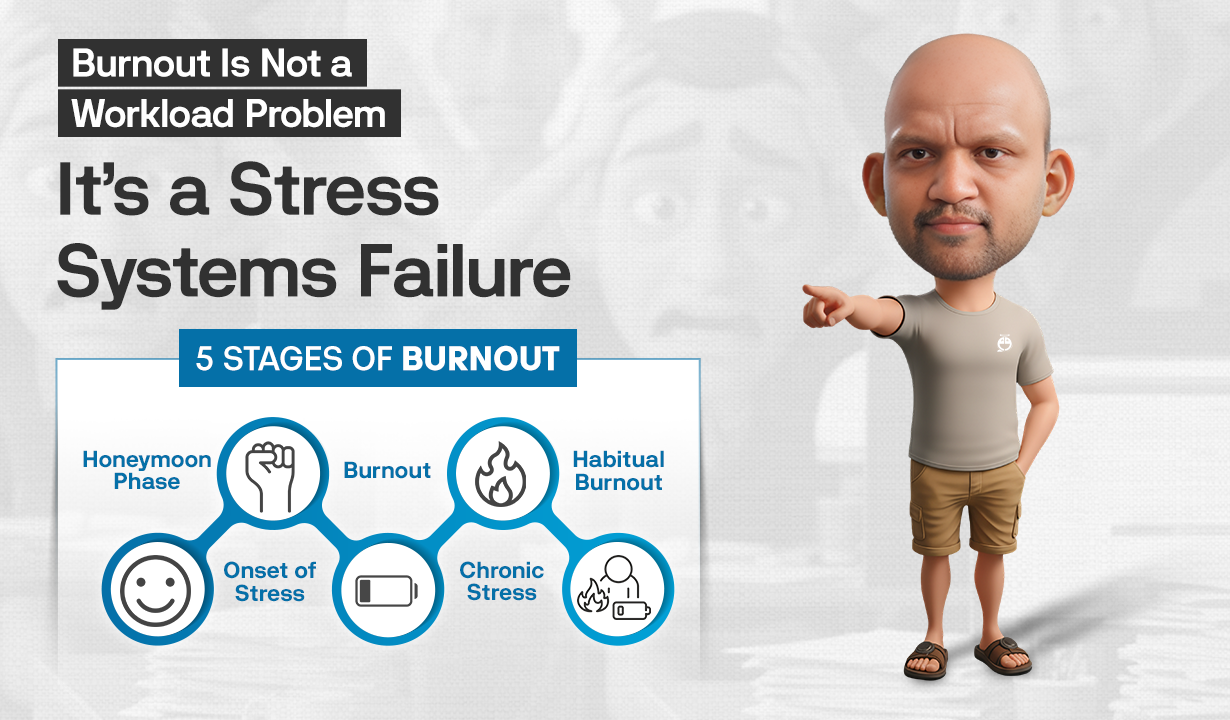
Burnout at workplace is not caused by long hours alone.
It’s caused by unregulated stress, invisible pressure, and the absence of recovery systems.
This blog challenges the most accepted burnout narrative and explains why organisations that focus only on workload reduction often miss the real problem and the real solution - behind burnout at workplace.
The Comfortable Lie We’ve All Accepted
Ask anyone why people burn out, and you’ll hear the same answer:
“People are working too much.”
It sounds reasonable.
It feels compassionate.
And it’s mostly wrong.
If burnout were simply about hours, then:
- surgeons wouldn’t last decades
- founders wouldn’t survive scale
- athletes wouldn’t train relentlessly
- parents wouldn’t cope at all
Yet they do.
Not because they work less
but because their stress is regulated, acknowledged, or absorbed somewhere.
Burnout isn’t about the volume of work.
It’s about how pressure is carried inside the workplace.
What Actually Breaks People
People don’t burn out from effort.
They burn out from effort without containment.
From:
- constant urgency with no release
- emotional pressure with no outlet
- expectations with no clarity
- responsibility with no support
- stress that is never named, measured, or managed
This is why two people can work the same hours and only one collapses.
The difference isn’t resilience.
It’s stress regulation a core failure in most workplace stress management approaches.
Why Reducing Workload Rarely Fixes Burnout
Organisations love workload fixes.
Shorter weeks.
Mandatory leaves.
“No meeting Fridays.”
Sometimes they help.
Often they don’t.
Because the moment people return, the same pressure patterns resume:
- same urgency
- same silence
- same emotional load
- same lack of visibility
Burnout at the workplace is not a scheduling problem.
It’s a systems problem, one that requires burnout management in organizations, not just policy tweaks.
The Real Burnout Equation
Burnout happens when three things combine:
- Stress accumulates
- Stress remains invisible
- Stress has no regulation pathway
That’s it.
Not laziness.
Not lack of grit.
Not ambition.
Unregulated stress is the fuel.
Time is just the container which is why stress measurement at work becomes critical for prevention.
Why High Performers Burn Out Faster
This is the part most narratives avoid.
High performers don’t burn out because they can’t handle pressure.
They burn out because they carry more of it silently.
They:
- absorb stress instead of deflecting it
- push through instead of pausing
- normalise exhaustion
- become the emotional shock absorbers for teams
Burnout isn’t sudden.
It’s stress debt coming due especially in environments that lack strong employee wellbeing systems.
Why “Talk About Mental Health” Isn’t Enough
Talking about mental health matters.
But talking without structure creates another problem: exposure without support.
People become aware of stress:
but still don’t know what to do with it daily.
Burnout doesn’t need more conversation.
It needs systems that respond before collapse.
Where Solh Wellness Changes the Equation
Solh exists because burnout conversations keep circling the wrong cause.
Instead of asking people to work less,
Solh helps organisations manage stress better.
That distinction matters for real burnout management in organizations.
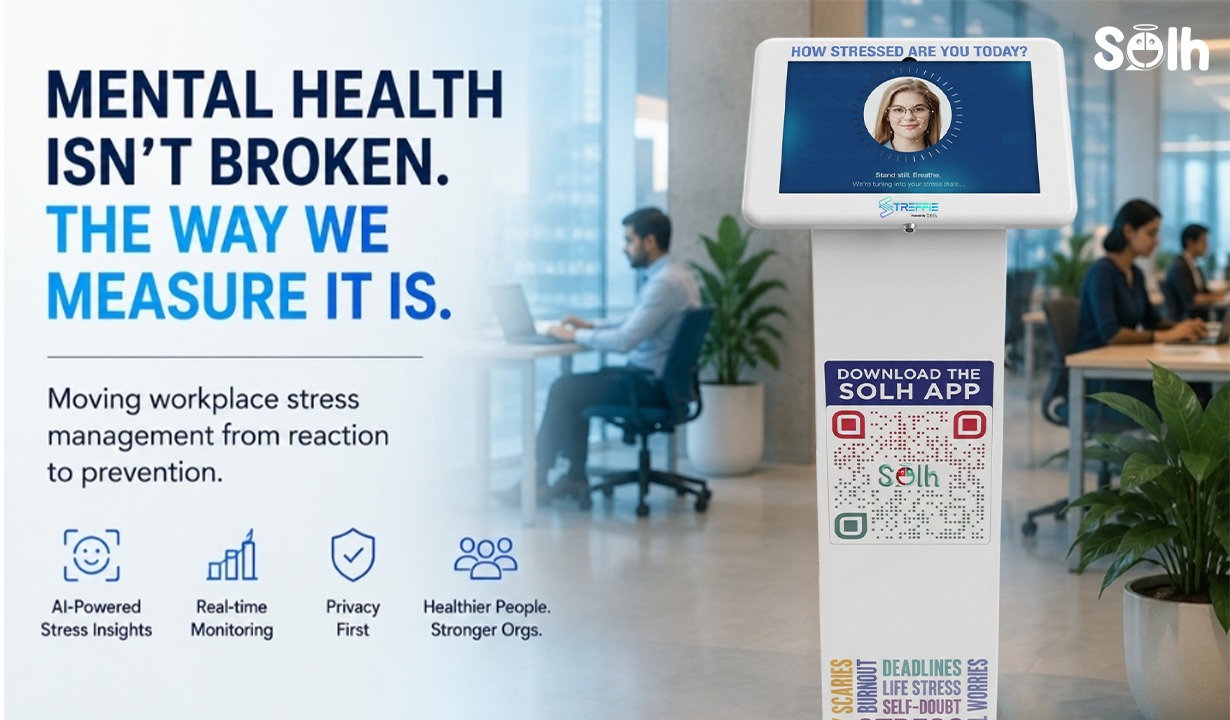
Streffie: Making Stress Visible Early
Streffie enables stress measurement at work through facial biomarkers
- No self-reporting.
- No stigma.
- No waiting for breakdown.
When stress becomes visible early, burnout becomes preventable.
Solh App: Daily Stress Literacy
The Solh App helps individuals understand how stress shows up in their body, focus, and emotions — daily, quietly, realistically.
This is not therapy.
It’s stress awareness with direction.
Guided Plans: Regulation Over Motivation
Burned-out people don’t need inspiration.
They need:
- structure,
- Pacing
- recovery rituals that fit real life.
Solh’s Guided Plans translate stress regulation into daily action - not advice.
Solh Buddy: Support Before Silence Turns Into Exit
Most people don’t ask for help when stress begins.
They ask when it’s too late.
Solh Buddy exists in that gap, offering non-judgmental, always-available support for everyday stress moments.
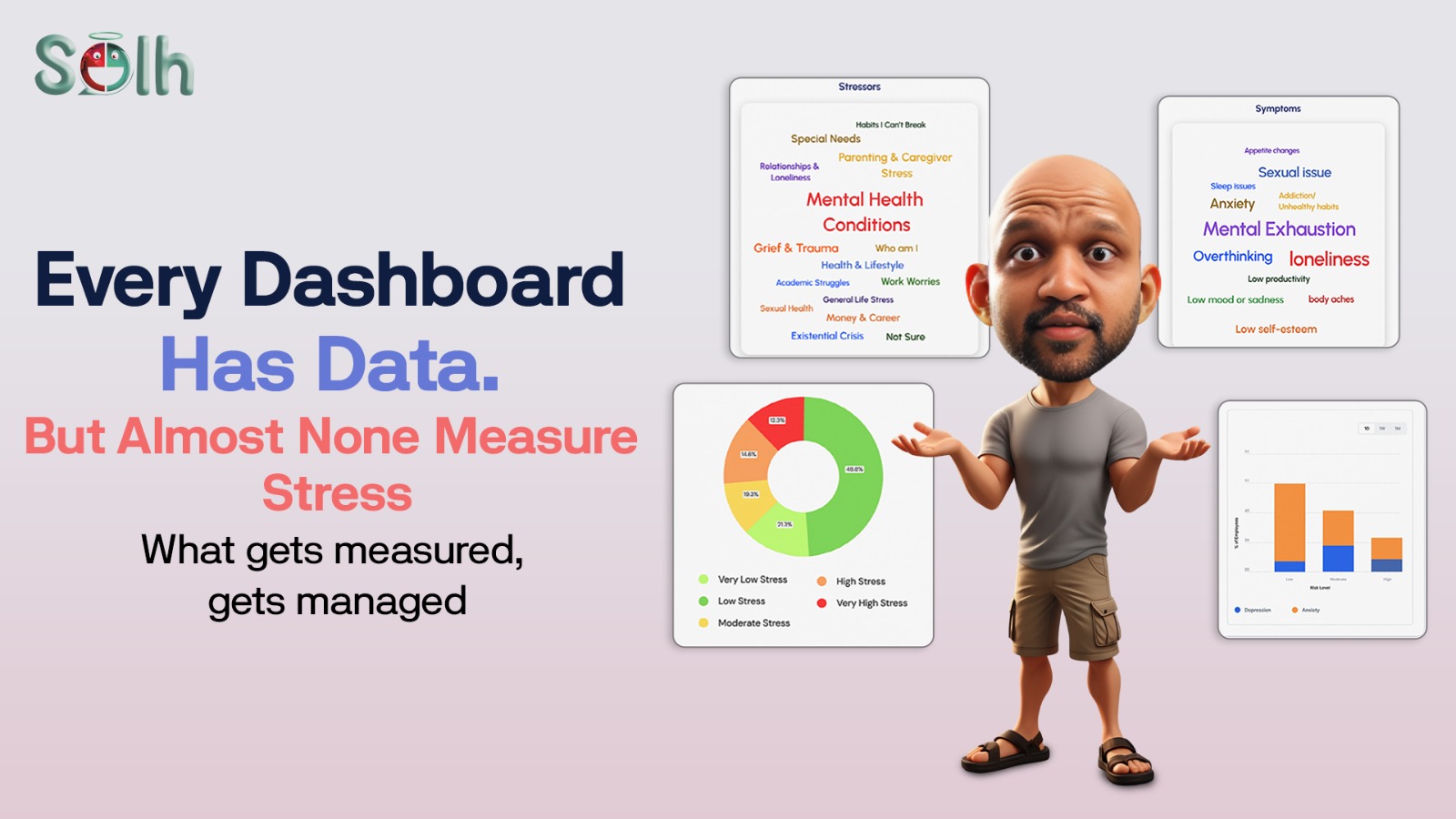
Smart AI Dashboard: Accountability Where It Belongs
Burnout is rarely an individual failure.
It’s an organisational blind spot.
Solh’s dashboard shows leadership:
- where stress is building
- which teams are under sustained pressure
- how recovery is - or isn’t happening.
Burnout stops being a mystery.
It becomes a signal.
The Core Insight
Burnout at workplace isn’t about working too much.
- It’s about stress that stays unseen,
- pressure that has nowhere to go
- systems that reward endurance but ignore regulation.
Reduce hours if you want.
But if you don’t change how stress is measured, managed, and released, burnout will keep returning not because people are weak, but because stress was never given a system.
That’s the problem Solh exists to solve.
FAQs
What is burnout at workplace?
Burnout at workplace is a state of chronic physical, emotional, and mental exhaustion caused by prolonged, unregulated stress. It’s not just about long working hours, but about invisible pressure, lack of recovery, unclear expectations, and systems that don’t support stress regulation.
Is burnout caused by working too much?
No. Burnout is not caused by working too much alone. Many people work long hours without burning out. Burnout happens when stress accumulates over time without being acknowledged, measured, or released through healthy systems.
Why doesn’t reducing workload always prevent burnout?
Reducing workload may offer temporary relief, but burnout often returns if the underlying stress patterns remain unchanged. Without proper workplace stress management and support systems, pressure builds up again, even with fewer hours.
Why do high performers experience burnout more often?
High performers tend to absorb more responsibility, suppress stress, and push through exhaustion silently. Over time, this creates stress debt, especially in workplaces that lack strong employee wellbeing systems and stress regulation practices.
How can organisations prevent burnout effectively?
Burnout prevention requires more than policies or time off. Organisations need systems that make stress visible early, support stress regulation, encourage psychological safety, and actively manage how pressure flows across teams.
How does Solh Wellness help with burnout management in organizations?
Solh Wellness helps with burnout management in organizations by making stress visible and manageable before it leads to burnout. Through stress measurement, daily stress literacy, and guided regulation plans, Solh enables organisations to shift from reacting to burnout to preventing it systemically.