
Everyone Is Asking the Wrong Question.
Every conference I attend on AI in mental health eventually reaches the same discussion.
"Will AI replace therapists?"
It's become the favourite headline.
The favourite panel discussion.
The favourite LinkedIn debate.
And every time I hear it, I think the same thing.
We're asking the wrong question.
When calculators were invented, nobody asked if mathematics would disappear.
When Google became available, teachers didn't become irrelevant.
When GPS arrived, we didn't stop learning geography.
Technology has never been at its best when replacing people.
It has always been at its best when helping people make better decisions.
So why are we suddenly expecting AI in mental health to replace one of the most human professions that exists?
Therapy isn't a transaction.
It's trust.
It's empathy.
It's silence that makes someone feel heard.
It's understanding emotions that people themselves struggle to describe.
No algorithm can genuinely replace that.
And it shouldn't.
The Real Problem Isn't the Lack of Therapists
Let's assume, for a moment, that tomorrow the world had twice as many therapists.
Would our mental health challenges disappear?
No.
Because one of the biggest problems in mental wellbeing isn't access.
It's awareness.
Millions of people don't seek support because they don't believe they need it.
Some think they're "just tired."
Some think everyone feels this way.
Some convince themselves they'll deal with it after the next project, the next promotion, the next holiday.
Weeks become months.
Months become years.
By the time many people decide to seek help, stress has already affected their sleep, relationships, work, confidence and overall quality of life.
The issue isn't always that therapy is unavailable.
The issue is that people often don't recognise they need support until much later.
That's the gap technology can help bridge.
AI in Mental Health Shouldn't Replace Human Care. It Should Make It Easier to Reach.
This is where I believe we've misunderstood the role of AI wellbeing solutions.
AI doesn't need to become your therapist.
It needs to become your reminder.
A reminder to pause.
A reminder to reflect.
A reminder to ask yourself a question that most of us avoid because we're too busy answering everyone else's.
"How am I actually feeling today?"
Sometimes that's all it takes.
One moment of honesty.
One moment of awareness.
One conversation that starts because someone finally noticed what they'd been ignoring.
That's where AI creates value.
Not by replacing empathy.
By creating opportunities for empathy to happen sooner.
Technology Can Measure Patterns. People Understand Stories.
Artificial intelligence is incredibly good at recognising patterns.
It can process information faster than any human.
It can identify changes.
It can detect trends.
It can highlight risks.
What it cannot do is understand what those patterns mean in the context of your life.
It doesn't know why you've been awake for three nights.
It doesn't understand the grief you're carrying.
It doesn't know the pressure of caring for ageing parents while trying to meet workplace deadlines.
It doesn't know what your silence means.
Only another human being can truly understand that.
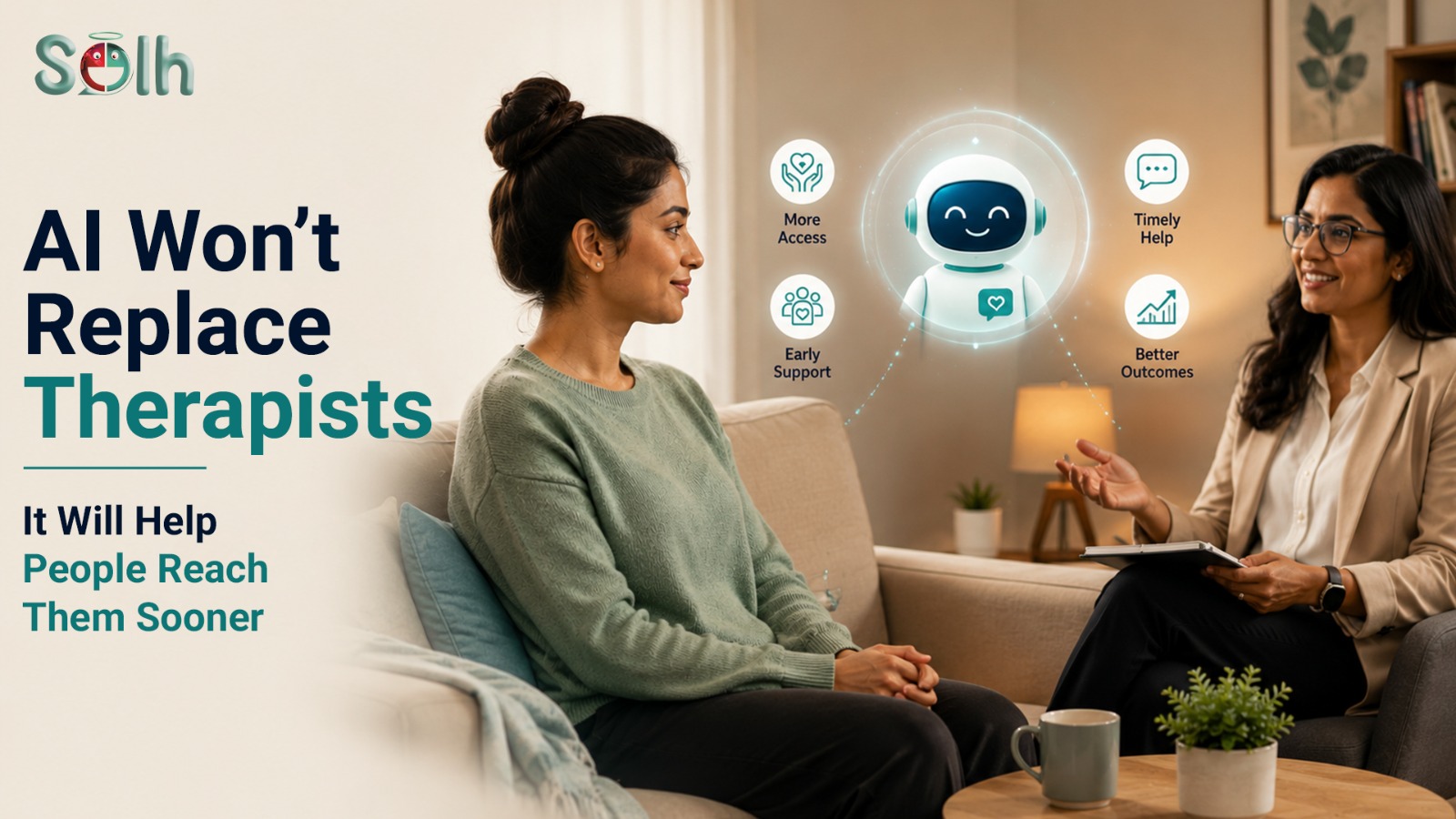
Which is why AI in mental health should always support professionals, not replace them.
Mental health technology provides awareness.
People provide care.
Both are necessary.
Neither is enough on its own.
That's Why We Built Streffie Kiosk
At Solh, we've never believed that technology alone can improve mental wellbeing.
If that were true, downloading a meditation app would solve stress.
It doesn't.
Technology is only useful when it encourages meaningful action.
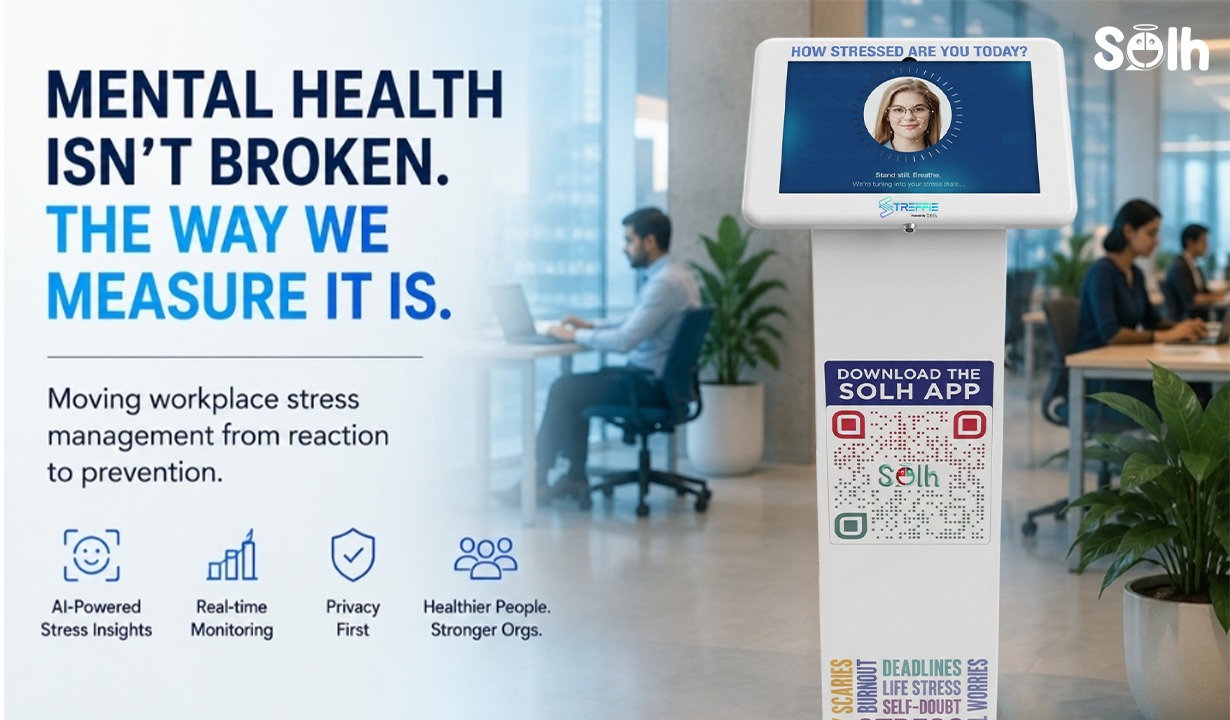
That's the thinking behind the Streffie stress monitoring kiosk.
It isn't designed to diagnose mental health conditions.
It isn't designed to replace psychologists.
It isn't designed to make decisions for people.
It's designed to encourage awareness through AI-assisted facial analysis, self-reported emotions and evidence-based AI stress assessment.
Because when people become aware of their emotional wellbeing, they're more likely to take the next step.
Sometimes that's a breathing exercise.
Sometimes it's speaking to a manager.
Sometimes it's opening up to a loved one.
Sometimes it's reaching out to a mental health professional.
Technology doesn't decide which step comes next.
People do.
The Future of Mental Health Isn't Artificial Intelligence. It's Human Intelligence, Supported by AI.
I don't think the future belongs to organisations with the smartest algorithms.
It belongs to organisations that use technology to become more human.
To notice people sooner.
To remove stigma.
To encourage conversations.
To make support easier to access.
The goal has never been to create machines that understand emotions.
The goal is to help people understand their own.
Because awareness changes behaviour.
Behaviour changes habits.
Habits change lives.
If AI helps someone recognise stress before it becomes burnout...
If it encourages one honest conversation...
If it gives one person the confidence to ask for help earlier...
Then it has already done something remarkable.
Not because it replaced a therapist.
Because it helped someone find one before they reached a crisis.
And maybe that's the future we should be building.
Not artificial empathy.
But real empathy, supported by intelligent technology.
Frequently Asked Questions
Can AI replace therapists?
No. AI therapy tools can support mental wellbeing through awareness, education and early stress identification, but they cannot replace the empathy, trust and clinical expertise of qualified mental health professionals.
How is AI used in mental health?
AI in mental health is used for stress assessments, wellbeing check-ins, mood tracking, digital mental health self-help, personalised recommendations and identifying behavioural patterns that may require further support.
What are AI mental health solutions?
AI mental health solutions are technology-enabled tools that help individuals monitor their emotional wellbeing, access self-help resources and encourage proactive mental health awareness.
What is Streffie Kiosk?
Streffie Kiosk is an AI-powered stress monitoring kiosk developed by Solh that combines facial analysis, self-reported emotions and evidence-based assessments to encourage proactive stress awareness.
Is Streffie Kiosk a therapy tool?
No. Streffie Kiosk is a workplace mental health awareness and wellbeing solution. It complements human care by encouraging early recognition of stress but does not diagnose or provide therapy.
Can AI detect stress?
AI can identify facial patterns and behavioural indicators associated with stress. When combined with self-reported emotions and scientific assessments, it provides a more meaningful understanding of emotional wellbeing.
Why is early stress awareness important?
Recognising stress early allows individuals to adopt healthier coping strategies, seek support sooner and reduce the risk of prolonged stress developing into burnout.
Let’s Connect!