
Every organization measures productivity every day. Revenue is tracked in real time. Attendance is monitored with precision. Performance is reviewed regularly. Yet very few organizations can confidently answer one simple question:
How stressed are our employees today?
That gap is where many workplace challenges begin.
Organizations invest significant time and resources in wellness sessions, awareness campaigns and annual employee surveys. These initiatives matter, but they often provide only a snapshot of wellbeing rather than a continuous understanding of how employees are actually feeling. By the time an annual survey identifies a problem, the stress may have already affected productivity, engagement and morale.
The biggest challenge in workplace stress management isn't that employees experience stress. It's that organizations usually discover it too late.
Burnout rarely appears overnight. It develops gradually through fatigue, declining focus, emotional exhaustion, reduced collaboration and growing disengagement. Long before resignation letters arrive or performance begins to decline, the warning signs are already present—but they often go unnoticed.
The business impact extends beyond individual wellbeing. Chronic workplace stress affects concentration, absenteeism, engagement and retention. As we explored in our blog on The Cost of Workplace Stress in India , the business impact of unmanaged stress extends far beyond employee wellbeing, making early awareness a strategic investment rather than simply an HR initiative.
Chronic workplace stress influences concentration, decision-making, creativity, teamwork, absenteeism and employee retention. Organizations often respond after these outcomes become visible, when prevention would have been far more effective.
Modern workplace stress management must move beyond reacting to burnout and towards preventing it. That starts with regular awareness instead of once-a-year measurement.
Why Annual Employee Surveys Are No Longer Enough
Annual employee wellbeing surveys remain valuable, but they have limitations.
- They capture only one point in time rather than ongoing wellbeing.
- Stress levels can change significantly over weeks or even days.
- Employees may hesitate to answer honestly when they fear judgment.
- Managers often receive insights long after problems have developed.
- Early awareness creates opportunities for timely support instead of crisis management.
Organizations cannot improve what they cannot see consistently.
What Is Proactive Workplace Stress Management?
Proactive workplace stress management is the continuous process of helping employees understand their wellbeing, identifying emerging stress early and encouraging supportive interventions before stress develops into burnout or long-term mental health challenges.
Instead of waiting until performance declines or employees begin struggling visibly, organizations create a culture where wellbeing becomes an ongoing conversation.
This shift transforms workplace mental health from a reactive HR initiative into a strategic business priority.
Building Awareness Before Burnout
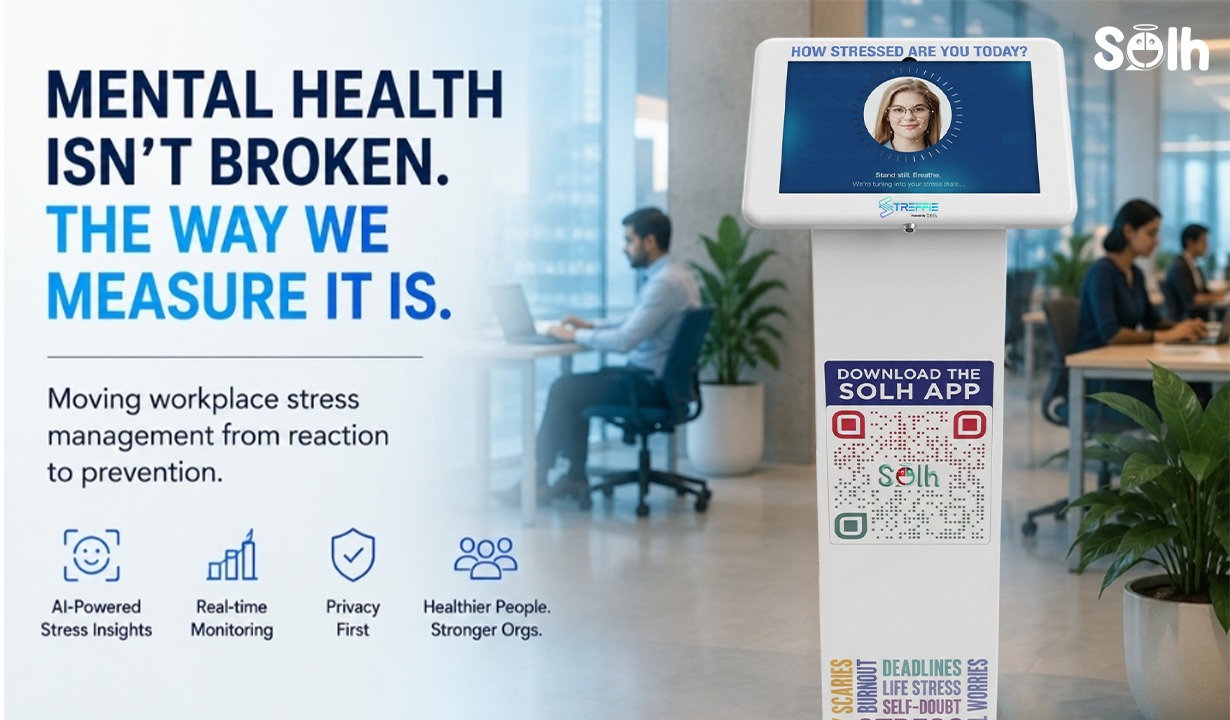
This is the philosophy behind Streffie Kiosk , Solh's AI-powered stress monitoring solution designed to help organizations identify workplace stress early through continuous awareness rather than annual measurement.
Rather than replacing psychologists, managers or existing wellness programs, Streffie Kiosk encourages employees to pause, reflect and better understand how they are feeling.
It combines AI-assisted facial analysis, self-reported emotions and evidence-based stress assessments to encourage regular wellbeing check-ins. Rather than relying solely on annual surveys, organizations gain ongoing visibility into overall workplace stress trends while helping employees become more aware of their own emotional wellbeing.
The objective is not diagnosis.
The objective is awareness.
When employees recognize stress early, they are more likely to adopt healthier habits, seek support sooner and engage with available wellbeing resources before challenges become overwhelming.
Across workplace wellbeing initiatives, one pattern appears consistently: people are often willing to talk about stress once they recognise it themselves. Awareness frequently becomes the first step toward healthier conversations, stronger coping strategies and earlier support.
Prevention is always easier—and significantly less costly—than responding after burnout has already affected performance, engagement and organizational culture.
Workplace Wellbeing Is a Business Priority
It is a business priority because healthy people build healthy organizations.
Whether it is a corporate office, manufacturing facility, hospital, educational institution or government department, every environment where people perform under pressure benefits from proactive employee wellbeing initiatives.
Organizations that invest in awareness are not simply improving employee wellness. They are strengthening engagement, productivity, collaboration and long-term organizational resilience.
Organizations looking to build a comprehensive wellbeing strategy can explore Solh's Workplace Stress Management Platform , which combines AI-driven stress assessments, guided interventions, expert support and real-time organizational insights.
Technology Supports People—It Doesn't Replace Them
Technology alone cannot create healthier workplaces.
People create healthier workplaces.
Technology simply helps us notice what we have ignored for too long.
Perhaps the workplaces of the future will not be remembered for their coffee machines, recreation rooms or wellness events.
They will be remembered because they cared enough to ask a better question:
"How are our people really doing today?"
Organizations that want to move beyond annual surveys and build a proactive approach to workplace stress management can explore Streffie Kiosk or learn more about Solh's complete Workplace Stress Management Platform . To discuss how proactive stress monitoring can support your workforce, Contact Solh and request a personalized demo
Frequently Asked Questions
What is workplace stress management?
Workplace stress management is the process of identifying, understanding and reducing workplace stress through awareness, supportive policies, regular wellbeing initiatives and practical interventions that help employees maintain better mental health and productivity.
Why are annual employee wellness surveys not enough?
Annual surveys provide only a snapshot of employee wellbeing. Stress changes continuously throughout the year. Regular awareness tools help organizations identify emerging concerns earlier, encourage timely support and promote proactive workplace wellbeing.
What is Streffie Kiosk?
Streffie Kiosk is an AI-enabled stress monitoring kiosk that promotes early stress awareness using AI-assisted facial analysis, self-reported emotions and evidence-based stress assessments.
Can AI detect stress?
AI can identify facial patterns that may be associated with stress. However, responsible workplace wellbeing solutions combine AI insights with self-reported emotions and validated stress assessments to provide a more balanced understanding rather than relying on AI alone.
Is Streffie Kiosk a medical device?
No. Streffie Kiosk is a preventive employee wellbeing solution designed to promote stress awareness. It does not diagnose medical or psychological conditions.
How does stress monitoring improve employee wellbeing?
Regular stress monitoring encourages employees to become more aware of their emotional wellbeing, supports earlier conversations, promotes healthier coping strategies and enables organizations to introduce support before stress develops into burnout.
Who can use Streffie Kiosk?
Streffie Kiosk is suitable for corporate offices, manufacturing facilities, hospitals, schools, universities, government organizations and any workplace that wants to build a proactive culture of employee wellbeing.
Let’s Connect!