
Every time someone resigns because of burnout, people ask the same question. "What happened?" Wrong question. The better question is: "What did we miss?"
Because burnout rarely arrives without warning. It doesn't walk into your office one Monday morning and announce itself. It arrives quietly. You stop looking forward to Mondays. You feel tired even after a full night's sleep. Meetings become exhausting. Conversations feel like work. Small tasks suddenly feel big. You become impatient with people you genuinely like. And then, slowly, you convince yourself this is just adulthood. This is just work. This is just life.
That's the most dangerous part. Not the stress. The normalization of stress.
We've become so comfortable living under pressure that we've started treating emotional exhaustion like a job requirement. Somewhere along the way, being constantly busy became a badge of honour. Being unavailable became proof of importance. Sleeping less became a sign of ambition. None of these are achievements. They're warning signs.
Burnout Begins Long Before Anyone Notices
One of the biggest myths about employee burnout is that it happens suddenly. It doesn't. Workplace burnout is usually the result of weeks or even months of unmanaged stress. It starts with small changes that are easy to ignore. You become slightly less patient. You lose focus more often. Your creativity begins to disappear. You postpone decisions. You stop participating in conversations. You disconnect from work that once excited you.
Individually, these moments don't seem significant. Together, they tell a very different story.
Unfortunately, most organizations only notice burnout when productivity falls, conflicts increase or an employee decides to leave. By then, the damage has already been done. That's why burnout prevention isn't about reacting faster. It's about noticing earlier.
Annual Surveys Can't Measure Daily Stress
Most organizations genuinely care about employee wellbeing. The challenge isn't intention. It's timing.
Think about how workplace wellbeing is measured today. A survey is conducted once or twice a year. Reports are generated. Meetings are scheduled. Action plans are discussed. Weeks later, initiatives begin.
Meanwhile, life continues. Deadlines change. Teams change. Managers change. Families go through challenges. Projects become more demanding. Stress changes every single day.
So why do we expect one survey to explain six months of someone's emotional life? It's like checking the weather once in January and assuming it'll still be accurate in July. Mental wellbeing isn't static. It moves. Which means workplace stress management also needs to become continuous instead of occasional.
Burnout Prevention Starts with Awareness
Here's something I've learned over the years. Most people don't ignore stress. They simply don't recognise it.
When you're constantly under pressure, stress starts feeling normal. You tell yourself, "I'll feel better after this project." Then another project begins. You promise yourself, "I'll take a break next month." Next month never comes.
That's why awareness matters. Not because awareness solves stress. But because awareness gives you the chance to respond before stress becomes something much bigger.
The earlier people recognise emotional exhaustion, the more options they have. A conversation. A break. A change in routine. Professional support. Healthy boundaries. Every one of these becomes easier before burnout arrives.
Why We Built Streffie Kiosk
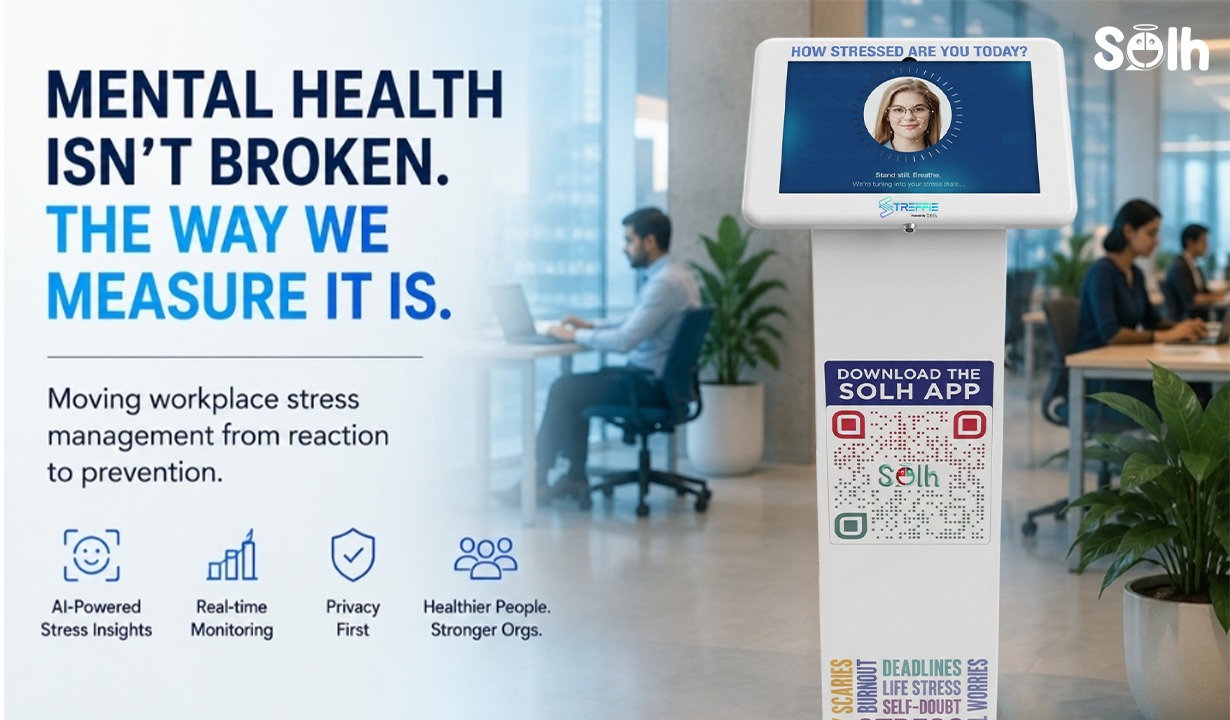
At Solh, we kept asking ourselves one question. What if people could notice stress before it started affecting everything else? Not after burnout. Not after resignation. Not after months of emotional exhaustion. Before.
That's the thinking behind Streffie Kiosk. It's an AI-enabled stress monitoring kiosk that encourages regular emotional check-ins using AI-assisted facial analysis, self-reported emotions and evidence-based stress assessments.
The objective isn't to diagnose anyone. It isn't to replace managers. Or psychologists. Or conversations. It's to create awareness.
Because you can't prevent burnout if you never notice stress. Technology doesn't solve mental wellbeing. People do. Technology simply helps people notice when they may need support. Sometimes that's enough to change the direction of someone's day. Sometimes it changes much more.
Maybe We've Been Asking the Wrong Question
Organizations often ask, "How do we reduce burnout?" Maybe the better question is, "How do we help people recognise stress sooner?"
Because burnout isn't where the story begins. It's where the story ends. The real opportunity lies much earlier. In the conversations we have. In the habits we encourage. In the awareness we create.
Healthier workplaces aren't built because they respond better to burnout. They're built because they make burnout less likely in the first place. And perhaps that's what mental health at work should look like. Not waiting until someone breaks. Making sure they don't have to.
Frequently Asked Questions
What is burnout?
Burnout is a state of physical, mental and emotional exhaustion caused by prolonged or unmanaged stress. It can affect motivation, performance, relationships and overall wellbeing.
What are the early signs of burnout?
Common burnout symptoms include constant fatigue, lack of motivation, irritability, reduced focus, emotional exhaustion, poor sleep and withdrawal from work or colleagues.
How can organizations prevent burnout?
Organizations can support burnout prevention by encouraging regular wellbeing check-ins, reducing stigma around mental health, promoting work-life balance and identifying stress early. Explore employee wellness solutions to build a proactive wellbeing culture.
Why is stress awareness important?
Stress awareness helps individuals recognise emotional strain before it develops into burnout, allowing earlier action and healthier coping strategies.
Streffie Kiosk is an AI-powered stress monitoring kiosk that helps individuals understand their stress through facial analysis, self-reported emotions and evidence-based assessments.
Can AI prevent burnout?
AI cannot prevent burnout on its own. However, it can support early stress awareness, helping people identify changes in their wellbeing and encouraging timely action. For structured recovery support, Prarambh Life offers evidence-based programs for individuals dealing with dependency and addiction.
Who can use Streffie Kiosk?
Corporate offices, educational institutions, hospitals, manufacturing facilities, government organizations and public spaces can all benefit from proactive corporate wellness programs and stress awareness tools.
Let’s Connect!