
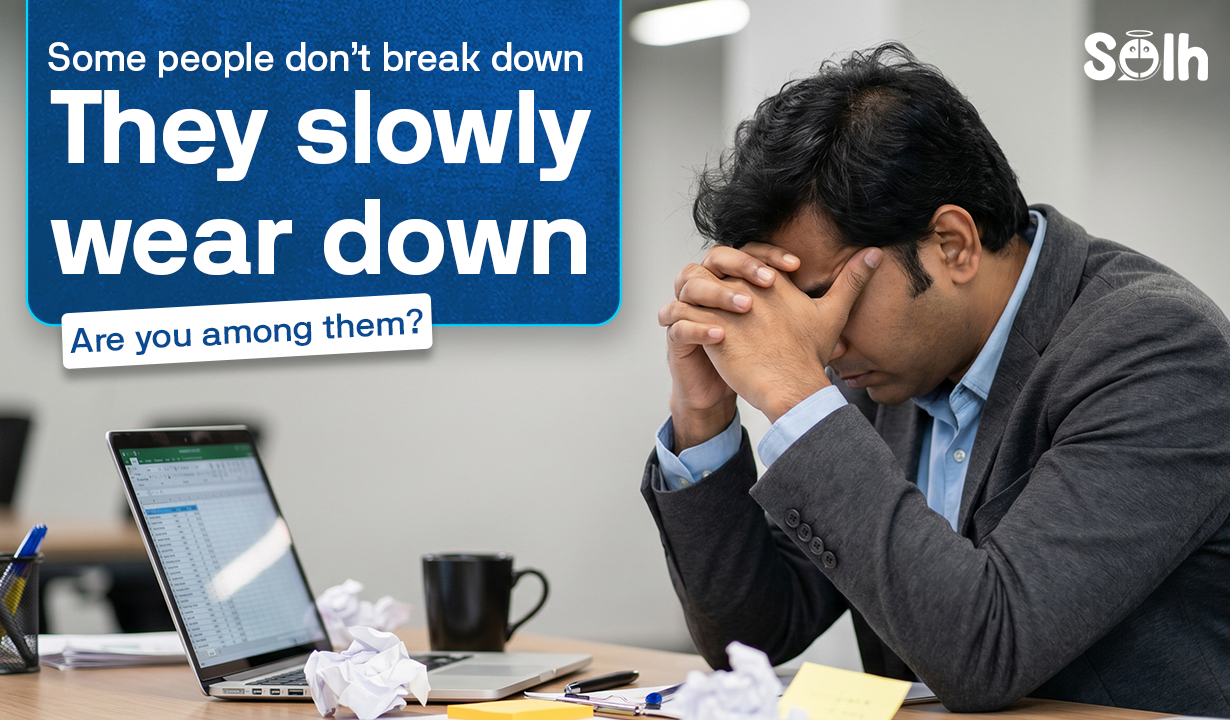
Someone asks how you're doing. You say fine. Your manager gives feedback that stings. You nod, say thank you, get back to your desk. A colleague takes credit for your work in a meeting. You let it go. Your workload doubles with no acknowledgement. You absorb it. You go home. Someone asks how your day was. Fine, you say. It was fine.
None of this feels like a problem. Because none of it is dramatic. You're being professional. Practical. Composed.
But your body has a completely different account of what is happening. And it has been keeping score. In ways that eventually become impossible to ignore.
This is what emotional suppression actually is. And this is why it matters for your physical health.
Emotional Suppression Is Not Emotional Regulation
Let me make a distinction most people don't.
Emotional suppression is not emotional regulation. This matters enormously.
Emotional regulation: you feel something, you acknowledge it internally, you choose how and when to express it. Active. Conscious. The emotion gets processed. The nervous system stays intact.
Emotional suppression: you feel something and you push it down before it is processed. The emotion does not go anywhere. It does not dissolve because it was not acknowledged. It gets stored. In your body. In your nervous system. In the chronic low-grade tension you've probably stopped noticing because it's been there so long it feels normal.
For most Indian professionals, suppression is not a choice. It is a survival strategy built around holding in emotions and staying functional under pressure. Learned early. Reinforced constantly. In classrooms, in families, in workplaces.
The message is consistent. Manage your feelings privately. Do not burden others. Do not show weakness. Be fine.
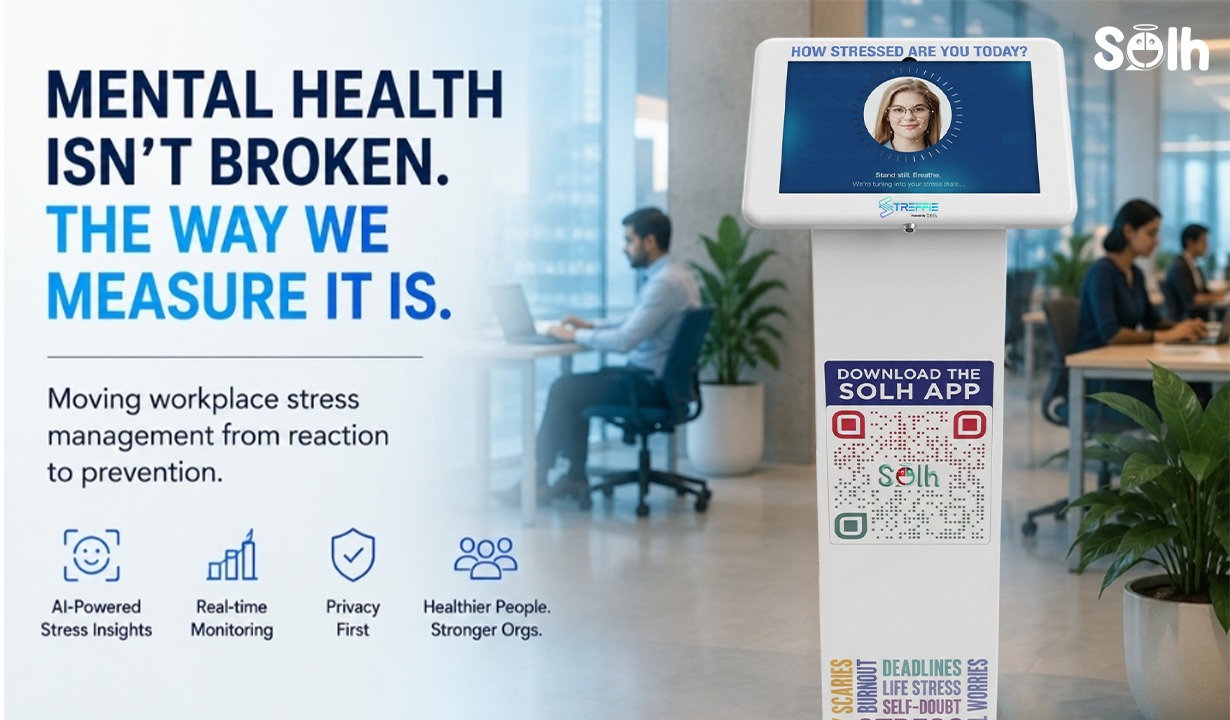
💡 Streffie on the Solh app reads the stress biomarkers your face carries even when your words say "I'm fine." An objective stress score in seconds, using just your phone camera. No questionnaires. No wearables. Download the Solh app and see what your body is actually saying.
What Happens Inside Your Body When You Suppress
Here's the physiology nobody explains.
An emotion is triggered. Your body initiates a physiological response. Cortisol and adrenaline are released. Heart rate increases. Muscle tension rises. The nervous system activates.
When you process that emotion through expression, movement, or conscious acknowledgment the physiological response completes its cycle. The system returns to baseline.
When you suppress it, the physiological response is interrupted mid-cycle. The hormones don't fully metabolise. The nervous system activation doesn't fully resolve. The body stays in partial arousal. Waiting for a completion that never comes.
Do this once. Inconsequential.
Do this dozens of times a day, across months and years. Peer-reviewed research confirms the consequences become serious.
Prolonged bottling up emotions is directly associated with elevated cardiovascular risk. Increased susceptibility to autoimmune disorders. Gastrointestinal problems. Chronic inflammation. Disrupted sleep architecture.
Not metaphorical connections. Measurable physiological pathways. From unexpressed emotion to physical illness.
Your body does not distinguish between "I didn't say anything because I was being professional" and "I didn't say anything because I was afraid." It only registers that the stress response was activated and never resolved.
Emotional experience | What happens internally | Physical impact over time |
Hiding emotions after stressful interactions | Cortisol and adrenaline remain elevated | Chronic stress and fatigue |
Holding in emotions at work | Nervous system stays partially activated | Muscle tension and headaches |
Not expressing feelings consistently | Stress response cycle remains incomplete | Sleep disruption and burnout |
Constant emotional suppression | Emotional stress accumulates in the body | Chest tightness and anxiety |
Bottling up emotions for long periods | Chronic inflammation and nervous system overload | Digestive issues and exhaustion |
Performing “fine” despite stress | Emotional distress becomes physically stored | Non-restorative sleep and irritability |
Why Suppression Is the Default in Indian Workplaces
The data is unambiguous.
48% of Indian corporate employees are already at high risk for poor mental health. 50% directly say stress reduces their productivity. 62% of Indian employees report burnout three times the global average.
These numbers exist in a cultural context that makes asking for help feel genuinely dangerous.
In Indian organisations, particularly hierarchical ones, emotional expression carries professional risk. Being seen as unable to handle pressure. Being labelled sensitive. Having your composure questioned in a setting where composure equals competence.
These are real consequences. Real people have experienced them.
The decision to say "I'm fine" is not irrational. It is often entirely rational given the environment.
But the cost is borne privately. Invisibly. Physically.
The employee who never complains is not the employee who is fine. They are frequently the employee who has spent years suppressing emotions so consistently that the distinction between what they feel and what they show has almost completely collapsed. Fluent in performing wellness. Experiencing something very different underneath.
The Physical Symptoms of Suppressed Emotions
Most people who have been bottling up emotions for a long time don't experience it as emotional distress. They experience it as physical symptoms.
The tension headache that appears every Sunday evening. The tight chest before a difficult meeting that never fully goes away. The sleep that is technically happening but never feels restorative. The fatigue that exists independent of rest. The stomach that churns at certain notifications. The jaw that's clenched before you've registered being upset. The shoulders that don't drop, even on holiday.
These are not separate problems requiring separate solutions. They are the body's accumulated account of every emotion that was activated and never completed.
And because they present as physical, they get treated as physical. Painkillers. Antacids. Sleep aids. Reassurances that the tests came back normal.
The tests come back normal because the problem is not in the organ. It is in the unprocessed emotional history sitting in the nervous system.
Why Journaling and Meditation Apps Aren't Enough
The wellness industry has an answer for all of this. Journaling. Meditation apps. Breathing exercises.
These are genuinely useful for people who are already broadly regulated. For someone who has spent years not expressing feelings or constantly hiding emotions, they can feel inadequate because they're addressing the surface without touching the underlying accumulation.
What actually shifts things is a combination of two things most suppression-oriented people have never had simultaneously.
A space with no social stakes. Expression of what you actually feel carries no professional consequence. No relational risk. No judgment.
A consistent low-pressure outlet. Somewhere to say what is actually true. At whatever hour it surfaces. Without having to justify it, contextualise it, or make it palatable for someone else.
For most Indian professionals, this space does not exist at work. Often barely exists at home.
💡 Solh Buddy is built for the person who says "I'm fine" when they're not. Your 24/7 AI support companion. Complete privacy. No judgment. Available the moment the weight becomes too much to keep carrying alone.
What You're Actually Carrying
The exhaustion that doesn't match your workload. The irritability without obvious cause. The flatness on weekends when there's nothing external to manage. The physical symptoms you've stopped mentioning.
This is not your baseline. This is not just who you are.
This is the weight of emotions that were activated, never processed, and stored somewhere your body could carry them without it being visible. Years of bottling up emotions eventually become impossible for the nervous system to ignore.
It is heavy. It has been heavy for a long time.
The first step is not a dramatic intervention. It is simply allowing the possibility that "fine" has been a performance. And that something different is available.
Built for the Person Whose Default Answer Is 'Fine'
Streffie reads the stress your face carries even when your words don't. Objective. In seconds. Your phone camera. 68 facial micro-expressions analysed with up to 90% accuracy. Bypasses the "I'm fine" default entirely.
Solh Buddy is there for when the weight gets heavy enough that carrying it alone stops feeling sustainable. 24/7. Complete privacy. No professional consequence.
Solh's guided plans include structured pathways specifically designed for emotional suppression and stress accumulation. Built for the Indian context. By mental health professionals who understand what fine actually costs.
📲 Download the Solh app. Start a conversation with Solh Buddy whenever you're ready.
Fine was never supposed to be the ceiling.
Frequently Asked Questions
What is emotional suppression and how is it different from emotional regulation? Emotional suppression is pushing down a feeling before it's processed the emotion stays activated in the nervous system. Emotional regulation is acknowledging the feeling internally and choosing when and how to express it. Suppression skips the processing. Regulation includes it.
Can suppressed emotions cause physical illness? Peer-reviewed research links prolonged emotional suppression to elevated cardiovascular risk, autoimmune conditions, gastrointestinal problems, and chronic inflammation. The mechanism is unresolved stress-response activation cortisol and adrenaline that never fully metabolise.
What are the physical symptoms of suppressed emotions? Common signs include Sunday-evening tension headaches, chest tightness before meetings, non-restorative sleep, unexplained fatigue, jaw clenching, GI disturbances, and shoulder tension that persists through rest. These often get treated as physical problems when the root is unprocessed emotional activation.
Kapil Gupta is the CEO and Co-Founder of Solh Wellness, India's AI-powered Employee Risk Intelligence Platform. Solh is available on Android, iOS, and web.
Let’s Connect!