
It starts innocently.
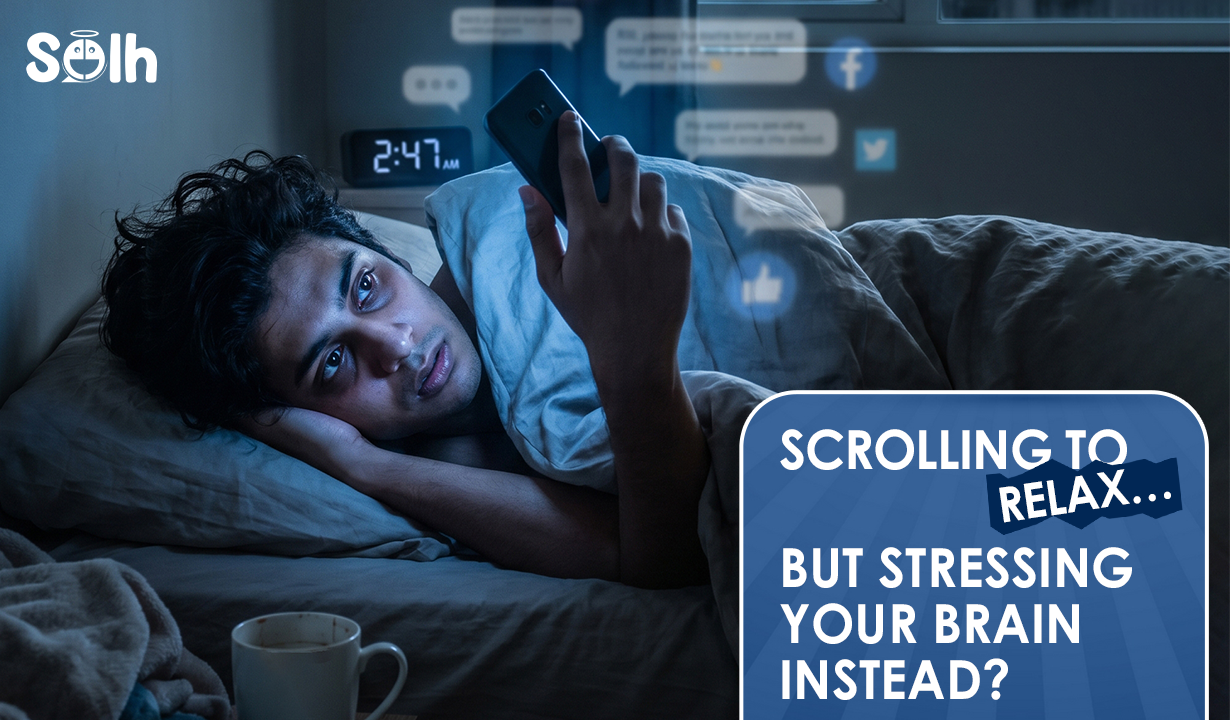
You're in bed.
The day is done.
Just a few minutes on the phone.
Check messages.
Scroll some news.
One more video.
An hour later you're still there.
Except now you're not relaxed.
You're wired.
Mind running.
Around 2am you force your eyes shut.
Knowing the 7am alarm is going to feel like a physical assault.
By 9am you're at your desk.
Functional on the surface.
Hollowed out underneath.
This is not a discipline problem.
This is not laziness.
This is a neurological loop millions of Indians are running every night through doomscrolling at night and excessive late night scrolling.
And it is doing measurable damage to your stress system.
Let's start with the data.
88% of Indians use their phone in the moments before sleeping.
Late night social media browsing increased 57% compared to pre-pandemic levels.
1 in 4 Indians believes they have insomnia linked directly to smartphone use.
These are not fringe behaviours.
This is the default winding-down ritual for the majority of working Indians.
And it feels like rest.
That's exactly why it's so damaging.
It exploits the gap between what feels like unwinding and what actually is.
💡 Curious what a night of doomscrolling at night actually does to your stress levels by morning? Download the Solh app . Use Streffie to check your morning stress score. Start seeing the pattern in real numbers.
Why Does Doomscrolling at Night Make It Hard to Sleep?
Here's what your brain is actually doing when you scroll at night.
Your body has a biological winding-down sequence.
Melatonin production increases.
Cortisol drops.
The nervous system shifts from sympathetic activation, alert and responsive, toward parasympathetic activity, rest and recovery.
Phone screens suppress melatonin production directly.
That alone delays sleep onset.
But the melatonin suppression is the smaller problem.
The larger problem is what the content does.
When you engage in late night scrolling, your brain is not passively consuming information.
It is actively processing it.
Evaluating it for threat relevance.
Responding emotionally.
Every distressing headline.
Every conflict-heavy comment thread.
Every anxiety-inducing news piece.
Each one activates your amygdala.
The same threat-detection system that fires during a difficult work conversation.
Cortisol stays elevated at exactly the time your body is trying to bring it down.
Your nervous system is being asked to rest while being fed a continuous stream of threat signals.
It cannot do both.
So it stays alert.
Waiting for the threat to pass.
While you lie there wondering why sleep won't come.
Why Do You Feel Wired at 2AM Even When You're Tired?
The 2am wired feeling is not energy.
Let's be clear about that.
You are not awake because you've slept enough.
You are awake because your cortisol hasn't dropped the way it should have.
Your stress system is still running.
Still processing the accumulated input of the scroll caused by excessive screen time at night.
And in the silence of 2am, with no new input coming in, the brain turns inward.
The unresolved work anxieties.
The low-grade dread.
The worries the daytime's busyness kept at bay.
This is the 2am thought spiral.
Not random.
The predictable output of a stress system that was never allowed to deactivate.
Chronic psychological stress disrupts the natural cortisol rhythm.
Blunts the morning peak that should give you energy.
Flattens the evening decline that should allow recovery.
62% of Indian employees report burnout at three times the global average.
If you're already carrying significant workplace stress, doomscrolling at night is not just a bad habit.
It is an accelerant poured onto an already struggling system.
Why Does Late Night Scrolling Make You Exhausted the Next Day?
The exhaustion at 9am is not just tiredness.
It is cognitive impairment.
Partial sleep deprivation, the kind that comes from delayed sleep onset and disrupted sleep architecture caused by phone use before bed, measurably reduces:
Working memory.
Emotional regulation.
Decision-making capacity.
Stress tolerance.
You are not just tired.
You are running on a neurologically compromised system.
One that will misread situations.
Overreact to minor stressors.
Struggle with complex thinking from the first hour.
And because it feels like tiredness rather than impairment, most people manage it with caffeine.
Which further disrupts cortisol rhythms.
Which deepens the cycle.
Which makes tomorrow's crash arrive earlier than today's.
The Rs 1.1 lakh crore yearly corporate loss from poor employee health in India is in significant part a sleep and recovery crisis.
Wearing the mask of a productivity problem.
💡 Solh's guided plans include specific interventions for sleep stress and screen fatigue, built by mental health professionals. Download the Solh app and explore your personalised plan.
If you're thinking "I know all this, I just can't seem to stop," you're not failing at willpower.
You're up against a system engineered to defeat it.
Social media platforms use variable reward mechanics.
The same psychological principle that makes slot machines compelling.
The scroll is unpredictable by design.
The next post might be distressing.
Might be entertaining.
Might feel important.
That unpredictability is what keeps the thumb moving.
Not a character flaw.
A feature.
This is exactly why phone addiction at night has become increasingly common among working professionals.
In India, there's an additional layer.
For many working professionals, using phone before sleep is the only time in the day that genuinely belongs to them.
The commute is exhausting.
The workday is demanding.
Evenings carry family obligations.
The phone at night is the one space of autonomy in a day that has very little of it.
Giving it up doesn't just feel hard.
It feels like surrendering the only thing that was yours.
Generic advice, "put your phone away an hour before bed," fails most people most of the time because it ignores this completely.
The goal is not to eliminate your evening.
It is to protect your nervous system's ability to recover.
What actually works:
Replace the scroll with lower stimulation input.
Audio content. Physical books. Guided breathing.
Something that engages without the cortisol-spiking properties of news and social feeds.
Create a genuine transition ritual between work and sleep.
Your nervous system needs a signal that the day is over.
A consistent routine activates the parasympathetic shift your screen time at night is currently preventing.
Track your morning stress score .
Most people have no objective data on how their evening choices affect their next-day state.
Seeing the pattern in actual numbers changes the conversation from willpower to information.
Address the underlying stress that makes the escape feel necessary.
If you're doomscrolling because the alternative is lying in the dark with anxiety, the phone is not the problem.
The anxiety is.
And that is solvable.
The loop is breakable.
Not with willpower alone.
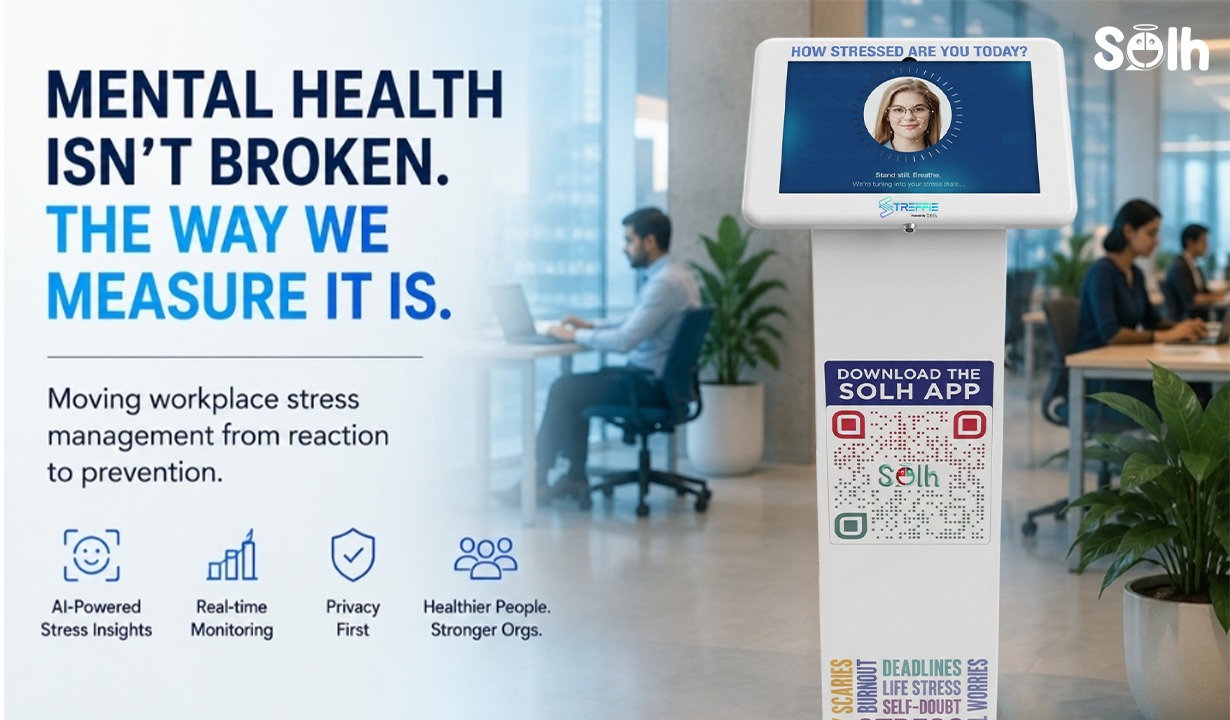
Streffie gives you an objective morning stress score.
Real numbers.
What the previous night actually did to your system.
No guesswork.
Solh Buddy is available at 2am.
When the spiral starts and the phone is already in your hand.
Somewhere to take what you're actually feeling.
A space that listens and guides you toward rest.
Not deeper into the loop.
Solh's guided plans include structured pathways for sleep stress and screen fatigue.
Daily interventions.
No lifestyle overhaul required.
📲 Download the Solh app and check your morning stress score. See the pattern. Then let's break it.
The exhaustion you feel at 9am started long before your alarm went off.
FAQ’s
1. What is doomscrolling at night?
Doomscrolling at night refers to continuously consuming negative or emotionally overwhelming content on social media or news platforms before sleeping, which can increase stress and disrupt sleep quality.
2. How does late night scrolling affect sleep?
Late night scrolling keeps the brain mentally active and delays the body's natural sleep cycle. It can increase cortisol levels, suppress melatonin production, and make it harder to fall asleep peacefully.
3. Is using phone before sleep harmful for mental health?
Yes, using phone before sleep regularly can affect emotional regulation, increase anxiety, reduce sleep quality, and contribute to long-term stress and mental exhaustion.
4. Why does phone use before bed make people feel tired the next day?
Phone use before bed can interfere with deep sleep and recovery. Even if someone sleeps for several hours, disrupted sleep cycles can leave them feeling mentally drained and exhausted the next morning.
5. Can screen time at night increase stress levels?
Yes, excessive screen time at night can overstimulate the nervous system and make it difficult for the brain to relax, increasing stress levels and affecting emotional wellbeing.
6. How can Solh help with stress caused by doomscrolling at night?
Solh helps users understand and manage stress through tools like Streffie, which tracks stress levels objectively, and Solh Buddy, which provides emotional support during moments of anxiety, overthinking, and sleep-related stress.