
How Did Stress Become “Normal”?
Through repetition.
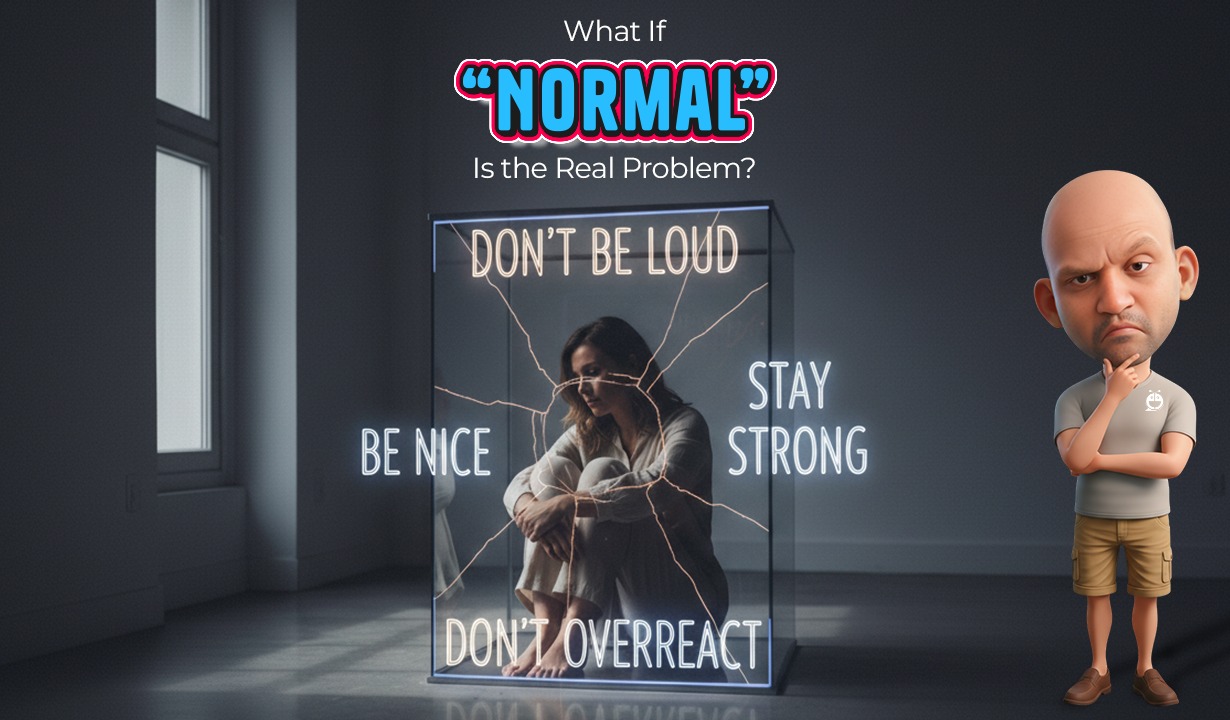
When everyone around you is stressed, it stops feeling exceptional. Over time, workplace stress and constant pressure begin to feel like standard operating conditions.
We hear phrases like:
- “It’s part of the job.”
- “This is normal pressure.”
- “Everyone goes through this.”
These statements slowly blur the line between healthy challenge and chronic workplace stress.
Over time, stress stops being questioned.
It starts being expected.
Language lowers alarm.
Why Language Matters
Language defines tolerance.
The moment stress is labelled “normal”:
- Early signs of chronic stress are ignored
- Recovery is postponed
- Overload is justified
People stop asking whether their stress is healthy.
They start searching for ways to endure it better.
This is where emotional exhaustion symptoms and subtle burnout at work begin to form quietly, gradually, without resistance.
The shift is subtle.
But the consequences are not.
What Happens When Stress Never Resolves?
Unresolved stress doesn’t explode overnight. It settles in.
The symptoms of chronic stress often appear as:
- Disrupted sleep and persistent stress and sleep problems
- Reduced emotional range
- Weakened focus and concentration
- Mental fatigue that feels like productivity
These are early long-term stress effects.
Because the change is gradual, people adjust instead of react.
Adaptation gets mistaken for resilience.
But adjustment is not the same as wellbeing.
Over time, unresolved stress can also contribute to unhealthy coping patterns, highlighting the link between chronic stress and addiction .
Why Organisations Repeat This Pattern
Normalised stress requires no accountability.
If stress is “just how things are”:
- Systems don’t change
- Workloads stay inflated
- Recovery remains optional
The burden shifts to individuals.
Instead of questioning job stress effects or structural overload, organisations often overlook the cost of workplace stress in India , which continues to rise as stress becomes normalised.What begins as performance slowly turns into occupational stress and eventually visible employee burnout signs.
And yet, because everyone is experiencing it, it continues to feel normal.
What Is the Correct Way to Frame Stress?
Stress is not the enemy.
Unresolved stress is.
Healthy stress:
- Has a beginning
- Has an end
- Allows recovery
There is a clear stress recovery cycle.
Chronic stress has none of these.
It lingers.
It accumulates.
It reshapes how you function.
The Solh Perspective
At Solh Wellness , we view chronic stress not as identity, but as information.
Stress reveals patterns.
It exposes recovery gaps.
It signals when the system is overloaded.
When mapped early, symptoms of chronic stress can be addressed before they become long-term damage.
When ignored, they simply become the new normal.
Founder’s Reflection
When we started calling chronic overload “normal,”
we didn’t build stronger people.
We normalised chronic stress, justified workplace stress, and ignored early warning signs.
We just stopped listening to our own signals.
- - Kapil Gupta
Perfect adding FAQs will strengthen SEO, improve dwell time, and help you rank for featured snippets around chronic stress.
I’ve added 5 FAQs aligned with your theme. The last one is Solh-specific, as requested.
You can place this section at the end of the blog.
Frequently Asked Questions (FAQs)
1. What is chronic stress?
Chronic stress is long-term, unresolved stress that continues without proper recovery. Unlike temporary stress, which has a clear beginning and end, chronic stress stays active in the body and mind. Over time, it affects sleep, emotional balance, and focus.
2. What are the symptoms of chronic stress?
Common symptoms of chronic stress include:
- Persistent fatigue
- Sleep disturbances
- Emotional exhaustion
- Reduced concentration
- Irritability or emotional numbness
Because these symptoms develop gradually, they are often dismissed as “normal pressure.”
3. How is chronic stress different from normal stress?
Normal stress is temporary and followed by recovery. It can improve performance and resilience.
Chronic stress, however, does not resolve. It continues without a recovery cycle. Over time, this ongoing activation can lead to burnout, mental fatigue, and long-term stress effects.
4. Can workplace stress turn into chronic stress?
Yes. Workplace stress becomes chronic when high demands, unrealistic expectations, and lack of recovery become constant. When stress is normalised in work culture, early warning signs are ignored, and occupational stress gradually turns into burnout.
5. How does Solh help in managing chronic stress?
At Solh Wellness, stress is treated as information — not identity.
Solh helps individuals identify patterns, track recovery gaps, and recognise early symptoms of chronic stress before they escalate. By making stress measurable and visible, it becomes something you can respond to — rather than silently endure.