
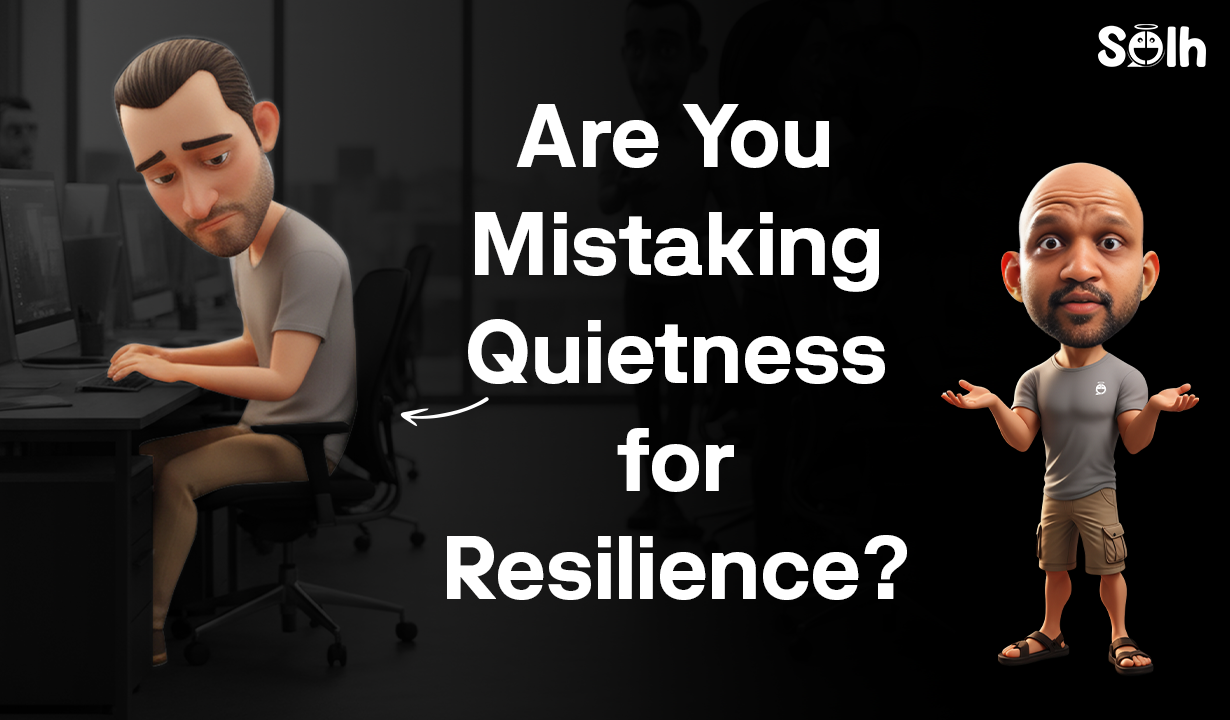
Why do organisations trust silent employees more?
The answer often hides in overlooked workplace stress signs .
Silence feels safe. It reduces visible stress in the workplace.
- No escalations.
- No resistance.
- No delays.
Silent employees:
- meet expectations
- reduce friction
- maintain momentum,
often masking deeper concerns around employee mental health at work
From the outside, they look stable.
But stability is not the same as sustainability.
What is internalised stress?
Internalised stress occurs when pressure is held inward instead of expressed outward.
There is no complaint.
No visible conflict.
No request for relief.
Stress stays inside the system, becoming a silent form of stress in the workplace.
Over time, this creates:
- emotional withdrawal
- reduced self-awareness
- physical fatigue without explanation
Why don’t these employees speak up at work?
This question reflects a common leadership blind spot about why employees don’t speak up .
Because silence is often rewarded.
They learn that:
- raising concerns slows things down
- asking for help feels risky
- expressing strain looks like weakness
So they adapt.
Adaptation keeps them functioning — but unsupported.
Why do breakdowns feel sudden?
Because warning signs weren’t behavioural.
They were internal.
Stress doesn’t always show up as mistakes.
It shows up as numbness, disengagement, and quiet exhaustion — some of the most ignored silent burnout signs and early employee burnout symptoms.
If leaders only watch output, they miss this completely.
What does this mean for leadership?
It highlights the urgent need to prioritise employee mental health at work .
It means “open-door policies” are not enough.
Not everyone feels safe enough to walk through that door.
Stress visibility must be:
- Private
- Non-judgemental
- proactive
Waiting for people to speak up leaves the quiet ones exposed.
The Solh lens
Solh focuses on early stress visibility without disclosure pressure.
Tools that allow private awareness protect the people least likely to ask for help, especially when stress in the workplace remains unspoken.
Founder’s Reflection
The employee who never complains is not your safest bet.
They’re often carrying the most alone — and those hidden loads are often the clearest workplace stress signs leaders fail to notice.
FAQ’s
1. What are the early workplace stress signs leaders often miss?
Early workplace stress signs are often subtle — emotional withdrawal, quiet disengagement, and silent exhaustion. These internal signals don’t disrupt output immediately, which is why they’re frequently overlooked until burnout becomes visible.
2. Why don’t employees speak up about stress at work?
Employees often stay silent because they fear being judged, slowing down work, or appearing weak. Over time, silence becomes an adaptive behaviour, even when internal stress continues to build.
3. How does Solh wellness help identify hidden employee stress?
Solh Wellness Platform focuses on early stress visibility through private, non-judgemental tools that allow employees to become aware of their emotional load without needing to openly disclose it. This helps organizations detect silent stress before it escalates into burnout.
4. Can silent employees still experience burnout?
Yes, silent employees are often at higher risk of burnout because they internalise pressure instead of expressing it. Their performance may remain stable while emotional fatigue increases unnoticed.
5. How can leadership support employee mental health at work proactively?
Leadership can support mental health by moving beyond reactive conversations and adopting proactive stress visibility systems, regular emotional check-ins, and psychologically safe environments where employees don’t have to struggle silently.
6. What role does stress intelligence play in preventing workplace burnout?
Stress intelligence helps organizations understand how stress manifests internally, not just behaviourally. With better awareness tools and supportive leadership practices, companies can prevent silent burnout before it impacts wellbeing and productivity.