
We spent the last decade obsessing over productivity, performance, KPIs, and “hustle.”
And where did it land us?
At the doorstep of 2026 — the year humans finally admit they can’t outrun their own nervous system anymore.
We’re entering an era where stress management is no longer a soft skill, it’s infrastructure.
Where emotional resilience isn’t personal virtue, it’s organisational survival.
Where workplace stress management becomes as essential as digital literacy.
And the companies who fail to adapt? They won't just lose talent. They’ll lose relevance.
Let me say this plainly:
2026 will not be shaped by emotionally exhausted humans pushing through burnout.
It will be shaped by emotionally intelligent systems that prevent burnout in the first place.
The Human Brain Has Hit Its Limit — and It’s Not Your Fault
Look around.
People are functioning, but barely.
Not because they lack ambition.
Not because they’re lazy.
But because the nervous system was not designed for constant load, constant alerts, constant stimulation, and constant comparison.
Workplace stress is not an HR issue anymore.
It’s a neuroscience problem.
The human system is overloaded — cognitively, emotionally, biologically.
And yet, most organisations keep trying to fix stress at work with:
motivational speakers
engagement activities
yoga days
corporate wellness webinars
once-a-year EAP reminders
These are band-aids on a bullet wound.
The world has changed.
Stress hasn’t.
But the volume has.
And humans are drowning in it.
This is exactly why 2026 needs a different operating system — one built not on “mindset hacks” but on emotional infrastructure and real managing workplace stress solutions.
To understand how organisations can shift from reactive to proactive stress care, read this detailed breakdown of a corporate wellness platform in the stress management ecosystem .
Why Emotionally Intelligent Systems Matter More Than Ever
Let me break this down:
Humans today don’t need more motivation.
They need more bandwidth.
More capacity.
More regulation, not inspiration.
That’s where emotionally intelligent systems come in.
These are systems that:
anticipate stress before it explodes
map emotional load scientifically
intervene with precision, not guesswork
teach the nervous system to stabilise itself
provide personalised stress management journeys using a personalized stress management app
integrate seamlessly into a modern corporate wellness platform
Not generic wellness.
Not mass webinars.
Not corporate-speak.
Actual, scientific emotional support. At scale. In real time.
That’s the future.
And unless organisations adopt it, they will continue to “react” to burnout instead of preventing it — losing productivity, losing morale, and losing employees to quieter exits.
2026 Will Reward Companies That Treat Stress as Data, Not Drama
Let’s talk business.
Because “well-being” alone doesn’t convince companies.
Numbers do.
The companies who will win 2026 are the ones who treat stress the way they treat cybersecurity — measurable, predictable, preventable.
Imagine organisations where:
Stress levels are monitored like vital signs
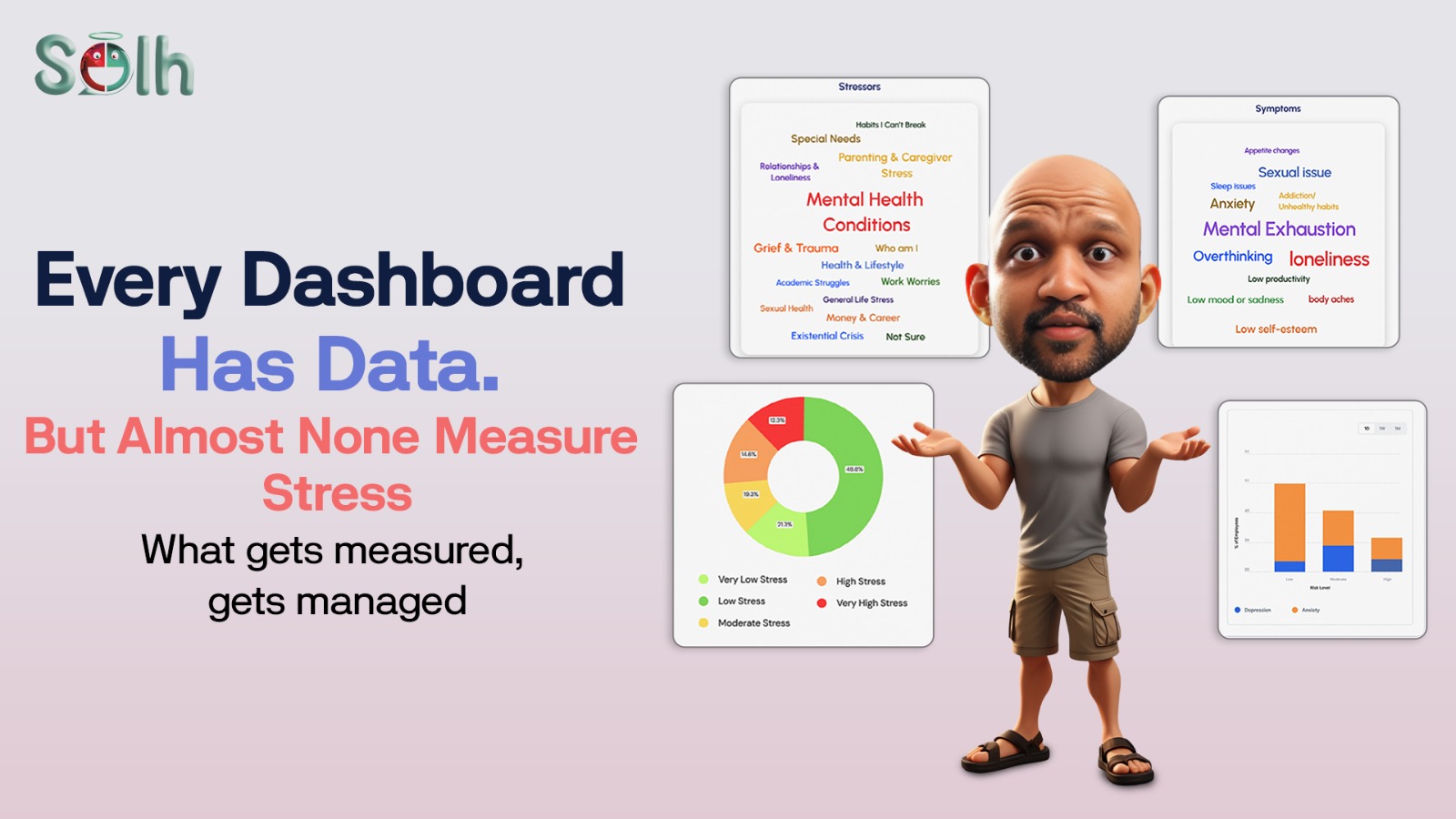
Departments have emotional climate dashboards
Teams receive early alerts before burnout
Employees get stress management for employees through personalised nervous system regulation plans
Leaders are trained not just to manage people, but to manage emotional load
This is not fiction.
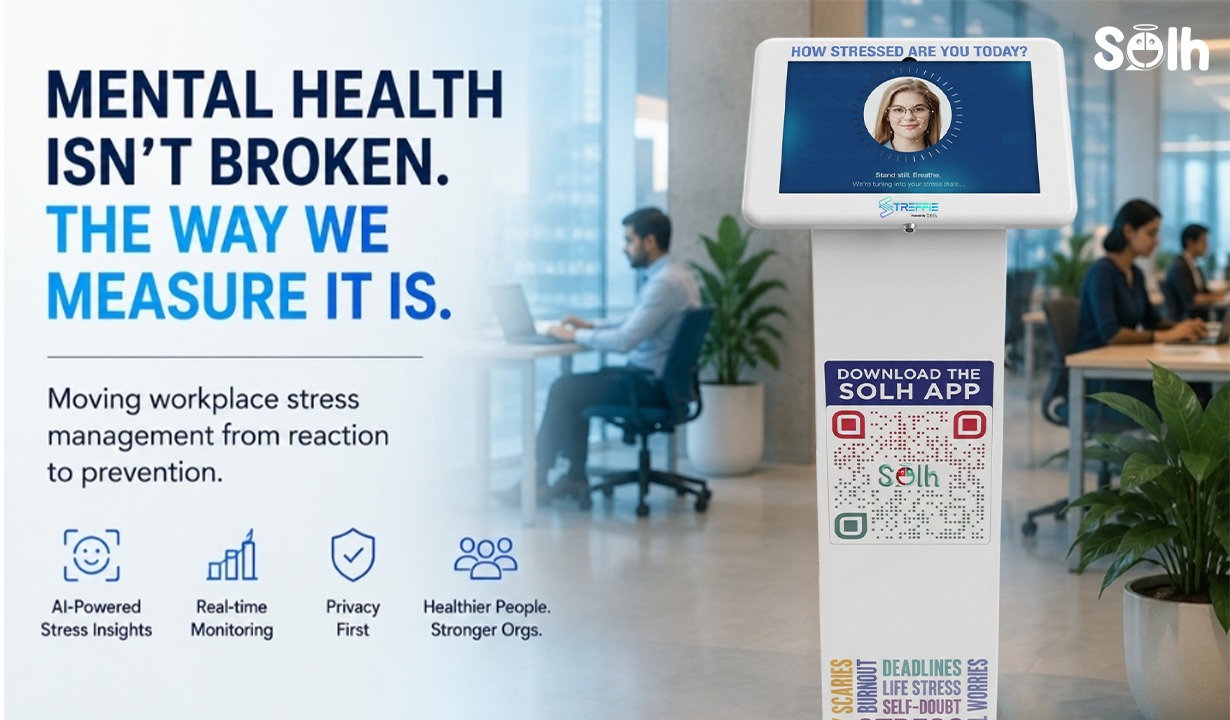
This is already happening at Solh Wellness through Streffie scans, guided plans, stress intelligence dashboards, and our AI emotional support system — Solh Buddy.
For a deeper look at how AI transforms workplace stress management, explore how organisations are building measurable wellbeing systems through AI in this blog on workplace stress management with AI .
When you can see stress, you can solve stress.
And in 2026, visibility is survival.
Let’s Accept a Hard Truth: Humans Alone Cannot Handle Stress Anymore
This is not a weakness.
It’s biology.
The modern world is faster than the nervous system’s ability to cope.
You can meditate 10 minutes a day — but if your system is overloaded 23 hours and 50 minutes, you’re not healing. You’re coping.
AI has already transformed finance, communication, healthcare.
And now, it’s coming for the most human domain of all — emotional resilience.
Not to replace us.
To support us.
To give us back the bandwidth we lost.
Emotionally intelligent AI is not a luxury in 2026.
It’s an emotional safety net.
Systems like Solh Buddy don’t shame you for struggling.
They don’t judge.
They don’t get overwhelmed.
They don’t burn out.
They stay.
They support.
They stabilise.
They guide your nervous system back to balance — one micro-intervention at a time.
The Shift from Human Willpower → System-driven Regulation
For decades, we romanticised willpower.
The “just push through” culture.
The “work harder” mentality.
The “hustle till it hurts” mantra.
But humans don’t break because they’re weak.
They break because the system around them is flawed.
2026 finally acknowledges what science has been shouting:
📌 Stress cannot be managed by willpower.
It must be managed by systems.
Systems that track.
Systems that nudge.
Systems that intervene.
Systems that re-train the nervous system through data-driven workplace stress management tools.
And this is why stress-tech will outperform wellness in 2026.
Because wellness is a message.
Stress-tech is a mechanism.
The Future of Work Will Be Nervous System–First
Hybrid vs remote?
Office vs virtual?
Flexible hours vs rigid hours?
All old conversations.
The real conversation for 2026 is:
“Does your workplace align with the human nervous system?”
Because here’s the truth:
The future of work will be built around how humans emotionally function, not just how they intellectually perform.
That means:
Reduced context switching
Fewer cognitive interruptions
Sensory-friendly meetings
Clear emotional boundaries
Daily micro-recovery
Stress mapping for teams
Calm leadership as a KPI
AI-supported emotional regulation for employees
This is what modern employee well-being really looks like.
Not fruit baskets.
Not bean bags.
Not motivational posters.
Actual, science-backed stress management woven into the fabric of the workplace.
2026 Will Belong to Those Who Build Emotional Capacity — Not Those Who Fake It
If you take one thing away from this blog, let it be this:
Stress intelligence will be the No. 1 workplace skill in 2026.
Not coding.
Not communication.
Not leadership frameworks.
The ability to regulate your nervous system under pressure.
That’s the new competitive advantage.
That’s the future of productivity.
That’s the foundation of every high-performing individual and every sustainable organisation.
And emotionally intelligent systems — like Solh’s stress ecosystem — are the scaffolding that will make it possible.
2026 is not about “feeling better.”
It’s about functioning better.
With capacity.
With clarity.
With calm.
And the companies that embrace this shift?
They won’t just survive the decade.
They’ll lead it.