
Let me start with an uncomfortable truth
Most people I meet today aren’t breaking down. They’re showing up. They’re delivering. They’re responding to emails faster than ever. And they’re coping.
That word—coping—has quietly become the most dangerous compliment in modern work culture.
- “He’s coping well.”
- “She’s managing.”
- “They seem fine.”
Fine has replaced healthy. Managing has replaced recovering. And no one seems worried.
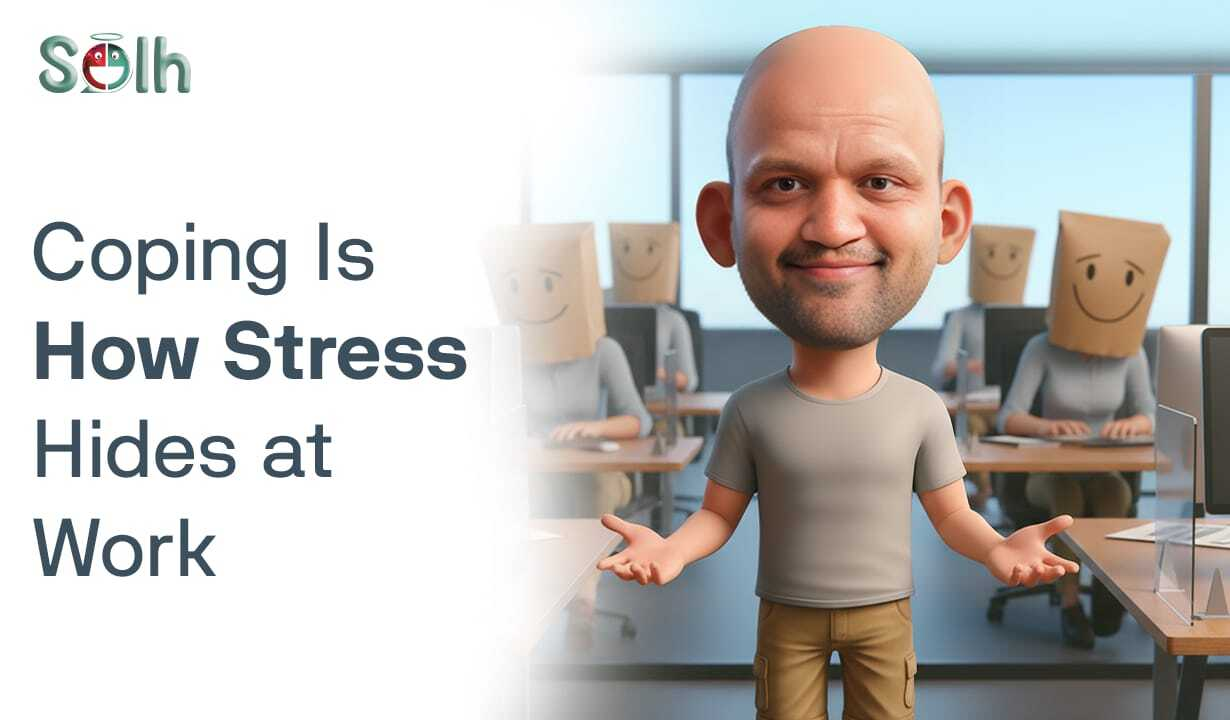
This is exactly why coping at work is dangerous—it hides stress behind performance while slowly draining resilience.
What does “coping” actually mean?
Coping doesn’t mean stress at work is absent. It means stress has been absorbed. It means a person has adjusted their nervous system to operate under continuous load. They’ve stopped expecting relief. They’ve stopped waiting for pauses. They’ve accepted pressure as normal.
Coping is not resilience. Coping is adaptation to overload. And that’s a very different thing.
Why coping is rewarded in organisations
Because coping doesn’t disrupt output. People who cope:
- Don’t complain
- Don’t escalate
- Don’t demand changes
They keep deadlines intact. They keep teams moving. They keep leadership comfortable. Coping is organisationally convenient. Breakdowns are visible. Coping is silent. And systems prefer silence.
This is where stress management conversations fail
Most corporate stress conversations start after damage appears—burnout, attrition, disengagement, medical leave. But stress at work doesn’t suddenly appear at the end. It builds quietly while people are still “doing well.” That’s the blind spot.
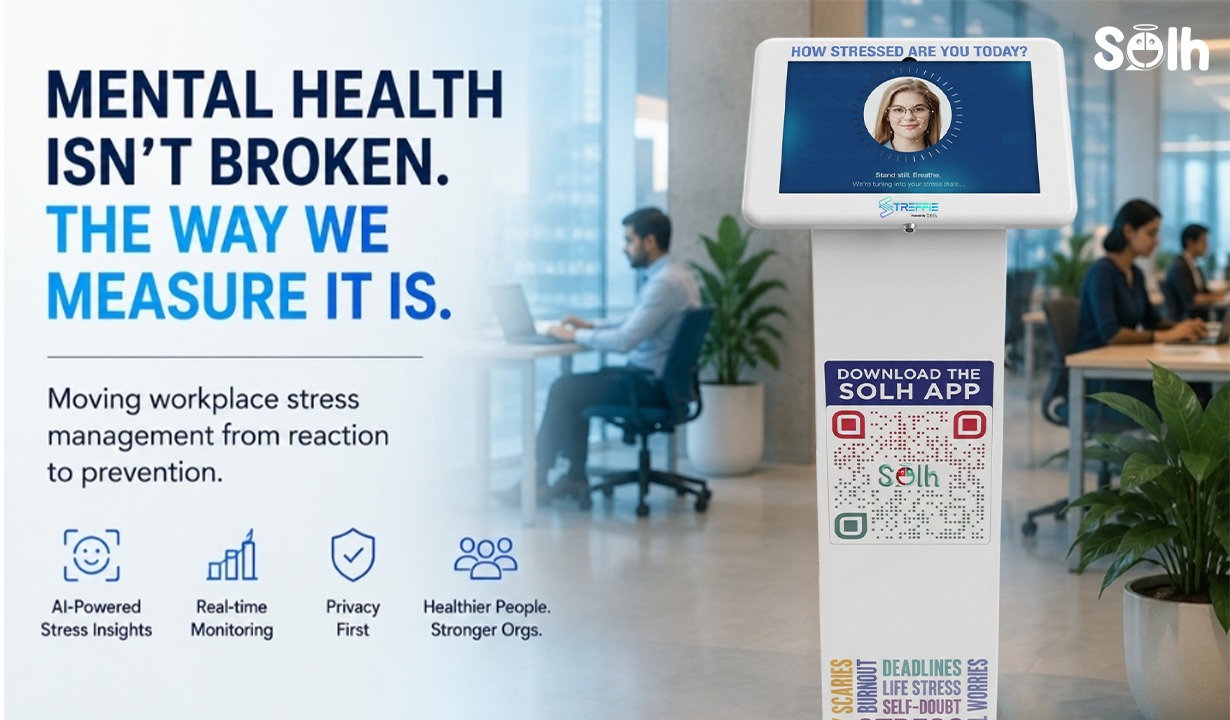
At Solh, when we look at stress patterns—through workplace stress monitoring, behavioral signals, facial stress indicators like Streffie, and self-assessments—we see something consistent:
👉 The most stressed individuals are often the most functional. They are not chaotic. They are composed. And composition is misleading.
For a deeper look at how AI‑based stress monitoring captures hidden signals that traditional HR tools miss, see Streffie: How AI Is Revolutionizing Stress Monitoring at Work
The illusion of productivity
We’ve confused productivity with capacity. Just because someone is producing doesn’t mean they have room left. Stress at work doesn’t always reduce output immediately. Sometimes it increases it—temporarily. Adrenaline compensates. Fear motivates. Habit takes over. But none of these are sustainable nervous system states. They are emergency modes. When emergency becomes normal, the system starts paying interest.
How coping shows up in real workplaces
You’ll recognise this:
- The team that delivers every quarter but never feels energised
- The leader who is respected but emotionally unavailable
- The employee who hasn’t taken real leave in years
- The organisation where everything works—but nothing feels light
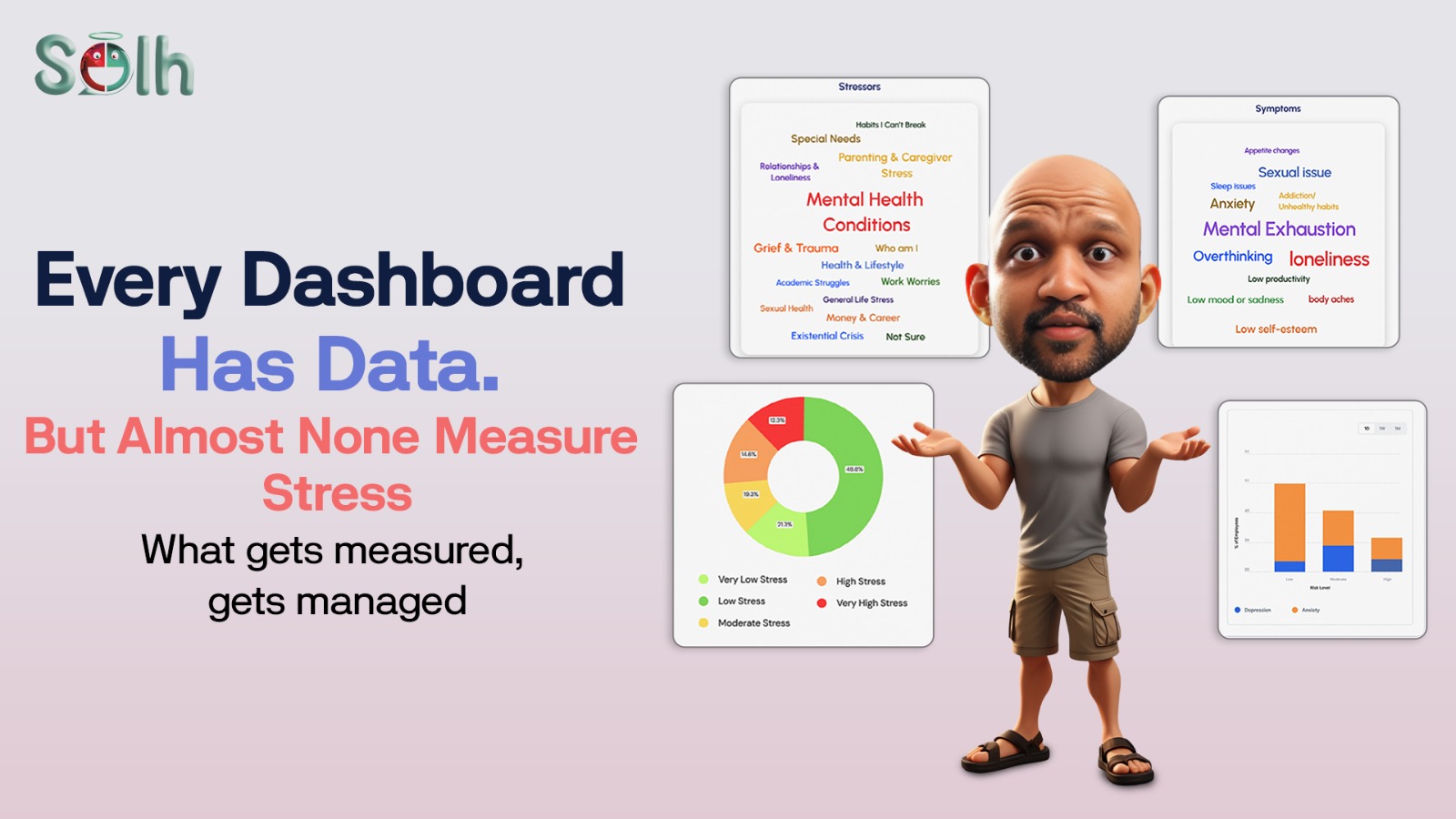
Stress at work isn’t visible on dashboards. But it’s present in tone, fatigue, and emotional flatness. This is why stress monitoring cannot be episodic. It has to be continuous, non-judgemental, and human-centred. Stress is not an event. It’s a load curve.
Observing these patterns is crucial, because it clearly shows why coping at work is dangerous for both employees and organisations.
Why leaders miss coping stress
Because leaders are trained to look for problems that interrupt performance. Coping doesn’t. It preserves performance—until it doesn’t. By the time someone says “I can’t do this anymore,” the stress system has been overloaded for months, sometimes years. At that point, recovery takes longer. Intervention becomes reactive. Trust is already strained. Early stress signals are subtle. They don’t announce themselves. That’s why Solh focuses on early stress awareness, not crisis response.
Coping vs resilience (this matters)
Let’s be clear.
Resilience includes:
- recovery
- flexibility
- self-regulation
Coping includes:
- endurance
- suppression
- tolerance
Resilience replenishes capacity. Coping consumes it.
If your stress management platform only helps people cope, you’re postponing breakdown—not preventing it.
Why “everyone is coping” should worry you
Because coping means no one is recalibrating. No one is asking:
- Is this pace sustainable?
- Is this pressure necessary?
- Is this system humane?
People adapt instead. Adaptation without reflection is how stress becomes culture.
The Solh perspective
At Solh, we don’t ask people to “handle stress better.” We ask:
- Where is stress accumulating?
- What patterns are repeating?
- What recovery is missing?
Stress management is not about calming people down. It’s about making stress visible early, safely, and without stigma. That’s why:
- Workplace stress monitoring matters
- Guided plans matter
- AI stress management tools matter
- Non-judgemental tools matter
Because coping shouldn’t be the goal. Awareness should be.
To explore how stress data becomes a measurable foundation for organisational wellbeing, see The Future of Workplace Wellbeing Lies in Measurable Stress .
Founder’s reflection
If everyone around you seems to be coping, pause. Not to congratulate the system. But to question it. Because stress rarely announces itself with chaos. More often, it shows up as calm endurance under unsustainable load. And that’s the most expensive kind.
FAQ – Stress at Work & Coping
Q1: Why is coping at work dangerous?
Coping at work hides stress while preserving output, consuming resilience, and delaying recovery. It can lead to burnout if unaddressed.
Q2: How can organisations detect hidden stress?
Continuous workplace stress monitoring, AI stress management tools, and early behavioral indicators can reveal stress patterns before breakdown occurs.
Q3: What is the difference between coping and resilience at work?
Coping consumes capacity through endurance and suppression, while resilience replenishes it through recovery, flexibility, and self-regulation.
Q4: How can leaders improve workplace mental wellness?
By tracking organizational stress management patterns, promoting recovery cycles, and implementing stress management platforms that focus on awareness rather than just coping.
Q5: What tools help employees manage work-related stress?
AI-powered stress management tools, workplace stress monitoring systems, and mental wellness platforms provide early insights, guided reflection, and sustainable support.
Q6: How does Solh Wellness help organisations address stress beyond coping?
Solh Wellness focuses on early stress awareness rather than crisis response. Through workplace stress monitoring, AI-assisted insights, and non-judgemental reflection tools, Solh helps organisations identify where stress is accumulating, understand recurring patterns, and restore capacity—so employees don’t just cope, but recover.