
Why does March feel more stressful than any other month?
Every year, around this time, I hear the same sentence.
“March is madness.”
“Year-end pressure is crazy.”
“Everyone is stressed.”
Many professionals describe this period as financial year end stress or financial year closing stress.
Let me say something that may irritate you.
March is not stressful.
Your system is overloaded.
March simply exposes it.
The financial year closing.
Target reconciliations.
Appraisal cycles.
Audit tension.
Board pressure.
Exam season.
Tax filings.
All of that is real.
But none of it is new.
So why does it suddenly feel heavier?
Because stress is not created in March.
It accumulates from April to February.
And by the time March arrives, your nervous system is running on fumes.
This is why March work pressure and financial year end stress feel overwhelming for many professionals.
What actually causes year-end stress?
It’s not the deadlines.
It’s the accumulation of unprocessed micro-stress.
Let’s break this down clearly.
Throughout the year:
You compromise on sleep.
You postpone difficult conversations.
You say yes when you should say no.
You suppress irritation.
You overextend to “just finish this quarter.”
You live in continuous low-grade urgency.
This is how chronic workplace stress quietly builds inside organisations.
None of these explode immediately. They stack. Over time, this is exactly why ignoring stress makes burnout worse for individuals and teams.
They stack.
Stress is cumulative load on the nervous system.
By March, that load has nowhere left to go.
So it leaks as:
Irritability
Mental exhaustion
Short focus span
Body aches
Headaches
Emotional reactivity
Conflict escalation
These are classic workplace burnout symptoms and early signals of mental fatigue at work.
And people say, “March is intense.”
No.
March is revealing.
Why does year-end pressure feel heavier psychologically?
Because March doesn’t just test performance.
It tests identity.
Think about it.
For professionals, March means:
“Did I hit my targets?”
“Did I grow enough?”
“Did I justify my salary?”
“Did I prove myself?”
For students, it means:
“Did I study enough?”
“Will my results define me?”
“What if I fail?”
For leaders, it means:
“Did we scale?”
“Did we retain?”
“Did we outperform competition?”
Notice the pattern.
The question isn’t about output.
It’s about worth.
And when work becomes identity, stress multiplies.
This is why financial year end stress feels personal.
Because performance evaluation activates threat perception.
The human brain is wired for survival.
And social evaluation feels like survival risk.
That’s not philosophy.
That’s biology.
What happens inside the nervous system during prolonged pressure?
When pressure is short-term, the body adapts.
When pressure is continuous, the body compensates.
When pressure is unregulated, the body collapses.
Here’s what prolonged stress does:
Cortisol remains elevated.
Sleep cycles get disrupted.
Cognitive clarity reduces.
Emotional regulation weakens.
Recovery windows shrink.
By March, many professionals are not stressed.
They are fatigued.
And fatigue looks like stress.
But it’s more dangerous.
Because fatigue reduces resilience.
This is a common pattern seen in chronic workplace stress and nervous system overload.
This is why small issues feel big in March.
A minor email feels like criticism.
A delay feels catastrophic.
A review meeting feels threatening.
Your system doesn’t have recovery bandwidth left.
Why do organisations normalise March burnout?
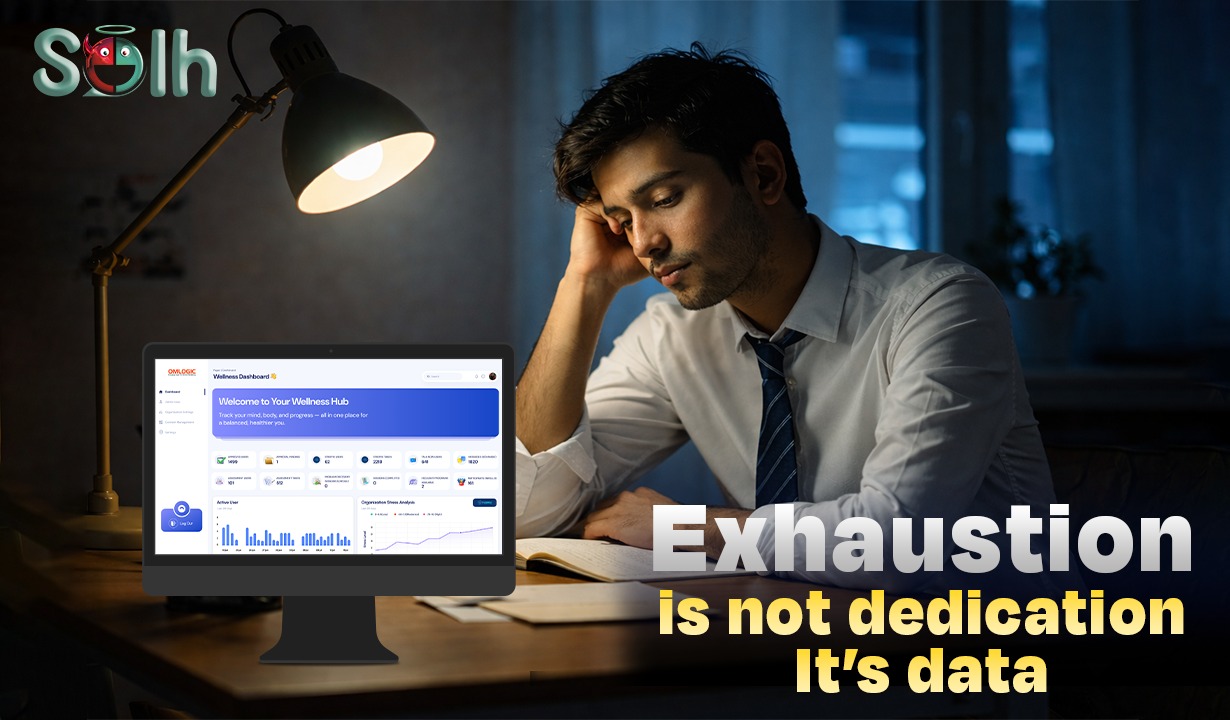
Because exhaustion is mistaken for dedication.
Let me be blunt.
We have glorified depletion.
If someone says:
“I barely slept, but I closed the deal.”
They are celebrated.
If someone says:
“I’m exhausted.”
They are seen as weak.
So teams learn something very quickly.
Hide stress.
Perform anyway.
And this culture builds silent burnout.
Which is why employee burnout prevention should be a strategic priority in organisations.
The problem?
Burnout doesn’t explode in March.
It shows up in June as resignations.
Or in July as disengagement.
Or in August as medical leave.
What leaders think is:
“Sudden attrition.”
What it actually is:
Accumulated financial year end stress and long-term workplace stress mismanagement.
How should organisations manage year-end stress intelligently?
First, stop guessing.
Stress is not invisible anymore.
You measure sales.
You measure growth.
You measure productivity.
Why are you not measuring workplace stress
Effective workplace stress management requires visibility.
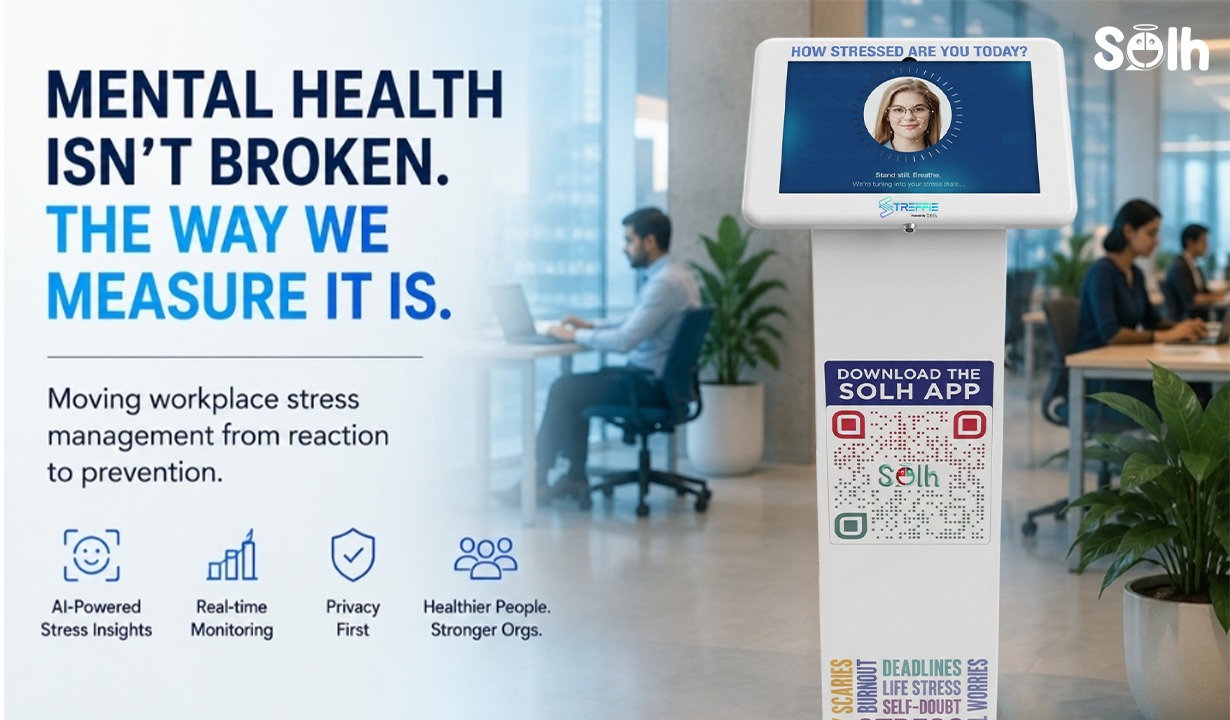
At Solh, we built Streffie Kiosk because leaders needed visibility.
In 5 seconds, teams can see their stress pattern.
Not to judge.
Not to penalise.
But to understand capacity.
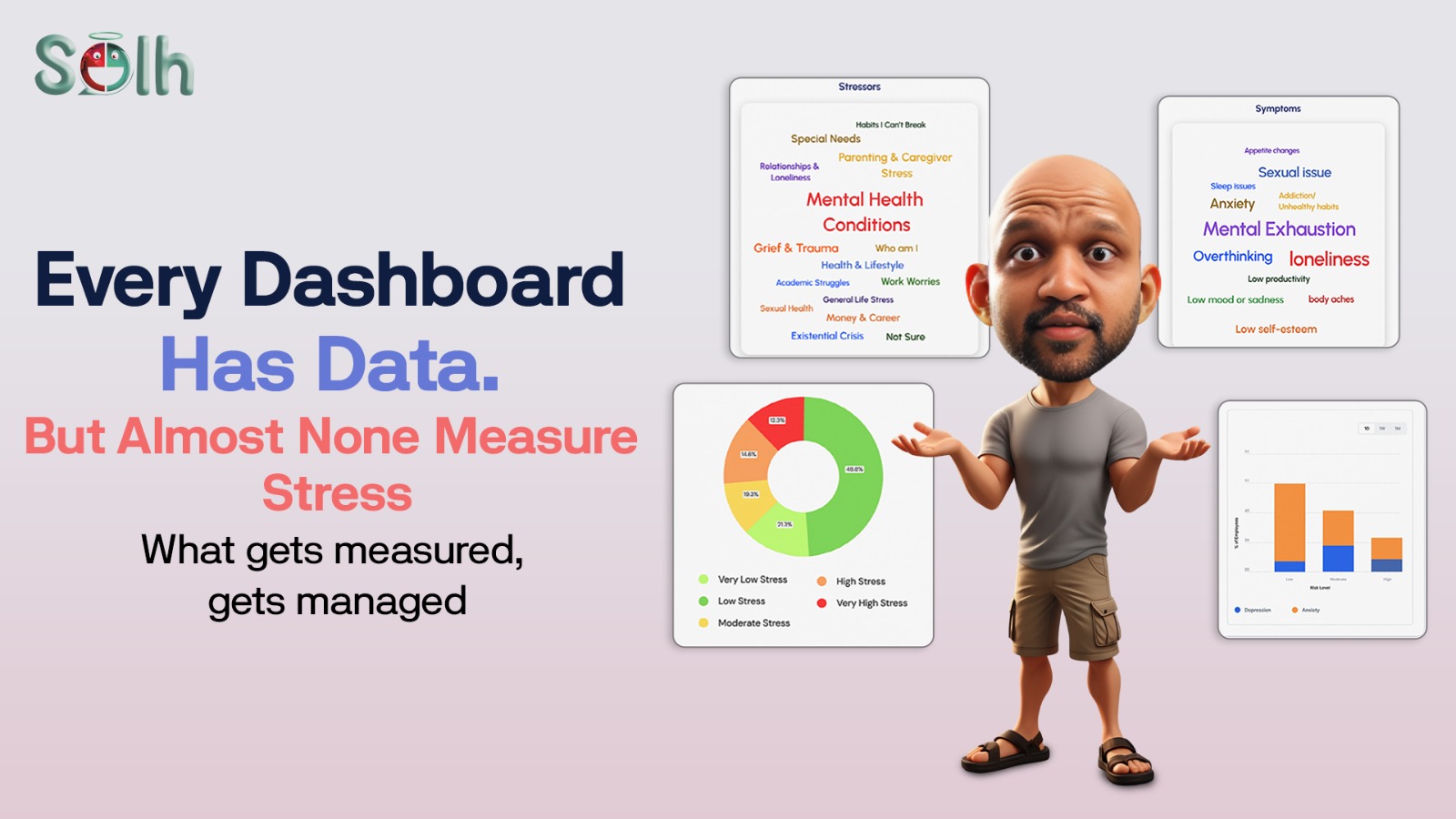
When aggregated dashboards show:
High productive stress
Productive but drained
Burnout risk patterns
Conversations change.
Leaders move from:
“Why is performance dropping?”
To:
“Where is recovery missing?”
That shift is strategic maturity.
Is stress always bad?
No.
Stress has two forms.
Productive Stress – sharp, energised, focused.
Depletion Stress – heavy, irritable, fatigued.
The problem is not stress.
The problem is sustained depletion without recovery.
March amplifies depletion.
Because there is pressure but no pause.
That is why guided recovery plans matter.
That is why structured workplace stress management ecosystems matter.
Meditation apps are not enough.
You need:
Stress measurement
Personalised guided plans
Nervous system regulation tools
Organisational dashboards
Cultural acceptance of recovery
Without structure, stress management becomes random.
And random recovery doesn’t solve systemic pressure.
What should individuals do differently in March?
Let’s keep this practical.
Three immediate shifts:
1. Protect Sleep Before Protecting Targets
Sleep is not luxury.
It is cognitive reset.
Even a 45-minute earlier wind-down improves decision clarity and reduces mental fatigue at work.
2. Reduce Micro-Decisions
Decision fatigue is invisible stress.
Pre-plan meals.
Pre-plan clothing.
Block calendar focus hours.
Remove friction where possible.
3. Insert Micro-Recovery Windows
Not vacations.
Micro-recovery.
5-minute breath reset.
Somatic muscle release.
Screen break cycles.
Short guided audio sessions.
Recovery does not require hours.
It requires consistency.
These small habits reduce financial year end stress and help prevent workplace burnout symptoms.
Why does ignoring stress hurt business outcomes?
Because stress affects:
Strategic clarity
Risk judgment
Creativity
Team trust
Conflict resolution
Retention
This is how stress affecting work performance silently impacts organisations.
A fatigued leadership team makes defensive decisions.
A regulated leadership team makes expansive decisions.
The difference shows in quarterly growth.
Stress management is not HR softness.
It is business infrastructure.
What should leaders audit before April begins?
Before celebrating revenue numbers, ask:
What was our stress trend this quarter?
Which teams showed elevated fatigue?
Are high performers quietly depleted?
Did we provide structured recovery support?
Do managers know how to discuss stress intelligently?
If you can’t answer these, growth may be masking fragility.
And financial year end stress may already be accumulating for the next cycle.
Is March the problem?
No.
March is the mirror.
If your system is regulated, March feels intense but manageable.
If your system is overloaded, March feels overwhelming.
Stress does not arrive suddenly.
It accumulates silently.
And organisations that learn to monitor employee stress patterns early, win sustainably.
Final Thought
Stress is not weakness.
It is data.
March is not chaos.
It is information.
The real question is not:
“How do we survive March?”
The real question is:
“Why did we allow 11 months of load to go unregulated?”
That’s where maturity begins.
And that’s where real performance lives.
Frequently Asked Questions (FAQs)
1. Why does financial year end stress feel higher in March?
Financial year end stress feels higher in March because the pressure accumulated throughout the year finally reaches its peak. Deadlines, audits, target reviews, tax filings, and performance evaluations converge at the same time. The stress people experience is usually not new pressure, but the result of months of accumulated workplace stress and limited recovery.
2. What are the common signs of financial year end stress in employees?
Some common signs include:
- Mental fatigue at work
- Irritability and emotional reactivity
- Difficulty focusing
- Sleep disruption
- Body aches or headaches
- Reduced patience in meetings or communication
These are often early workplace burnout symptoms that appear when employees experience sustained pressure without adequate recovery.
3. How does financial year closing stress affect workplace performance?
Prolonged financial year closing stress can reduce cognitive clarity, decision-making ability, and emotional regulation. When stress remains high for extended periods, it can lead to mental fatigue and nervous system overload, which directly impacts strategic thinking, collaboration, and productivity.
4. What are practical ways professionals can manage financial year end stress?
Professionals can reduce financial year end stress by focusing on small but consistent recovery habits:
- Prioritising sleep and recovery time
- Reducing unnecessary daily decisions
- Scheduling short micro-breaks during work hours
- Practising breathing or somatic relaxation techniques
- Maintaining realistic workload boundaries
These small shifts help regulate the nervous system and prevent chronic workplace stress from escalating.
5. How can organisations measure and manage employee stress during financial year closing?
Organisations can manage financial year end stress more effectively when they start measuring it instead of guessing. Solutions like the Solh Wellness Streffie Kiosk allow teams to quickly assess stress patterns across employees. By identifying trends such as productive stress, fatigue, or burnout risk, leaders can implement structured workplace stress management strategies and support teams before stress turns into burnout.