
Why does appraisal season create so much anxiety?
Let’s remove the corporate filter.
Appraisal season is not about salary increments.
It is about identity validation.
And identity is emotional.
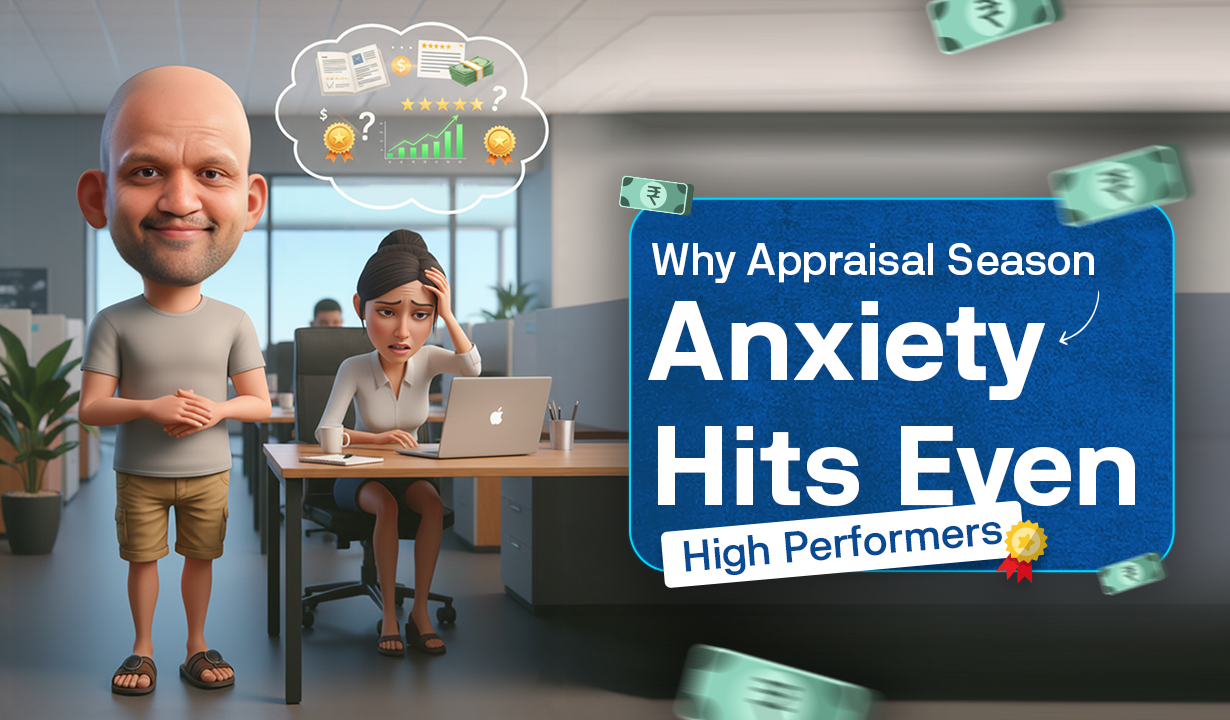
That is why appraisal anxiety hits even high performers during the employee appraisal cycle.
You can be confident.
You can be competent.
You can be respected.
And still lose sleep before a review meeting.
Why?
Because evaluation activates threat perception.
Not career threat.
Belonging threat.
Humans are wired to care about status within a group.
When that status feels uncertain, stress activates automatically.
That’s not weakness.
That’s neurobiology.
What actually happens in the brain during performance reviews?
When you know someone is about to evaluate you during an employee appraisal, your nervous system does not think:
“This is professional feedback.”
It thinks:
“Am I safe?”
Social judgment historically meant survival risk.
Rejection meant exclusion.
Exclusion meant vulnerability.
So the body prepares for threat.
Heart rate increases.
Sleep reduces.
Overthinking begins.
Conversations replay in your head.
Minor feedback feels amplified.
Even if logically you know:
“I’ve done well.”
Emotionally, your system says:
“What if I’m not enough?”
And this is the part no one admits.
Appraisal anxiety is rarely about numbers.
It’s about self-worth.
Why do high performers feel appraisal stress more intensely?
Because high performers attach identity to output.
Their self-concept is built on competence.
So when the employee appraisal season arrives, the internal question becomes:
“If my performance is average this year… who am I?”
This is dangerous territory.
Because when work becomes identity, feedback feels personal.
Not strategic.
That’s why some people become defensive.
That’s why some become hyper-pleasing.
That’s why some shut down emotionally.
It’s not attitude.
It’s self-protection.
Why does appraisal season feel heavier in March specifically?
Because it overlaps with financial year-end stress.
You’re already fatigued.
Cognitive load is high.
Sleep debt exists.
Decision fatigue is real.
Then appraisal enters the system.
When the nervous system is already overloaded, perceived threats feel bigger.
That’s why small feedback can feel overwhelming in March compared to October.
Context amplifies stress.
This is why leaders must understand timing.
Stress is cumulative.
Appraisal stress in isolation is manageable.
Appraisal stress layered on year-end fatigue is explosive, often becoming visible as workplace appraisal stress across teams.
What mistakes do organisations make during appraisal season?
Three major ones.
1. They treat it as a compensation process, not a psychological event.
Performance reviews are emotional events disguised as HR rituals.
Ignoring that reality increases anxiety and affects workplace mental health.
2. They maintain ambiguity.
Ambiguity creates more stress than bad news.
When expectations are unclear, employees imagine worst-case scenarios.
Uncertainty is fuel for overthinking.
3. They evaluate output but ignore capacity.
A team may have delivered.
But at what cost?
If output was high but depletion is severe, sustainability is compromised.
Most organisations don’t measure this, even when early signs of employee burnout begin to appear.
And that’s the flaw.
Can appraisal anxiety affect performance?
Yes. Immediately.
Stress impacts:
- Working memory
- Verbal clarity
- Emotional regulation
- Listening ability
- Confidence tone
That’s why people walk out of review meetings thinking:
“I didn’t explain myself properly.”
Or
“I sounded defensive.”
When the nervous system is activated, executive functioning reduces.
This is not a personality flaw.
It’s physiology.
And physiology influences outcomes.
How can leaders reduce appraisal season stress?
Let’s be practical.
First, clarity reduces cortisol.
The more transparent your evaluation framework is, the calmer your teams will be during employee appraisal discussions.
Explain:
- What metrics matter.
- How feedback is structured.
- What improvement pathways look like.
- How growth conversations will continue beyond the review.
Second, normalise stress discussion.
Not dramatic vulnerability sessions.
Simple acknowledgment:
“Appraisal season can feel intense. If you’re feeling pressure, let’s discuss it.”
That sentence alone reduces perceived threat.
Third, measure stress visibility before and during review cycles.
At Solh, we’ve seen something consistently.
When organisations run stress scans during appraisal month, patterns emerge.
Teams show elevated stress even when performance is strong.
That insight shifts leadership behaviour.
From:
“Why is morale low?”
To:
“Where do we need recovery support to address organisational stress?”
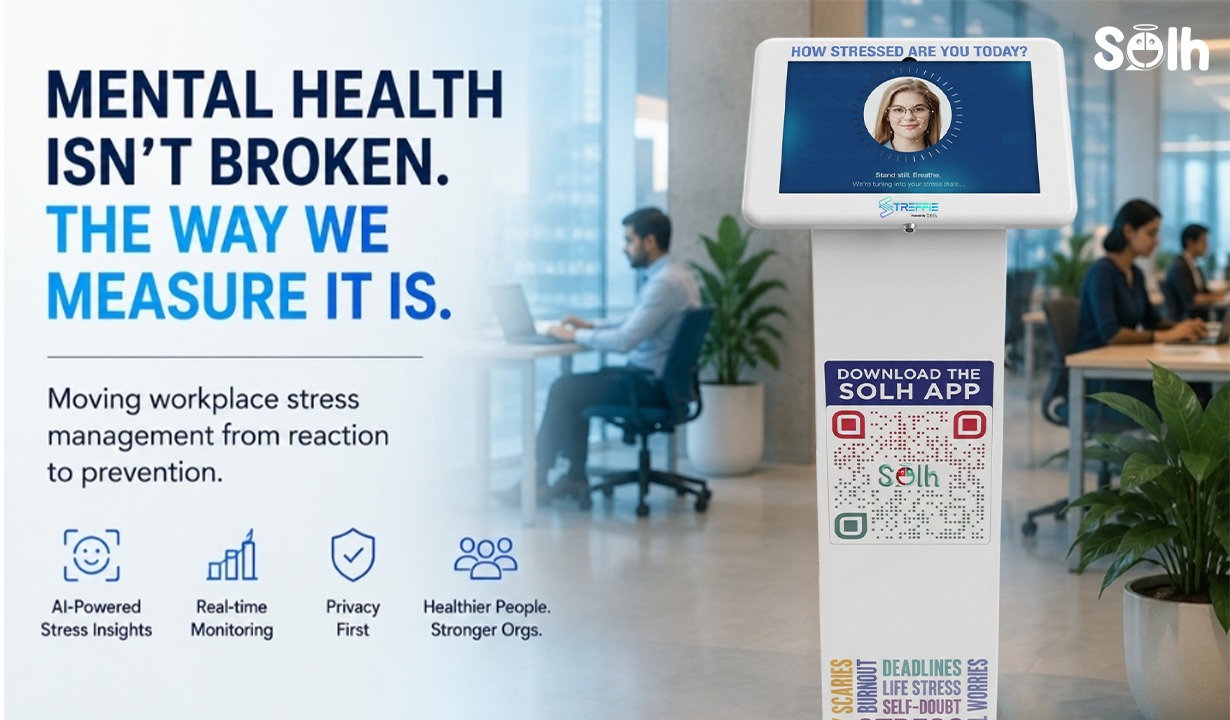
Streffie Kiosk gives real-time visibility.
Guided plans provide structured regulation.
AI-based companion support gives employees a private processing space.
Without structured systems, stress becomes silent.
Silent stress becomes disengagement.
What should employees do to handle appraisal anxiety better?
Let’s keep this grounded.
- Separate performance from identity.
Your performance is a metric.
You are not a metric.
Feedback is data.
It is not character judgment.
Repeat that until it settles.
- Regulate before review meetings.
Five minutes of breathwork.
Shoulder release.
Jaw relaxation.
Slow exhale cycles.
Nervous system regulation before evaluation improves clarity during conversation and is one of the most practical ways of how to deal with appraisal stress.
- Prepare narrative, not defense.
Instead of preparing counterarguments, prepare reflection:
- What worked?
- What didn’t?
- What did I learn?
- Where do I want to grow?
Control the tone of the dialogue.
Calm signals strength more than aggression.
Why does appraisal season sometimes damage culture?
Because poorly handled evaluations create invisible resentment.
If employees feel:
- Unheard
- Surprised
- Unclear
- Undervalued
Stress lingers beyond March.
And unresolved stress converts into:
- Quiet quitting
- Reduced initiative
- Emotional withdrawal
- Passive resistance
Most attrition decisions are not made impulsively.
They are emotionally seeded during evaluation cycles.
Leaders underestimate this.
Should stress management be part of appraisal infrastructure?
Absolutely.
Performance conversations without stress awareness are incomplete.
Because stress influences performance.
And performance influences stress.
It’s a loop.
Forward-thinking organisations now include:
Pre-appraisal stress check-ins
Post-review regulation resources
Manager training on stress-aware dialogue
Organisational stress dashboards
This is not “wellness.”
This is performance sustainability and protection of workplace mental health.
What should leaders audit before finalising appraisals?
Ask:
- Are our teams fatigued?
- Have we measured stress trends this quarter?
- Are high performers showing depletion signs or early employee burnout signals?
- Do managers know how to give feedback without activating threat?
- Are recovery tools available during this month?
If the answer is no, then appraisal season is not just an HR exercise.
It is a stress amplifier.
And unmanaged amplifiers damage culture.
Final Thought
Appraisal anxiety is not about money.
It is about meaning.
It is about belonging.
It is about worth.
And until leaders recognise that employee appraisal conversations are psychological events — not administrative tasks — stress will remain invisible.
Stress is data.
Appraisal season is information.
And organisations that learn to regulate during evaluation cycles reduce workplace appraisal stress, strengthen workplace mental health, and build stronger, more resilient teams.
Not just higher revenue.
FAQs
1. Why does appraisal season create so much stress for employees?
Appraisal season triggers uncertainty about performance, recognition, and career growth. This uncertainty often activates stress responses related to belonging and self-worth.
2. Why do high performers feel more anxious during employee appraisal discussions?
High performers often tie their identity to their work results. When evaluation happens, feedback can feel personal rather than just professional.
3. Can appraisal stress affect performance during review meetings?
Yes, stress can impact clarity, emotional regulation, and communication. This is why employees sometimes struggle to explain their achievements properly during reviews.
4. What causes workplace appraisal stress in organisations?
Lack of clarity, unclear expectations, and surprise feedback often increase anxiety. When employees don’t know how they’re being evaluated, stress levels naturally rise.
5. How can leaders reduce stress during employee appraisal cycles?
Leaders can reduce stress by providing clear evaluation frameworks and transparent feedback. Open conversations about pressure also help employees feel psychologically safe.