

Let’s stop pretending.
2025 wasn’t a year of declining productivity.
It was a year of collapsing nervous systems inside modern emotionally intelligent workplaces.
Companies kept asking,
“Why aren’t people performing?”
“Why is output dipping?”
“Why are teams disengaged?”
“Why is everyone exhausted by Thursday?”
The answer was right in front of us:
You can’t squeeze high performance out of dysregulated nervous systems.
We didn't face a skill gap, a motivation gap, or a talent gap.
We faced a capacity gap — a biological, emotional, neurological failure to function at the pace modern workplaces and corporate wellness platforms now demand.
2025 didn’t break productivity.
It exposed it.
And as we move toward 2026, organisations that ignore this truth will keep burning out their workforce while wondering why nothing is changing in their organisational stress management strategies, despite efforts at redefining stress management in modern workplaces.
Productivity Declined Because Human Systems Declined
Every company measures KPIs:
Sales, output, deadlines, efficiency.
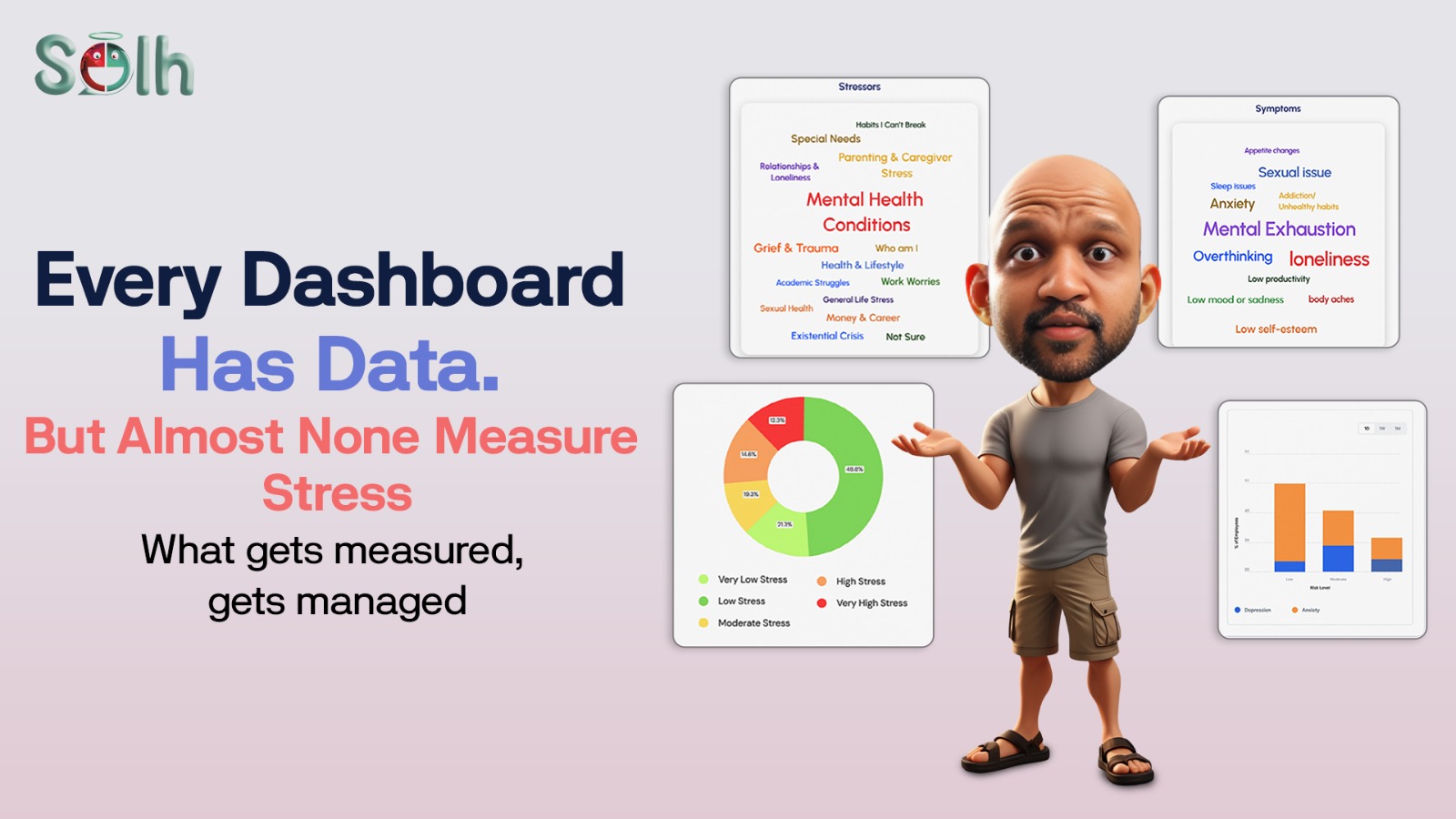
But almost none measured the thing that drives all performance: the human nervous system — the core of true organizational mental health.
You can automate workflows, optimise tools, and revamp processes — but if your people’s emotional bandwidth is fried, the entire system collapses, no matter how advanced your AI stress management tools look on paper.
In 2025 we saw:
Executives performing at 50% of their brain’s capacity
Gen Z employees emotionally fatigued before lunch
Team leads absorbing stress like sponges and breaking quietly
Managers unable to regulate their own nervous system, let alone their teams
Teams overstimulated by meetings, pings, messages, context-switching
People working hard but thinking slow
Productivity didn’t fall overnight.
It fell because human circuitry was overloaded past repair.
Stress became the silent CPU thief.
Burnout became the hidden memory leak.
This wasn’t a performance problem.
It was a physiological accumulation of unprocessed stress — something no stress management platform can fix without nervous system regulation.
Stop Blaming Motivation. Start Measuring Stress
Most leaders got the diagnosis wrong.
They said:
“People aren’t motivated.”
“People don’t want to work.”
“People lack discipline.”
“People need time management training.”
No.
People needed nervous system regulation — not another stress management program or surface-level mental health support.
Because when your:
heartbeat is elevated
breathing is shallow
cortisol is spiking
brain fog is heavy
emotional load is high
cognitive stamina is low
…you can’t think, create, collaborate, or problem-solve.
Motivation cannot override neurobiology.
Productivity cannot override physiology.
But companies keep throwing frameworks, consultants, and task-management tools at a stress-born issue, instead of investing in real AI-powered stress management apps and nervous system regulation systems.
You cannot organise your way out of burnout.
You can only regulate your way out.
The New Productivity Metric: Emotional Bandwidth
2026 will force companies to ask the real question:
“How much emotional bandwidth does our workforce actually have inside emotionally intelligent workplaces?”
Because that single variable determines:
focus
speed
clarity
decision-making
conflict resolution
creativity
leadership quality
teamwork
Stress management is not a wellness activity.
It is a performance architecture.
The companies that succeed will treat stress data the same way they treat revenue and cost — through intelligent mental wellness platforms and real-time AI-powered wellness apps, supported by AI-powered workplace wellness systems.
At Solh, we predicted this shift early.
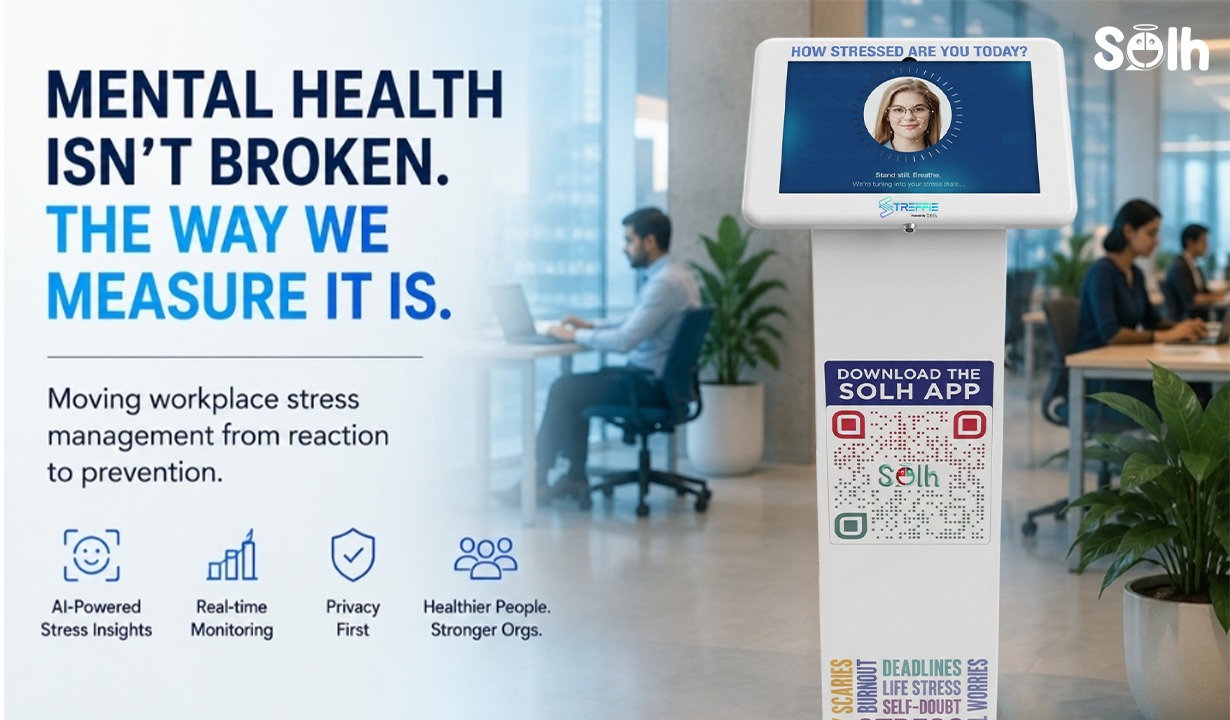
That’s why Streffie scans don’t just measure “how stressed you feel,”
they map how your nervous system is functioning across 5 scientifically designed levels.
When organisations saw these dashboards in 2025, a pattern emerged:
Teams weren’t underperforming — they were overburdened emotionally.
They weren’t slow — they were overloaded.
They weren’t disengaged — they were dysregulated.
Once emotional load became visible through real workplace stress analytics, everything made sense.
The Real Problem: Companies Still Expect Humans to Work Like Machines
Machines don’t get overwhelmed.
Humans do.
But corporate systems still operate like it’s 1998:
too many meetings
too much noise
too many interruptions
unclear boundaries
back-to-back cognitive load
zero emotional recovery time
Humans are not built for constant availability.
2025 was the year employees silently screamed:
“I need space to breathe.”
2026 must be the year companies finally listen through stronger organizational stress management frameworks.
Emotionally Intelligent Workplaces Are the Only Way Forward
So, what will solve this crisis?
Not motivation.
Not HR programs.
Not pizza Fridays.
Not “open-door policies.”
2026 requires emotionally intelligent workplaces powered by AI stress management and real-time mental health platforms that:
detect emotional overload in real-time
predict burnout before it happens
give employees personalised guided plans
regulate the nervous system through evidence-based tools
reduce cognitive load
support emotional resilience through AI
track stress patterns across teams and departments
train leaders to manage emotional climates, not tasks
This is not “well-being.”
This is operational clarity.
And this is where Solh’s stress management ecosystem — Streffie, Solh Buddy, guided plans, nervous system exercises — will become the backbone of organisational performance.
**2025 gave us the diagnosis.
2026 demands the treatment.**
Companies can no longer afford to operate with emotionally drained employees.
The future belongs to organisations that:
see stress as data
build emotional infrastructure
respect the human nervous system
prioritise regulation over endurance
measure emotional bandwidth like a business metric
integrate AI into daily stress management
build cultures where calm is power
Productivity isn’t going away.
But it will now depend on the health of the nervous system behind it.
2025 exposed the truth.
2026 will reward the companies that act on it.