
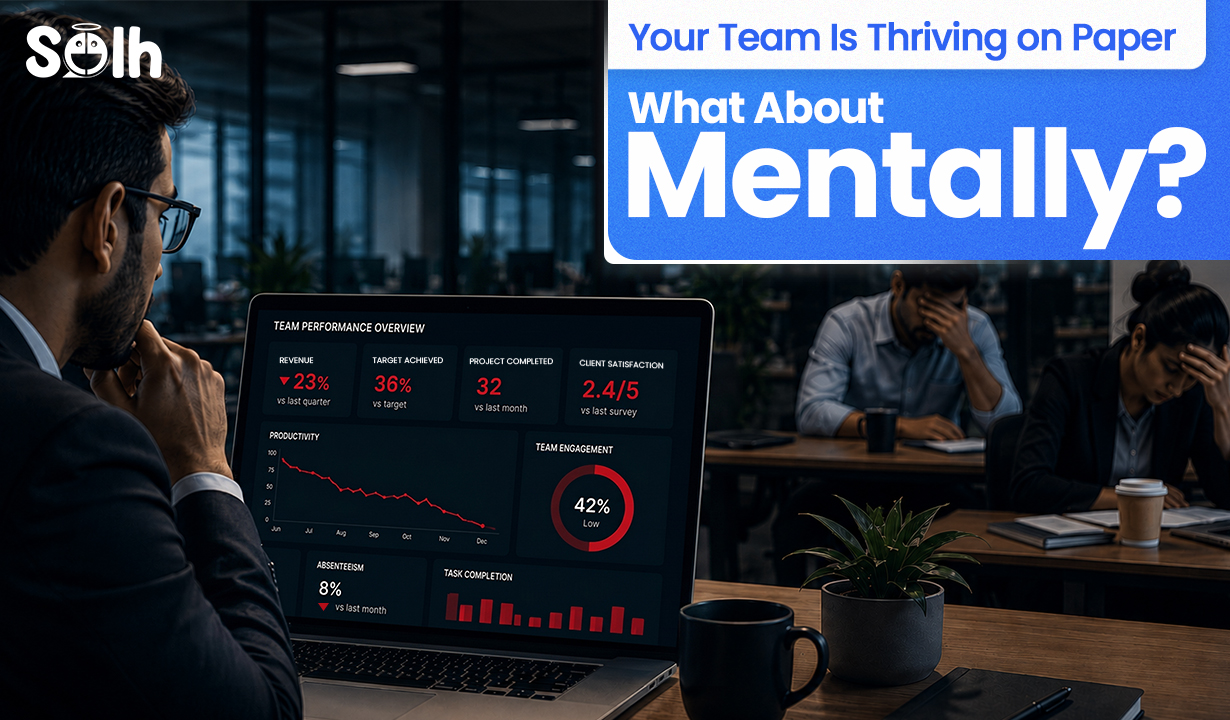
The numbers look good. Targets are being met. The engagement survey came back positive. Attrition is within acceptable range.
You could make a credible case to leadership that things are fine.
And yet.
Something doesn’t sit right. The energy in the room has changed. People are delivering, but they’re quieter. Informal conversations have dropped off. Someone who used to push back in meetings has stopped.
The team is performing. But if you're honest, everyone is running on fumes.
This is what high performing team burnout looks like in modern organisations: the metrics stay green while the people quietly deteriorate.
You’re not imagining it. And the data you’re looking at is not telling you the full story.
What Is High Performing Team Burnout?
High performing team burnout happens when teams continue delivering strong business outcomes while silently accumulating stress, emotional exhaustion, and psychological depletion that traditional performance metrics fail to detect.
Performance Metrics Measure Output. They Don't Measure Employee Burnout
This is not a philosophical distinction. It has direct, calculable consequences.
A team can sustain high output while silently accumulating a level of stress and psychological depletion that will eventually express itself.
In a wave of attrition. In a sudden drop in quality. In a key person going on extended leave at the worst possible moment. In the quiet disengagement that precedes all of those things.
The data confirms what most leaders already sense.
According to Deloitte India, 48% of Indian corporate employees are at high risk for poor mental health, while 42% of private sector employees report depression and anxiety symptoms. ADP Research also reported that employee engagement in India dropped sharply in 2025 , one of the steepest declines globally.
The World Health Organization estimates that poor mental health costs the global economy trillions annually through lost productivity, absenteeism, and presenteeism. In India alone, poor employee health costs companies an estimated ₹1.1 lakh crore every year.
These numbers exist inside organisations whose performance dashboards show no indication of a problem.
The performance dashboard and the wellbeing reality are measuring entirely different things. Most organisations are only looking at one of them.
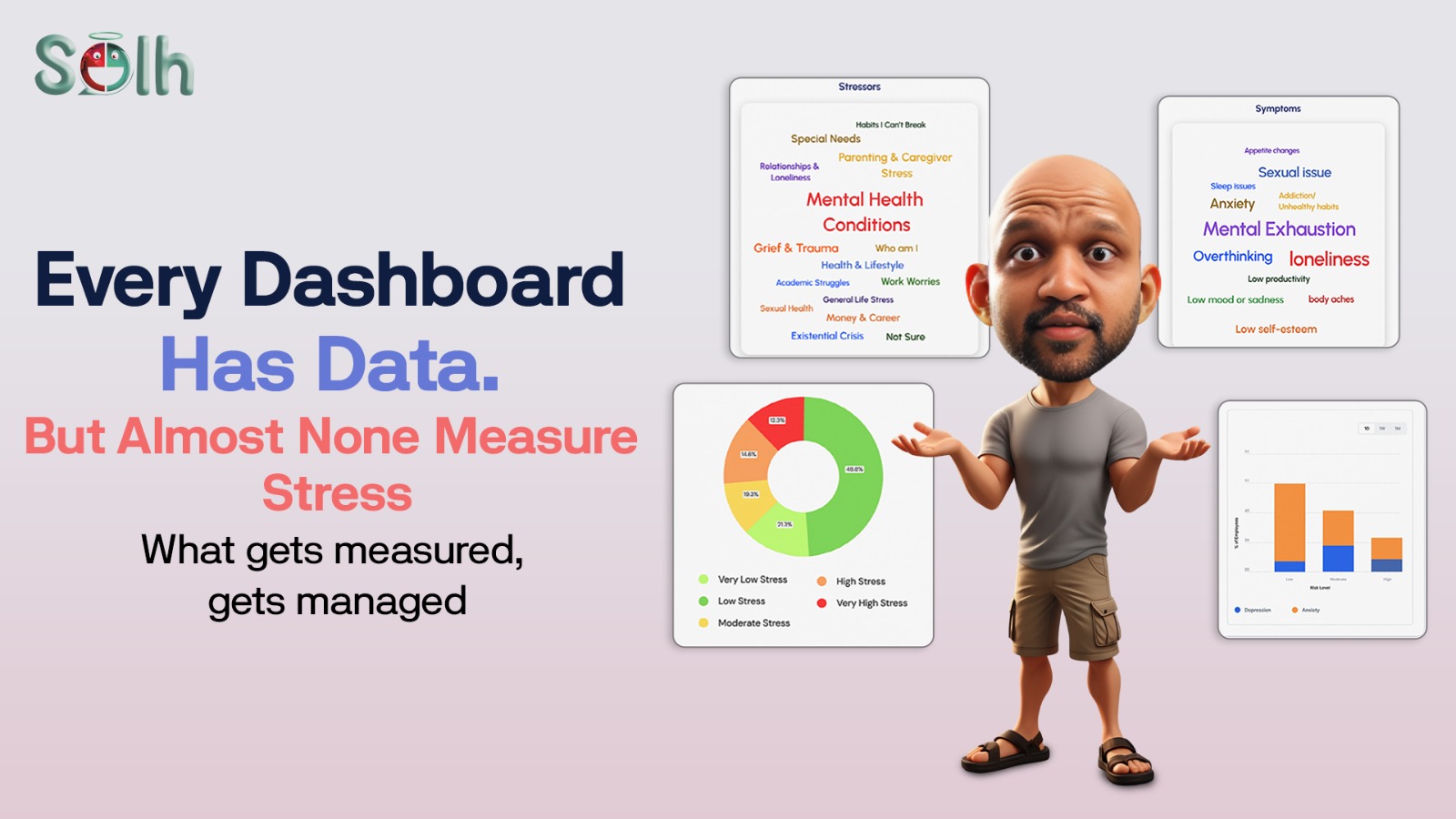
💡 The Solh SMART AI Dashboard gives HR leaders anonymised, real-time stress data across teams , so the wellbeing reality becomes as visible as the performance reality.
Why High Performing Teams Experience Hidden Burnout
Here’s the structural dynamic most organisations fail to recognise.
High performers set the pace. When pressure increases, it is usually the strongest people who absorb the additional load. They do it willingly. Because performance becomes tied to identity. Because saying “this is too much” feels like admitting weakness.
The load increases. The performance holds. The metrics stay green.
And underneath, the people carrying the most weight are operating at a deficit invisible to everyone , including themselves.
Research increasingly describes this pattern as performance punishment: the most capable employees are rewarded with more responsibility, more pressure, and less recovery until the very system that created high performance begins causing burnout.This is often how hidden burnout in high performing teams develops over time.
This is not a people problem. It is a systems problem.
The same mechanisms that make a high performing team effective , resilience, ownership, adaptability, willingness to stretch , are also the mechanisms that hide warning signs until they become impossible to ignore.
4 Hidden Signs of High Performing Team Burnout
Reduced Discretionary Effort
The team still delivers what is required.
But the creative suggestions, proactive thinking, and enthusiasm for new initiatives quietly disappear while core KPIs remain intact.
Social Withdrawal
The informal connective tissue of a healthy team starts thinning out.
People become increasingly transactional with each other. Collaboration technically continues. Connection doesn’t.
Presenteeism Over Presence
Bodies are present in meetings.
Minds are somewhere else , managing accumulated stress with no outlet.
The meeting happens. Real thinking doesn’t.
Key Person Fragility
Performance becomes increasingly dependent on a small number of people.
Each one is closer to their limit than leadership realises.
One resignation letter away from a crisis that was never reflected in any dashboard.
Why Engagement Surveys Fail to Detect Team Stress
Most organisations rely on engagement surveys to monitor team wellbeing.
Most engagement surveys are structurally inadequate for catching what they’re designed to catch.
They are infrequent. Retrospective. And they require employees to honestly self-report wellbeing concerns inside systems administered by their employer.
In a culture where professional vulnerability carries genuine risk, the gap between what employees report and what they actually experience becomes significant.
And consistent.
The survey says engagement is healthy. The team is running on fumes. Both can be true simultaneously.
According to ADP Research, India’s engagement levels fell dramatically in 2025 even while burnout indicators continued rising. High engagement scores and high stress levels are now coexisting inside the same organisations.
The survey will not tell you which one matters more right now.
The Financial Cost of Employee Burnout in India
Replacing a single mid-level employee in India can cost between 50–200% of their annual salary when recruitment, onboarding, productivity loss, and team disruption are considered.
A single wave of attrition from a burned-out high performing team can easily exceed the annual cost of comprehensive wellbeing investment.
The question is no longer whether organisations can afford to prioritise employee wellbeing.
It is whether they can afford not to.
💡 When you can see real-time anonymised stress data across teams, you stop waiting for annual surveys to reveal problems that already exist.
What Good Leadership Looks Like When Performance and Wellbeing Diverge
The leaders navigating this reality best are not the ones choosing between performance and wellbeing.
They are the ones making both visible simultaneously.
Real-time, objective data. Not annual surveys. Not gut feel.
Anonymous systems through which employees can signal distress without professional consequence.
Stress data is treated with the same seriousness as output data.Because without real-time stress measurement , organisations are operating blind.
Your team can be performing and suffering at the same time.
The responsibility of a modern organisation is to see both , not just the one that looks better on a dashboard.
How Solh SMART Dashboard Detects Hidden Burnout in Teams
Solh was built for exactly this gap between performance data and wellbeing reality.
The SMART AI Dashboard provides anonymised, real-time stress insights aggregated across teams, departments, and cohorts. No individual’s data is exposed. No employee is flagged publicly.
But the patterns become visible.
Which teams are approaching the edge. Which departments carry disproportionate emotional load. Where intervention today prevents a crisis six weeks later.
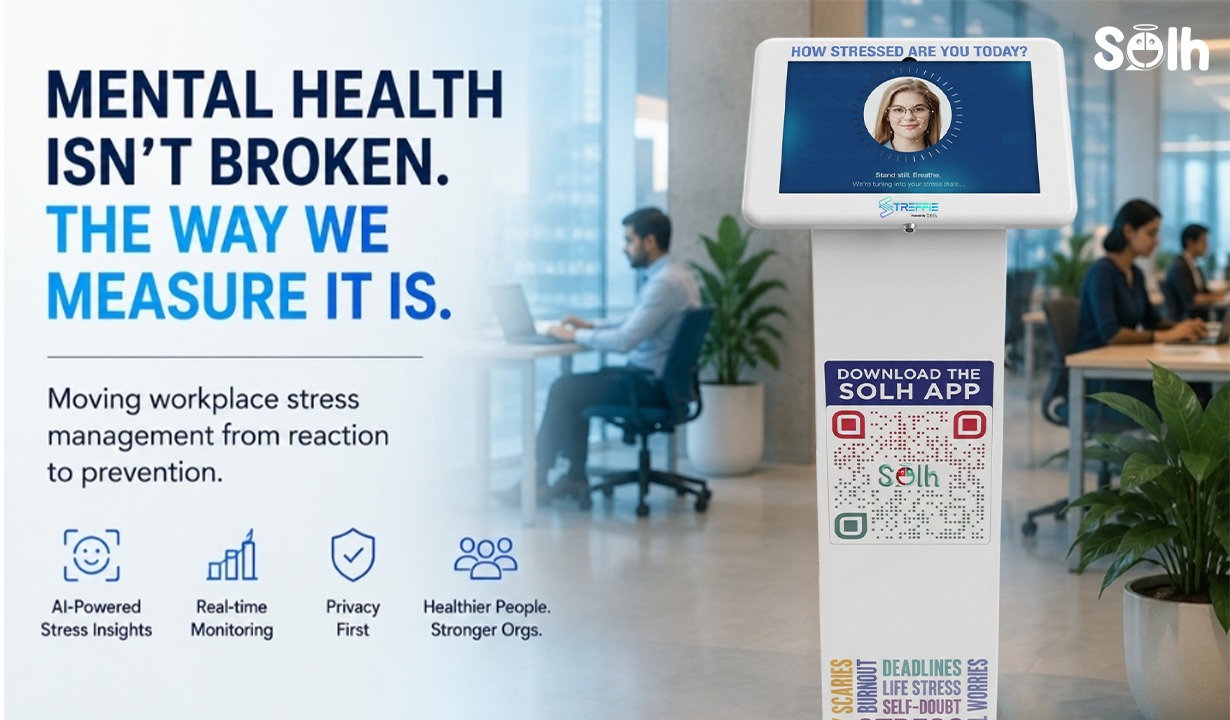
Streffie and the Solh app also provide employees with an objective stress score and a completely private pathway to support , separate from organisational hierarchy.
And when the data surfaces concern, the support infrastructure is already in place.
You already track performance in real time.
The question is: why are you still measuring employee distress once a year?
📲 Book a Solh enterprise demo and see what your team’s stress data actually shows.
Your performance dashboard is telling you one story.
Your people may be living another.
It’s time to see both.
Frequently Asked Questions
Can high performing employees hide burnout?
Yes , and this is precisely what makes high performing team burnout dangerous. Strong employees often absorb additional workload first, maintaining output while silently accumulating emotional exhaustion and psychological depletion. Warning signs usually appear in behaviour before productivity metrics decline.
Why do engagement surveys miss employee stress?
Engagement surveys are infrequent, retrospective, and dependent on honest self-reporting within employer-controlled systems. Many employees underreport stress due to fear of professional consequences, making surveys unreliable for detecting hidden burnout.
What are the signs of hidden burnout at work?
Common signs include reduced discretionary effort, social withdrawal, presenteeism, emotional fatigue, increased dependency on key individuals, and declining collaboration despite stable performance metrics.
How does Solh Wellness help organisations detect hidden burnout?
Solh Wellness helps organisations identify hidden burnout and rising workplace stress before they become attrition, disengagement, or performance crises. The Solh SMART AI Dashboard provides anonymised, real-time stress insights across teams and departments, allowing HR leaders to see employee wellbeing trends alongside performance metrics. Employees also receive private access to stress assessments, emotional support tools, and guided care pathways , without exposing individual data to managers or leadership.
Let’s Connect!