
For decades, we built our work culture on one fragile assumption — that motivation can override biology.
We believed that if people “really wanted it,” they would power through deadlines, pressure, burnout, and emotional collapse.
We romanticised grit, discipline, and hustle.
We glorified the “high performer” who could consistently work beyond capacity.
But 2025 shattered that illusion.
Employees weren’t breaking because they lacked motivation.
They were breaking because their nervous systems were out of regulation — a reality now shaping the future of workplace performance 2026.
The truth is simple:
You cannot outperform a dysregulated body.
You cannot out-hustle a fried nervous system.
You cannot out-motivate emotional overload caused by chronic stress at work.
And this is where 2026 makes its boldest shift yet:
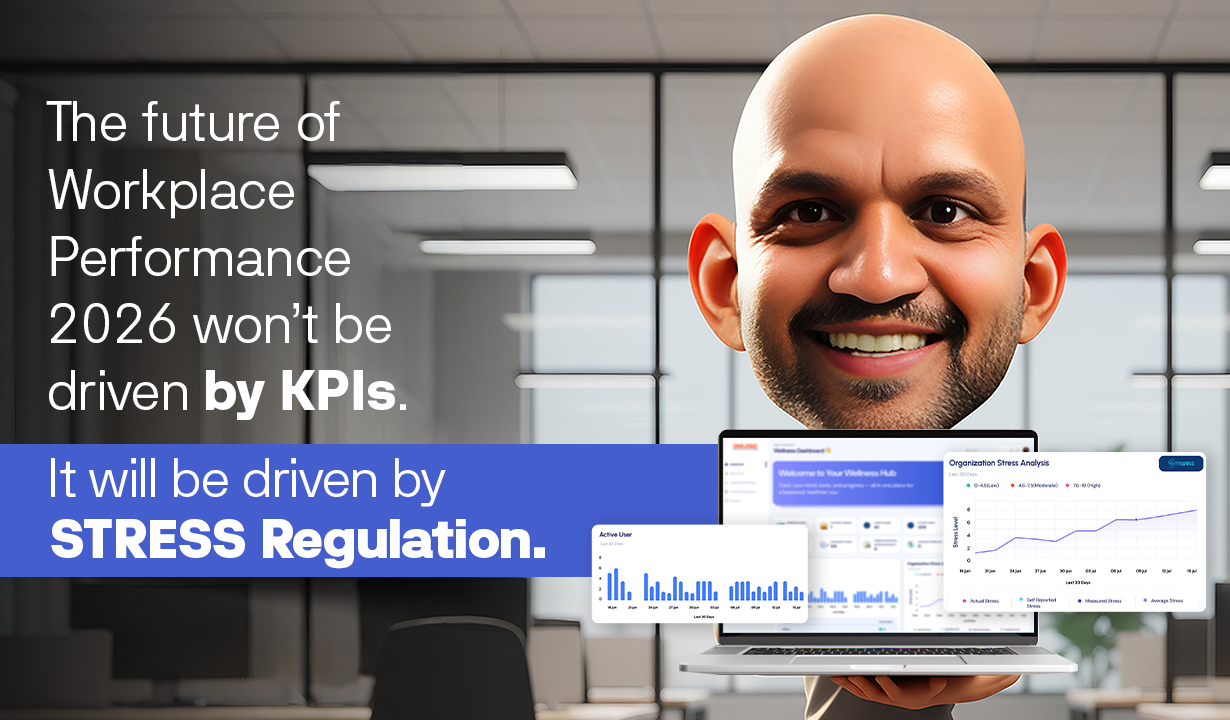
The new equation of performance = REGULATION > MOTIVATION.
Why Motivation Is No Longer the Engine of High Performance
- Motivation was designed for the old world — a world with:
- predictable work cycles
- linear expectations
- fewer distractions
- slower contexts
- reasonable sensory load
But today’s work world is none of that.
It is chaotic, fast, cognitively heavy, emotionally demanding, and always “on.”
This new reality has transformed workplace stress management from a soft skill into a survival requirement.
Modern work hijacks your nervous system at a biological level:
📌 constant notifications
📌 rapid context switching
📌 emotionally dense conversations
📌 digital overload
📌 decision fatigue
📌 comparison culture
📌 impossible speed expectations
This is not a motivation problem.
This is a neurochemical crisis driven by unmanaged work related stress.
You can be deeply motivated and still fail to perform because your brain cannot generate focus, your body cannot down-regulate, and your emotions cannot stabilise — the core challenge behind modern organizational stress management.
That’s why in 2026, the question won’t be:
“How motivated is the team?”
It will be:
“How regulated is the team?”
Regulation: The New Currency of Thriving
Regulation means your nervous system can:
- calm itself
- restore focus
- manage emotional responses
- shift out of survival mode
- create cognitive clarity
- access creativity
- handle complexity
- sustain output without collapsing
This is nervous system regulation at work, and it is the biological foundation of sustainable performance.
Regulation is not optional.
It is the prerequisite for sustainable employee performance.
And this is why companies are failing — not because people don’t want to work, but because people cannot regulate.
The human system is exhausted.
And motivation cannot revive a system that has no energy left.
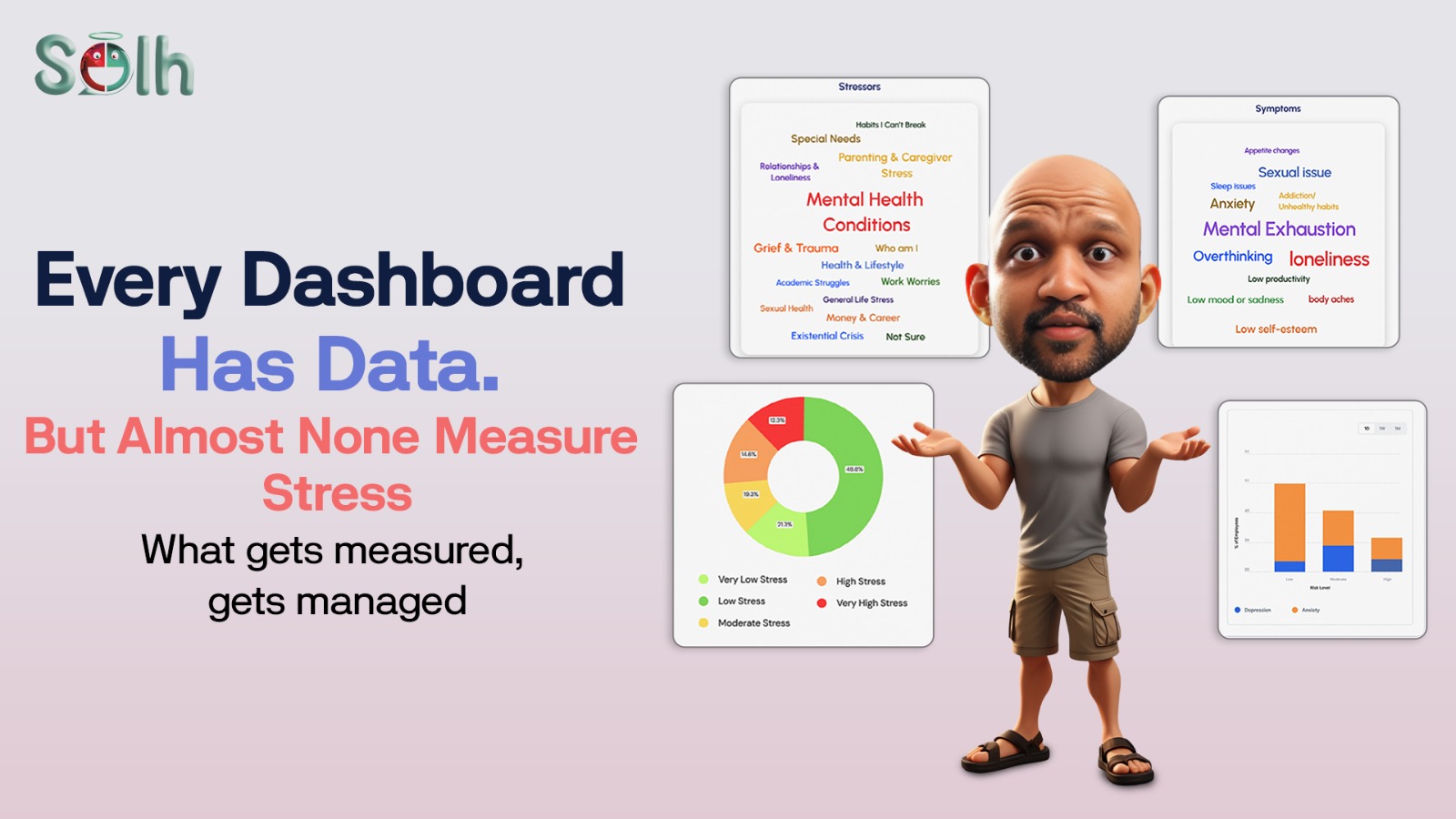
800 Seminars on Motivation. Zero Tools for Regulation.
Let’s be honest.
Organisations will spend lakhs on:
- motivational speakers
- leadership pep talks
- culture offsites
- goal-setting sessions
But they will ignore the actual problem — their employees’ nervous systems are shutting down, despite rising investments in organizational mental health.
We never trained people to regulate stress.
We trained them to hide it.
We taught them:
“Stay positive.”
“Be resilient.”
“Push harder.”
“Don’t complain.”
“Control your emotions.”
But we didn’t teach them:
- how to lower cortisol
- how to stabilise breath
- how to break emotional loops
- how to manage sensory overload
- how to offload mental pressure
- how to restore bandwidth
These are the missing foundations of real stress management for employees.
2026 will not reward the most positive teams.
It will reward the most regulated ones.
The Future of Workplace Performance Is Nervous-System First
2026 will force organisations to redesign performance from the inside out.
This shift defines the future of workplace performance 2026.
The five pillars of the new performance model:
1. Stress Visibility → Show me the data
You cannot regulate what you cannot measure.
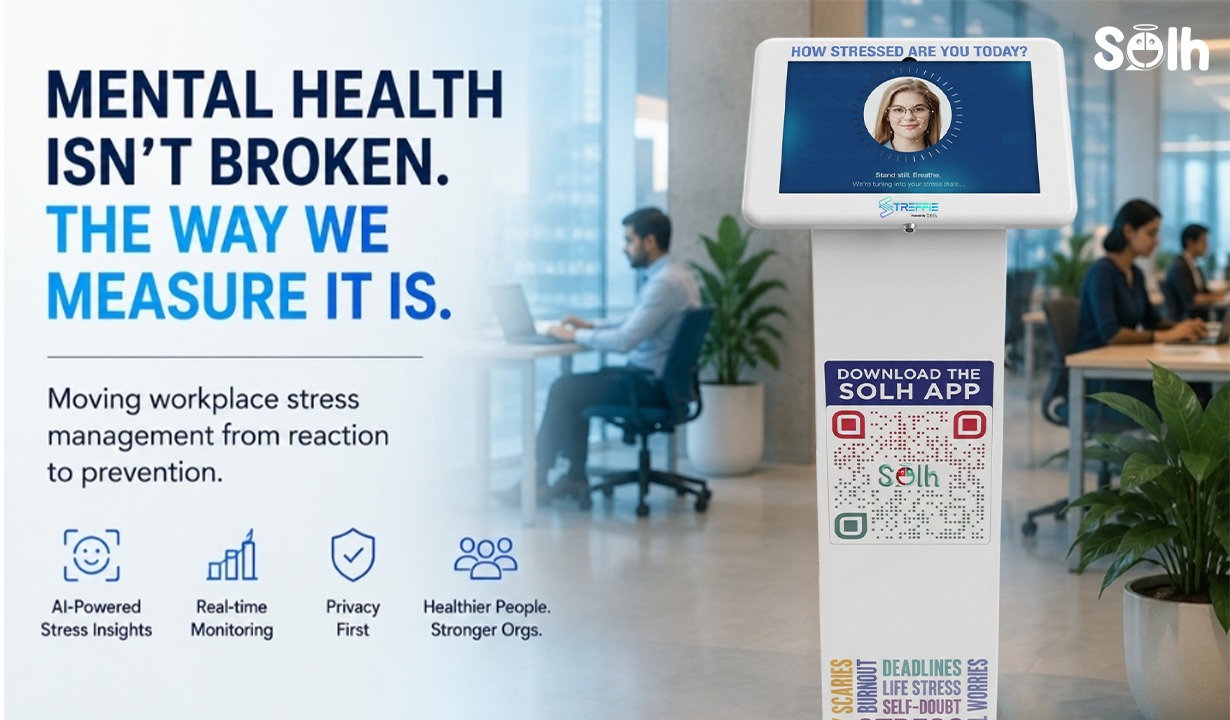
Streffie scans are becoming the new baseline metric of team health — replacing guesswork with stress intelligence™ and powering the next Stress Management Ecosystem, grounded in stress visibility.
2. Micro-Recovery → Daily nervous system resets
Regulation must happen in 3–7 minute windows throughout the day — not during a weekend retreat.
This is modern managing workplace stress, not avoidance.
3. Emotional Bandwidth Management → Protect the brain
Reducing unnecessary meetings, interruptions, and digital pressure is now central to workplace stress management.
4. AI-Assisted Regulation → Solh Buddy as the emotional co-pilot
A human can forget to breathe.
A machine won’t.
AI-powered wellness apps and personalized stress management app solutions are becoming core infrastructure for mental health support at work, aligning directly with the future of workplace performance 2026.
5. Regulation Literacy → Teach people how their body works
Stress is not a mindset.
It’s a physiological event.
This is biology-first performance, not motivational theatre.
Motivation Is a Spark. Regulation Is the Infrastructure.
Motivation helps you start.
Regulation helps you stay.
Motivation gives energy.
Regulation saves energy.
Motivation pushes you.
Regulation supports you.
Motivation is inspiration.
Regulation is intelligence.
Organisations that fail to make this shift will continue dragging an exhausted workforce from quarter to quarter, despite investing in corporate wellness platform tools that lack regulation depth.
The 2026 Workplace Will Be Built on One Truth
A regulated employee is a high-performing employee.
Not the one who hustles.
Not the one who sacrifices.
Not the one who burns evenings and weekends.
But the employee who understands their nervous system and uses the right tools — from stress management platforms to Stress Management Solutions for Organizations — at the right time.
2026 is not the year of ambition.
It is the year of regulated ambition.
And the companies that understand this will define the future of workplace wellbeing — and become the companies that thrive.