
Quick Summary
The Impact of Screen Time on Productivity is now one of the biggest hidden threats inside organisations.
Digital fatigue at work, sleep disruption, and screen overload are creating a cycle of burnout, cognitive decline, and emotional exhaustion — quietly destroying organisational mental health and employee wellbeing.
This blog breaks down the triangle and shows how Solh’s Stress Management Ecosystem identifies, measures, and repairs the damage, making it a comprehensive corporate wellness platform.
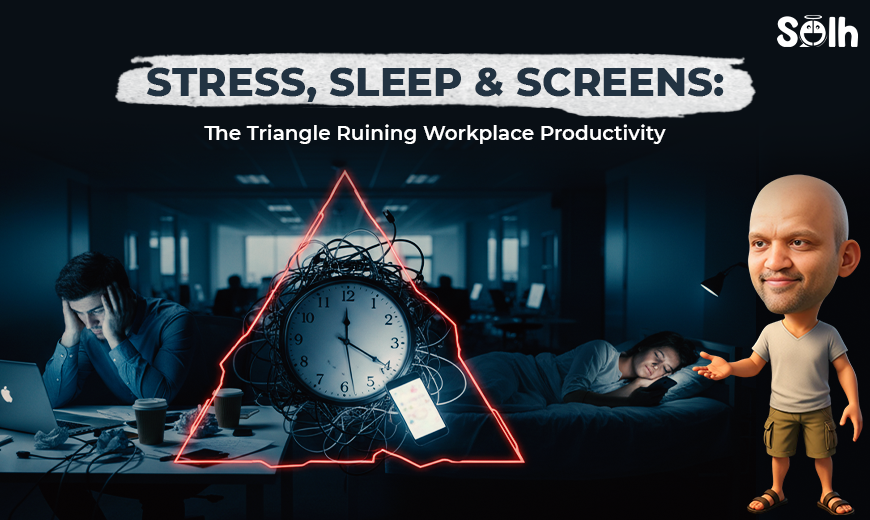
The Triangle Destroying Modern Work: Stress → Screens → No Sleep
People aren’t waking up tired because they’re lazy.
They’re waking up tired because they’ve spent the night fighting:
stress, screens, and broken sleep.
And this loop follows them into work, where it translates into:
slower thinking
scattering attention
irritability
mental fog
tech-induced workplace stress
emotional shutdown
This is the real Impact of Screen Time on Productivity.
No organisation can ignore it anymore, especially when work related stress is amplified by poor sleep and endless screen exposure.
Digital Fatigue at Work: The New Corporate Burnout
Screens were supposed to make work easier.
Instead, they’ve made the mind chaotic.
The core triggers of digital fatigue at work today:
nonstop notifications
dopamine crashes
digital overload
endless meetings
blue light and stress
digital distraction at work
tech-induced workplace stress
People aren’t distracted because they lack discipline —
they’re distracted because their neurological bandwidth has collapsed.
Blue Light, Broken Sleep & the Collapse of Cognitive Performance
If productivity is crashing, sleep is the first place to look.
Screens:
delay melatonin
confuse your circadian rhythm
destroy REM cycles
trigger emotional reactivity
By morning, your brain is not rested — it’s chemically stressed.
Which directly affects:
focus and attention at workplace
cognitive performance at work
emotional regulation
problem-solving
memory retention
Sleep deprivation at workplace creates a workforce that is physically present and mentally absent. Learn more about the impact of screens on sleep and why it matters for productivity.
The Productivity Crash No One Wants to Admit
Here’s the truth:
Employees aren’t underperforming.
Their brains are over-stimulated, overloaded, and under-recovered.
The biggest productivity decline factors today are:
excessive screen time effects
mental fatigue
emotional dullness
lack of deep work windows
constant task-switching
stress at work stacking daily
This becomes visible as classic workplace burnout signs:
silence, withdrawal, irritability, mistakes, and apathy.
But the real cause sits inside the nervous system.
How Solh Breaks the Stress–Sleep–Screens Cycle
Solh doesn’t try to eliminate screens —
it builds a system that helps the mind survive them.
The Solh Stress Management Ecosystem, as a corporate wellness platform, addresses the problem at every layer:
measurement → recovery → structure → insight → emotional support.
Streffie → Shows the Stress Screens Leave Behind
Streffie is the starting point.
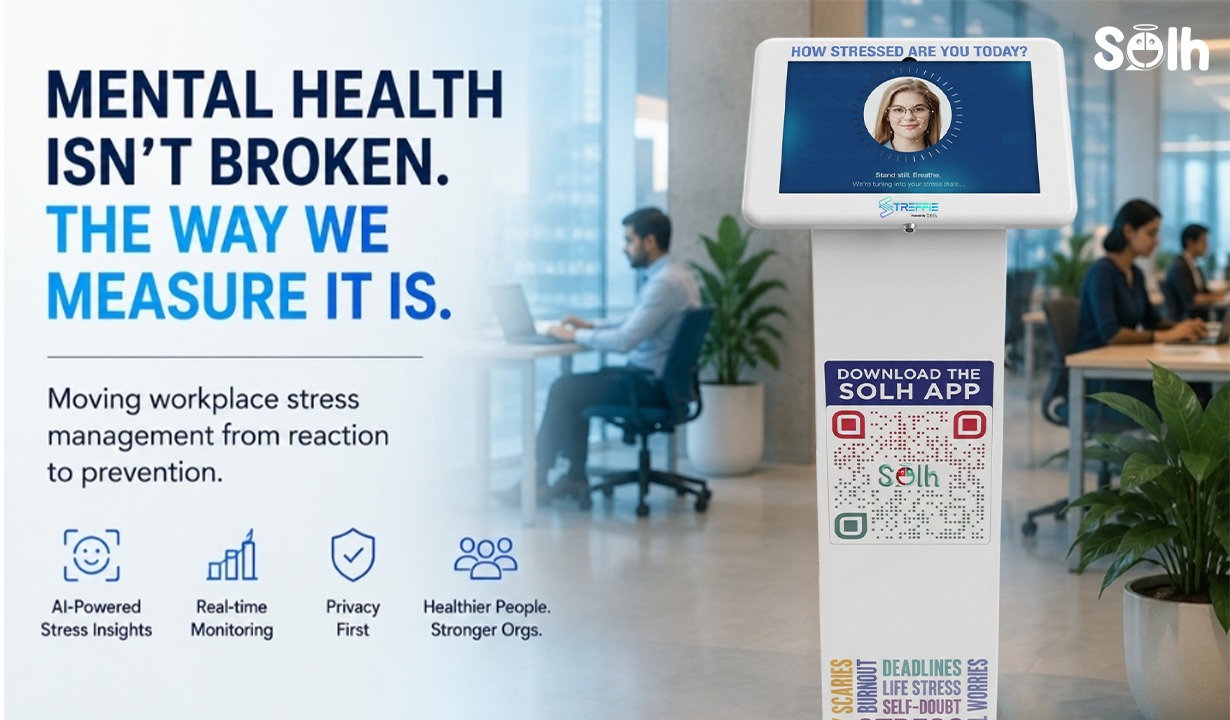
It measures stress objectively by analyzing 68 facial points, detecting:
digital overload
emotional fatigue
blue-light–driven stress
tech-induced workplace stress
early burnout signals
This turns invisible overwhelm into visible data —
the foundation of real Workplace Stress Management.
You cannot fix work related stress unless you measure it first.
Solh App → The Recovery Engine for Screen-Broken Minds
After Streffie reveals the stress pattern, the Solh App helps repair it.
Its strength lies in the 1,000+ stress management resource library, offering:
grounding tools for overload
emotional reset practices
focus rebuilders
sleep-regulation resources
anxiety-calming micro-routines
This makes the Solh App a truly personalized stress management app —
a lifeline for anyone drowning in digital noise.
Guided Plans (7–14–21 Days) → Structured Stress Management Strategies
No employee overwhelmed by screens can design their own recovery.
Guided Plans give:
daily structure
stepwise behavioural reset
emotional recalibration
nervous-system recovery
They transform stress management for employees from random effort into consistent progress.
Smart AI Dashboard → Stress Intelligence for Leaders
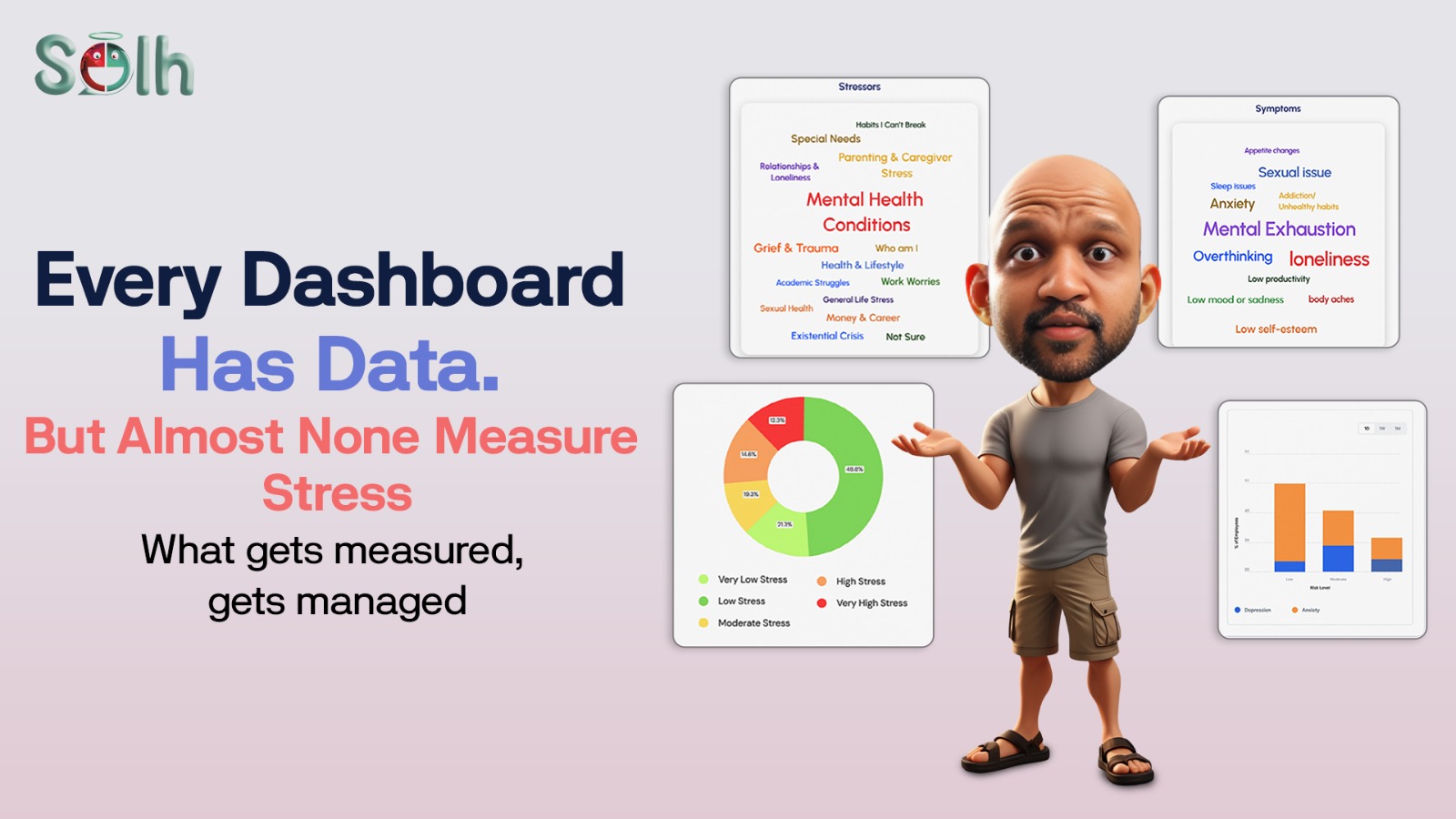
The Dashboard converts emotional overload into organisational intelligence.
Leaders see:
fatigue hotspots
burnout patterns
digital overload spikes
organisational mental health trends
cognitive performance dips
This is Stress Management Solutions for Organizations powered by real insight, not assumptions.
It reveals where managing work related stress is failing —
and where leaders need to intervene.
Solh Buddy → Emotional Support in a Digital World
Screens overstimulate the mind.
Solh Buddy brings it back to earth.
A human-supervised AI companion that helps:
regulate micro-stress
decompress during work
manage digital overload
steady emotional turbulence
It keeps employees emotionally anchored between meetings, deadlines, and notifications.
The Modern Workplace Has a Simple Choice
Ignore the triangle of stress, sleep, and screens
and watch productivity continue to collapse.
Or take responsibility for organisational mental health
and build a Stress Management Ecosystem that protects the human brain.
The Impact of Screen Time on Productivity is no longer theoretical.
It’s measurable.
It’s visible.
It’s solvable — but only if organisations choose to see it.
The Core Insight
Screens will not get fewer.
Notifications will not slow down.
The world will not become quieter.
But your stress, sleep, and mental bandwidth can be protected
if the systems around you evolve.
You don’t fix productivity by pushing people harder.
You fix it by giving their mind space to recover.
FAQs
Q1. What is the real Impact of Screen Time on Productivity?
It slows thinking, weakens memory, destroys focus, triggers stress, and kills creativity — all caused by chronic digital overload.
Q2. How does digital fatigue affect organisational mental health?
It accelerates burnout, sleep disruption, irritability, emotional withdrawal, and long-term cognitive decline.
Q3. Can Solh help employees manage digital fatigue?
Yes. Solh’s 1,000+ resource library, Guided Plans, and Solh Buddy are designed for rebuilding emotional and cognitive resilience.
Q4. How does Streffie support Workplace Stress Management?
By measuring stress at work through 68 facial points, giving organisations the earliest possible warning before burnout becomes visible.
Q5. What makes Solh a powerful Stress Management Solution for Organizations?
It doesn’t offer inspiration; it offers intelligence — measurement, recovery, structure, insights, and real-time emotional support.