
Let’s stop pretending.
Motivational mails and brochures don’t fix burnout.
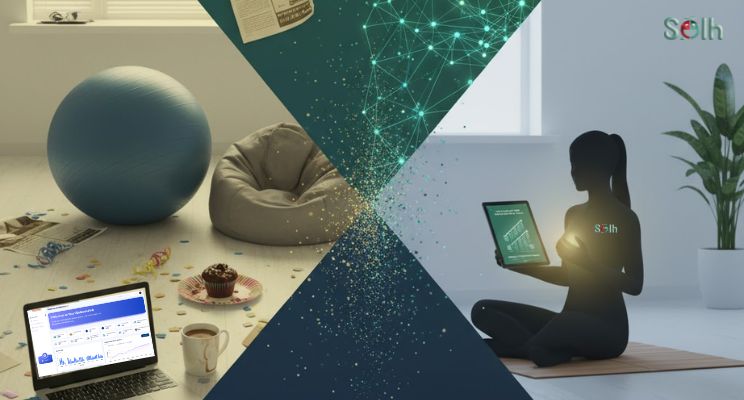
Neither do yoga mats, bean bags, or one-hour “wellness webinars.”
They’re distractions — glossy band-aids on a bleeding system.
And deep down, everyone knows it.
The truth is, your people aren’t tired because they need a break.
They’re tired because the system they work in is broken.
And no, another “fun Friday” won’t fix that.
The Lie of Corporate Wellness
Every company loves to say it cares about “employee well-being.”
But what they really care about is optics.
They’ll host a mindfulness session after a bad quarter.
Send a motivational mailer after a resignation spree.
Order cupcakes after a team burnout.
And then go back to worshipping the same demon — stress.
Here’s the thing:
You can’t sugarcoat exhaustion.
You can’t detox a nervous system with free lunch coupons.
Stress isn’t a vibe. It’s a virus.
And it feeds on your randomness.
Stress Has a System. So Should Recovery.
Stress isn’t chaos — it’s precision.
It knows your weak spots, your triggers, your timelines.
It creeps in quietly, builds patterns, and becomes your default mode.
It’s biological. It’s behavioral. It’s structured.
So why the hell is your wellness plan still random?
At Solh, we decided to flip the script with AI stress management — using data, structure, and behavior-driven insights to rebuild people from the inside out.
No glitter. No fluff. No vague “self-care tips.”
Just structure.
Real, level-wise, measurable Guided Plans that actually work.
What Guided Plans Really Are
Guided Plans aren’t your typical “7-day challenge” nonsense.
They’re personalized, level-wise stress management journeys built after decoding what’s actually screwing you up — your stressors, symptoms, habits, and emotional patterns.
Because every person’s stress is different — and so is the way out.
Some people overthink until 3 a.m.
Some feel numb.
Some snap at everything.
Some can’t feel anything at all.
You can’t throw the same “breathing exercise” at all of them and call it wellness.
That’s lazy. That’s ignorant.
At Solh, Guided Plans are customized after your stress map is decoded through Streffie, Solh Buddy, and AI inputs — the foundation of our AI stress management ecosystem.
Then comes the real part — your structured 7, 14, or 21-day plan.
Each day, you get micro-actions, reflections, nervous system resets, and tools — all curated from Solh’s 1,000+ resource library.
Every step is deliberate.
Every task is connected.
Every plan is designed to take you from survival to awareness to resilience.
That’s not therapy. That’s training.
Why Random Wellness Always Fails
Because randomness never changes behavior.
A yoga session gives temporary relief.
A Friday pizza gives dopamine for two hours.
A motivational speaker gives goosebumps for a day.
And then? Stress is back. Stronger. Smarter. Quieter.
We’ve glamorized comfort and ignored structure.
We celebrate “chill” but forget that calm has to be built — especially when it comes to managing workplace stress .
You can’t Netflix your way out of burnout.
You can’t meme your way out of anxiety.
You can’t eat your way out of emptiness.
You need system.
You need repetition.
You need accountability.
That’s what Guided Plans bring — discipline disguised as recovery, powered by AI stress management that tracks patterns, behaviors, and progress over time.
The Solh Way: Turning Awareness Into Architecture
At Solh, we don’t chase positivity.
We build systems that don’t collapse when life gets ugly — because workplace stress management needs architecture, not motivation.
Here’s how the system works:
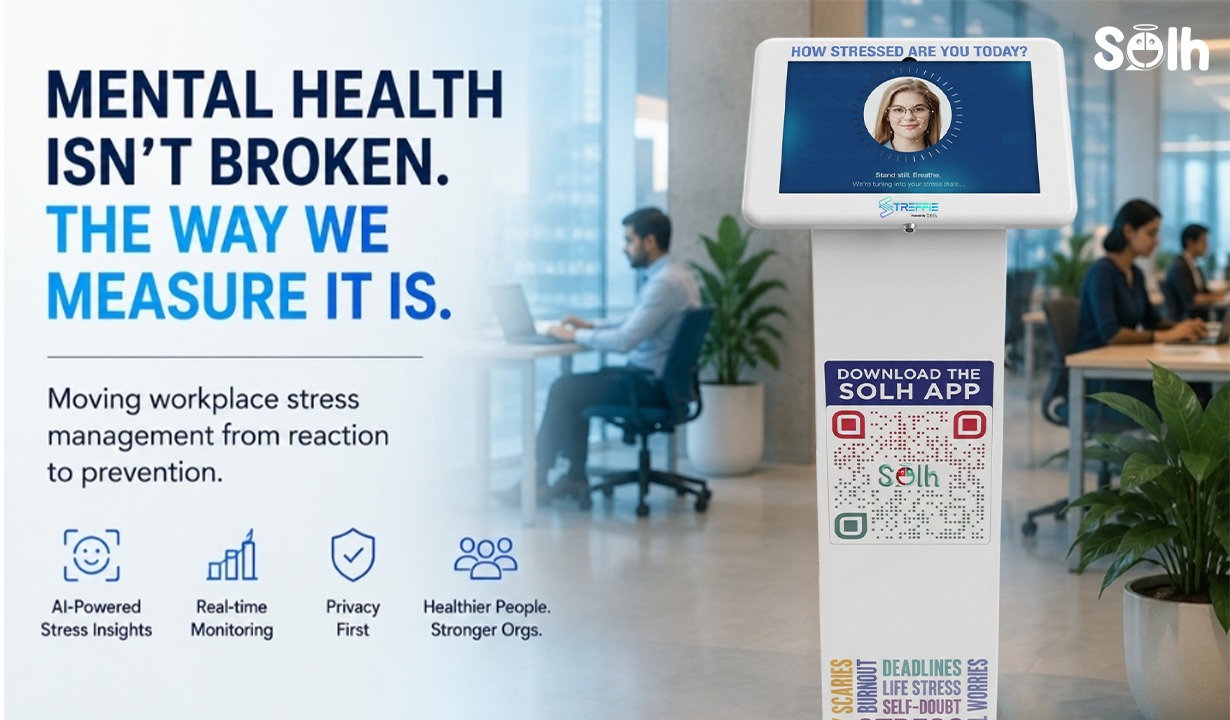
Streffie – The Stress Scanner: Reads stress in seconds. No filters. No lies. Just data.
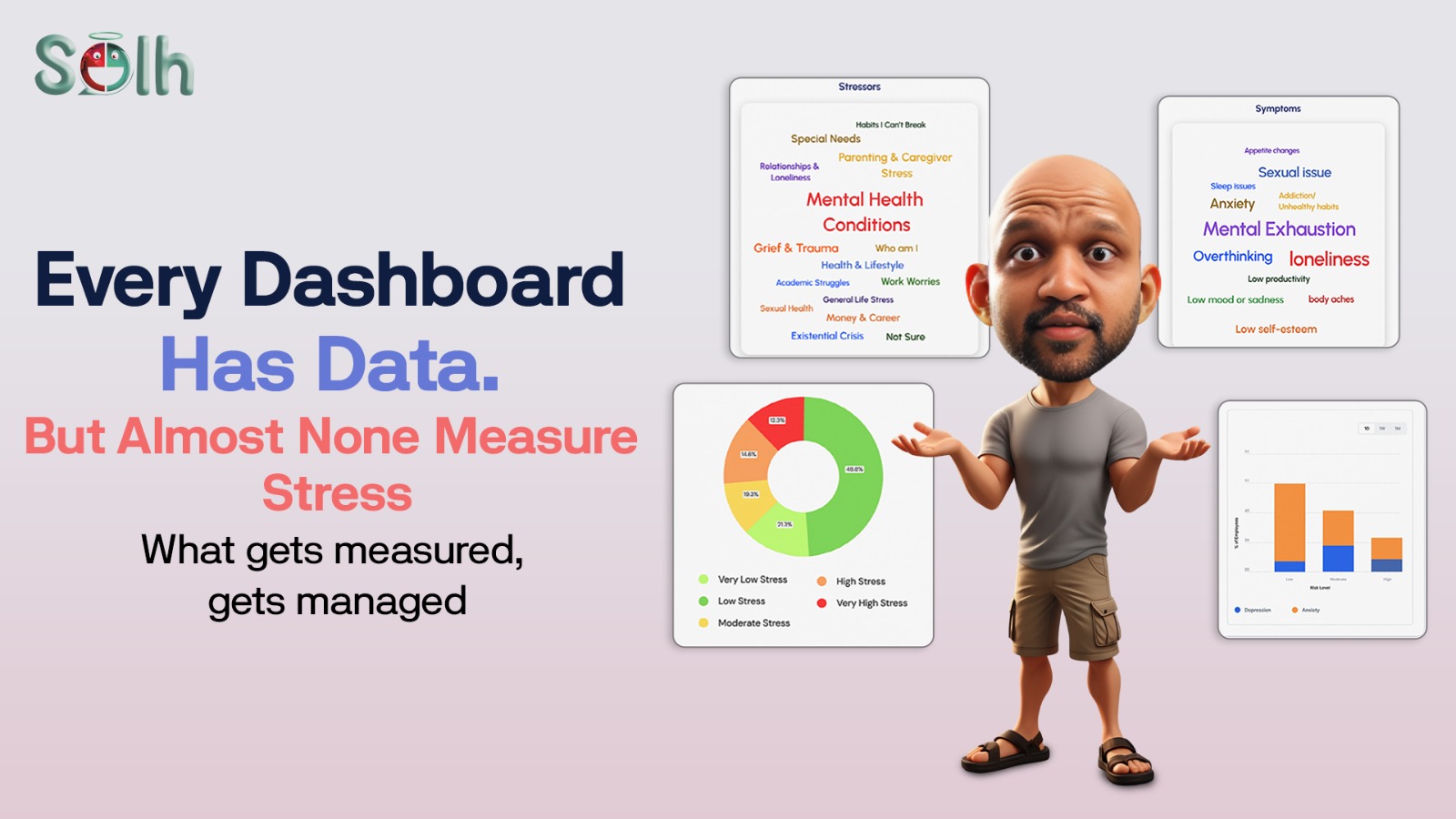
Smart AI Dashboard: Tracks patterns across individuals and teams — because burnout is an organizational issue tied directly to organizational stress management .
Solh Buddy: Your 24x7 confidante — listens, nudges, and challenges patterns silently sabotaging performance.
Guided Plans (7–14–21 Days): Structured, customized plans built after decoding real stressors and symptoms.
Solh Library: A living ecosystem of 1,000+ resources that fuel recovery and long-term employee well-being solutions.
Prarambh Life: When stress spills into addiction, this is digital rehab — real recovery, no judgment, no labels.
This is what real wellness looks like — measured, repeatable, non-negotiable.
A true AI stress management system built to outsmart burnout.
The Final Truth Shot
Stress isn’t random.
It’s patterned, precise, and patient.
It waits for you to ignore it.
And every time you replace structure with perks, you’re not fighting it — you’re feeding it.
Perks feel good.
Guided Plans work.
Because healing isn’t found in a yoga session.
It’s found in the boring, disciplined, everyday act of showing up for yourself.
At Solh, we don’t sell “wellness.”
We build systems stress can’t survive — powered by AI stress management that learns, adapts, and strengthens over time.
So the next time you plan another “Fun Friday,” ask yourself:
Do you want applause — or actual recovery?
Truth Shot:
Random perks decorate burnout.
Guided Plans dismantle it — one structured day at a time.
FAQs
1.What is AI stress management and how is it different from wellness perks?
AI stress management uses data, behavior patterns, and structured plans to address stress at its root. Unlike wellness perks that offer temporary relief, it builds repeatable systems that actually change how people function under pressure.
2.Why do random wellness activities fail in the workplace?
Because randomness doesn’t change behavior. A yoga class or webinar may feel good briefly, but without structure and follow-through, stress returns stronger and more ingrained.
3.How do Guided Plans help with workplace stress management?
Guided Plans create daily structure through micro-actions, reflections, and nervous system resets. They replace one-off initiatives with consistent routines that support long-term workplace stress management.
4.Is AI stress management suitable for organizations, not just individuals?
Yes. Stress doesn’t exist in isolation. AI stress management helps organizations track patterns across teams, making organizational stress management measurable instead of reactive.
5.What role does structure play in managing workplace stress?
Structure turns awareness into action. Managing workplace stress requires repetition, accountability, and progression—not motivation or comfort-based perks.