
By 2026, universities that don’t treat stress management as a life skill will quietly fail their students.
Not academically — emotionally, cognitively, and psychologically.
This blog explains why stress management in education can no longer be optional, how student mental wellness is breaking under modern pressure, and why institutions must adopt structured ecosystems like Solh Wellness to prepare students for real life — not just exams.
Why Stress Management as a Life Skill Is No Longer Optional
Universities still believe their job ends at knowledge.
Degrees. Credits. Placements.
But the world students are walking into doesn’t reward intelligence alone.
It punishes emotional unpreparedness.
Stress is no longer an occasional challenge.
It is continuous, ambient, and unrelenting.
If institutions don’t teach managing stress as a life skill, they’re not neutral —
they’re negligent.
Because stress doesn’t wait for graduation.
As explored in Lessons Stress Never Taught Us in School, traditional education systems have long ignored emotional preparedness — and universities are now paying the price.
What Is Really Breaking Student Mental Wellness Today
The conversation around student mental wellness often misses the point.
It focuses on:
- anxiety labels
- crisis intervention
- counselling after collapse
But the real issue is earlier and quieter.
Modern students live inside:
- constant evaluation
- comparison culture
- digital overload
- performance pressure
- uncertainty about the future
This is stress and mental health in education playing out daily — not dramatically, but persistently.
And most institutions respond only when students break.
That’s not support.
That’s damage control.
Why Is Stress Management Important for Students?
Because stress doesn’t just affect feelings.
It affects thinking.
Unmanaged stress:
- reduces focus
- impairs memory
- weakens decision-making
- disrupts sleep
- erodes confidence
This is why stress management for students is not a wellness add-on.
It is a learning prerequisite.
A stressed brain cannot learn deeply.
It can only survive.
Teaching content without teaching stress regulation is incomplete education.
How Universities Accidentally Normalize Breakdown
Most universities unintentionally teach one lesson very well:
“Push through.”
Late nights are glorified.
Burnout is joked about.
Sleep deprivation is normalised.
Emotional overwhelm is private.
This culture tells students:
- stress is weakness
- coping is personal
- silence is maturity
That’s how stress management for teens becomes avoidance instead of skill-building.
By the time students seek help, they’ve already learned the wrong lesson.
How Can Universities Teach Stress Management Effectively?
Not through lectures.
Not through posters.
Not through one-off workshops.
Stress management in education must be:
- continuous
- measurable
- stigma-free
- embedded into daily student life
Which requires systems, not speeches.
This is where most institutional mental wellness programs fail — they focus on awareness, not capability.
The Role of AI and Digital Tools in Student Stress Management
Human support alone cannot scale across thousands of students.
And it shouldn’t have to.
This is why AI stress management and stress detection technology will define student wellness in 2026.
Modern tools can:
- identify stress early
- offer real-time support
- guide regulation daily
- reduce dependency on crisis response
An AI-powered stress management app is not replacing care.
It is filling the silence before collapse — a principle further explored in Don’t Wait for Rock Bottom: Early Stress Detection Is the Real Innovation.
How Solh Wellness Rebuilds Stress Management in Education
Solh Wellness doesn’t treat student stress as pathology.
It treats it as data + skill + practice.
That’s the difference.
1. Streffie: Real-Time Stress Visibility
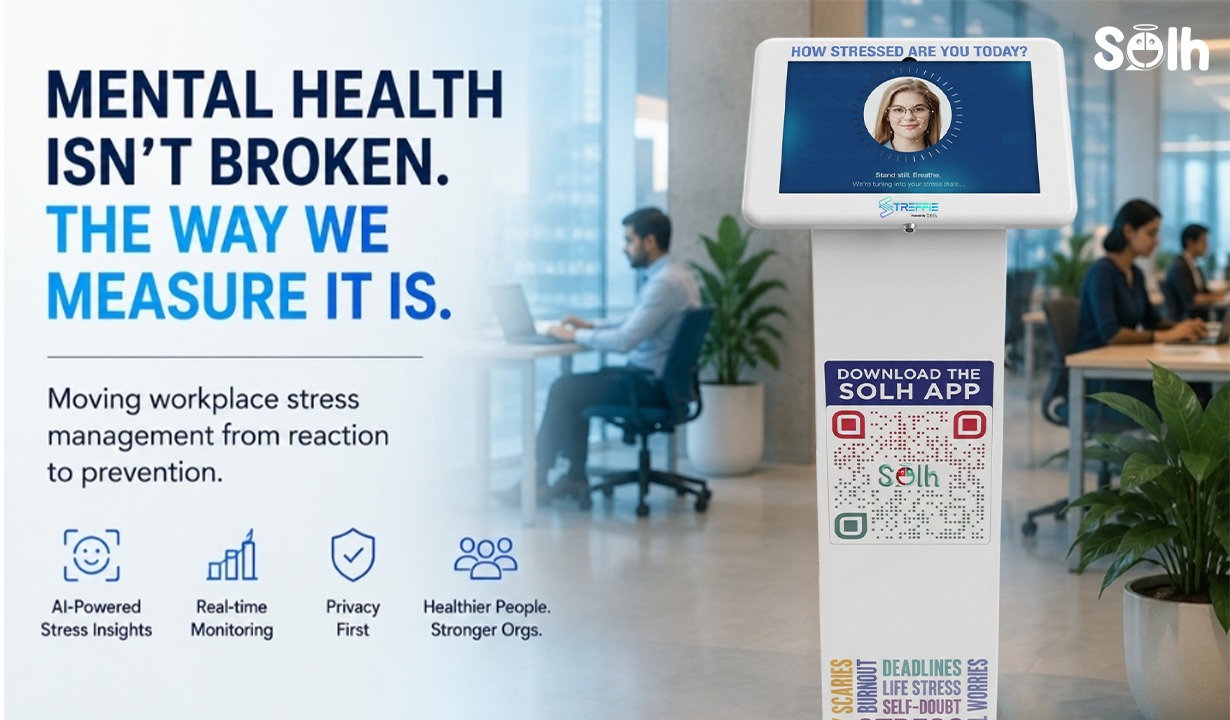
Streffie functions as an AI Powered Stress Monitor, using facial biomarker analysis to detect stress levels objectively.
This enables:
- early stress detection
- non-intrusive monitoring
- real-time stress analysis
Students don’t need to “admit” stress.
It becomes visible before denial sets in.
2. Solh App: Stress Literacy for Students
The Solh App works as a student stress management platform, helping students understand how stress shows up — emotionally, cognitively, physically.
This builds:
- emotional awareness
- emotional resilience in students
- daily stress regulation habits
Stress stops being vague.
It becomes understandable.
3. Guided Plans: Teaching Stress as a Skill
Solh’s Guided Plans turn stress management strategies into daily practice.
Not advice.
Not motivation.
Structure.
This is how stress management as a life skill is actually taught — through repetition, not theory.
4. Solh Buddy: Continuous Mental Health Support
Solh Buddy provides human-supervised AI support — a quiet space for reflection, regulation, and mental wellness discussions.
This enables:
- mental health conversations without stigma
- accessible mental health support
- daily emotional regulation
Support doesn’t wait for breakdown.
5. Dashboards for Institutions: Responsibility Without Surveillance
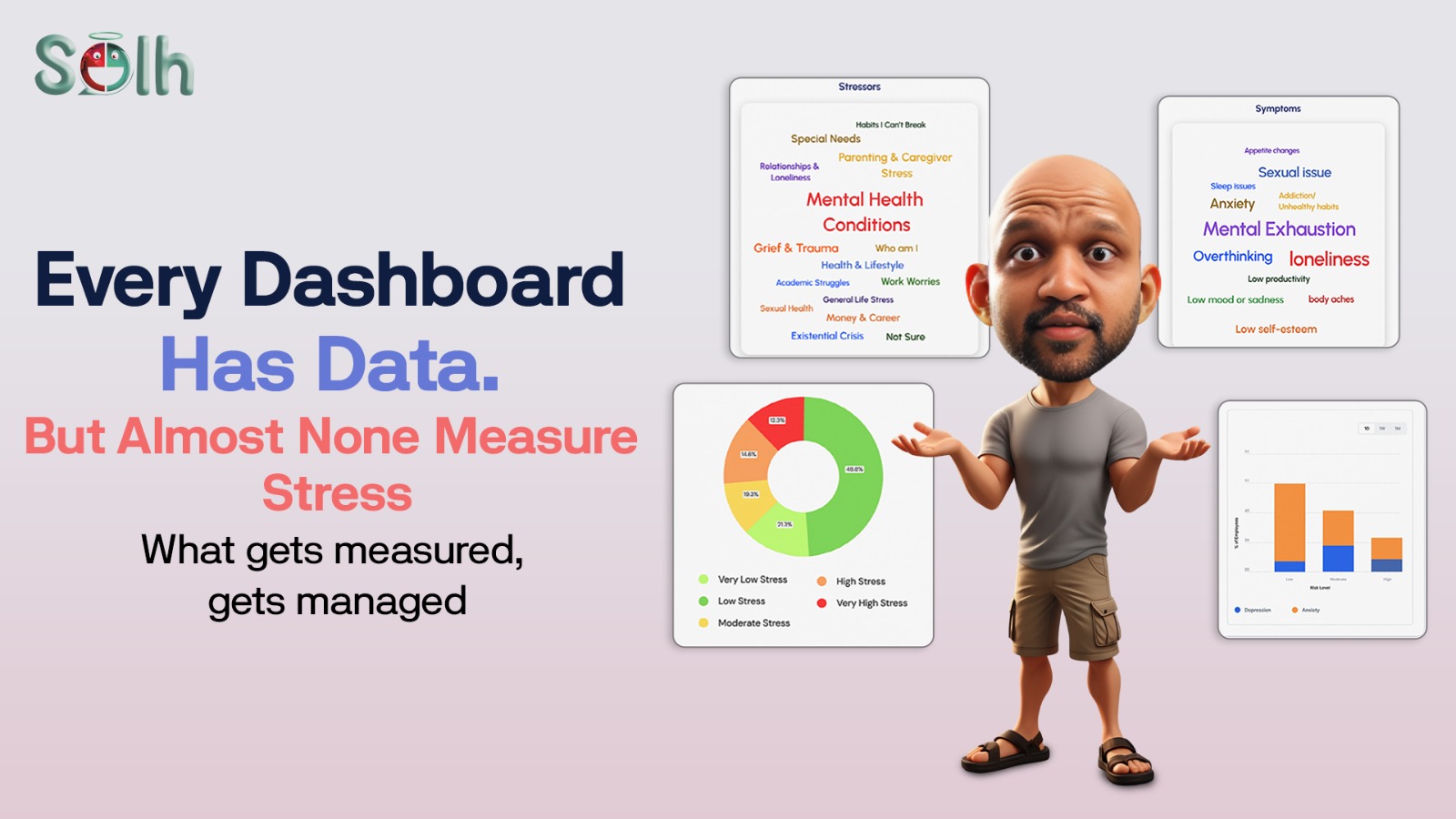
For universities, Solh provides ethical, aggregated insights — enabling institutional mental wellness programs without violating student privacy.
This transforms wellness from intent into responsibility.
Mental Health, Sustainability, and Institutional Responsibility
In 2026, mental health and sustainability will be inseparable.
Universities that ignore stress will see:
- disengaged students
- higher dropouts
- academic underperformance
- reputational damage
This is why CSR mental wellness programs and CSR initiatives must move inward — not outward.
Empowering mental health begins on campus.
The Core Insight
If universities teach everything except stress,
they are preparing students for knowledge — not life.
Stress management as a life skill is no longer optional.
It is foundational.
Institutions that build structured stress management ecosystems will graduate resilient adults.
Those that don’t will graduate exhausted ones.
And in the world students are entering,
exhaustion is not a phase — it’s a failure point.
FAQ
Q1. Why is stress management important for students?
Because unmanaged stress directly affects learning, decision-making, sleep, and long-term mental health.
Q2. Is stress management really a life skill?
Yes. It determines how individuals handle pressure, uncertainty, and responsibility across life stages.
Q3. How can universities teach stress management effectively?
By embedding continuous, measurable systems — not one-time awareness sessions.
Q4. How can AI help students manage stress?
AI enables early detection, real-time support, and daily stress regulation without stigma.
Q5. What role does Solh Wellness play in education?
Solh provides a complete stress management ecosystem — combining measurement, skill-building, AI support, and institutional visibility.