

In 2026, the most critical survival skill will not be speed, hustle, or emotional intelligence — it will be stress literacy.
The ability to detect, understand, and regulate stress before it turns into burnout, disengagement, or breakdown. This blog explains why stress literacy matters now, and how platforms like Solh are making it measurable, actionable, and scalable across organisations.
What Is Stress Literacy?
It is the ability to read stress signals early — in the body, in behaviour, and in performance — and respond before damage sets in. — enabling early stress detection before damage sets in.
It is not:
- Positivity
- resilience talk
- motivation
Stress literacy means:
- recognising rising stress before burnout
- understanding how stress affects sleep, focus, and decision-making
- knowing what to do when pressure crosses healthy limits
In simple terms:
This is situational awareness for the nervous system.
Why Stress Literacy Has Become Non-Negotiable
Stress has changed its form.
It’s no longer episodic.
It’s continuous.
Deadlines, screens, notifications, performance pressure, economic uncertainty — workplace stress is now ambient. Always present.
In this environment, people don’t burn out suddenly.
They burn out because they didn’t know stress was accumulating.
That is the cost of illiteracy — the absence of stress.
Without stress literacy, people:
- mistake overload for ambition
- ignore fatigue until cognition drops
- push through warning signs
- collapse silently
With stress, pressure becomes manageable — not destructive.
What Happens When Stress Literacy Is Missing
Low stress doesn’t look dramatic.
It looks functional — until it isn’t.
Common signs:
- chronic fatigue masked as “busy”
- irritability disguised as leadership style
- sleep disruption normalised
- loss of focus blamed on distraction
- emotional numbness mistaken for professionalism
At an organisational level, this shows up as:
- declining performance
- Disengagement
- quiet quitting
- rising attrition
- burnout that “comes out of nowhere” — a clear failure of early burnout prevention
It doesn’t come out of nowhere.
It comes from unread stress signals.
How Stress-Literate People Operate Differently
Stress-literate individuals don’t avoid pressure.
They interpret it correctly.
They:
- treat fatigue as feedback, not failure
- recognise sleep disruption as stress data
- regulate daily instead of collapsing periodically through active stress regulation
- adjust workload instead of glorifying overload
- seek support early instead of late
They don’t ask, “Why am I not coping?”
They ask, “What is stress telling me right now?”
That single shift changes outcomes.
How Stress Literacy Is Actually Built (Not Taught)
It cannot be learned in a workshop.
It requires measurement, feedback, and daily practice.
This is where the Solh Stress Management Ecosystem becomes critical — because literacy needs systems, not slogans.
1. Streffie: Making Stress Visible
You cannot be literate in something you cannot see.
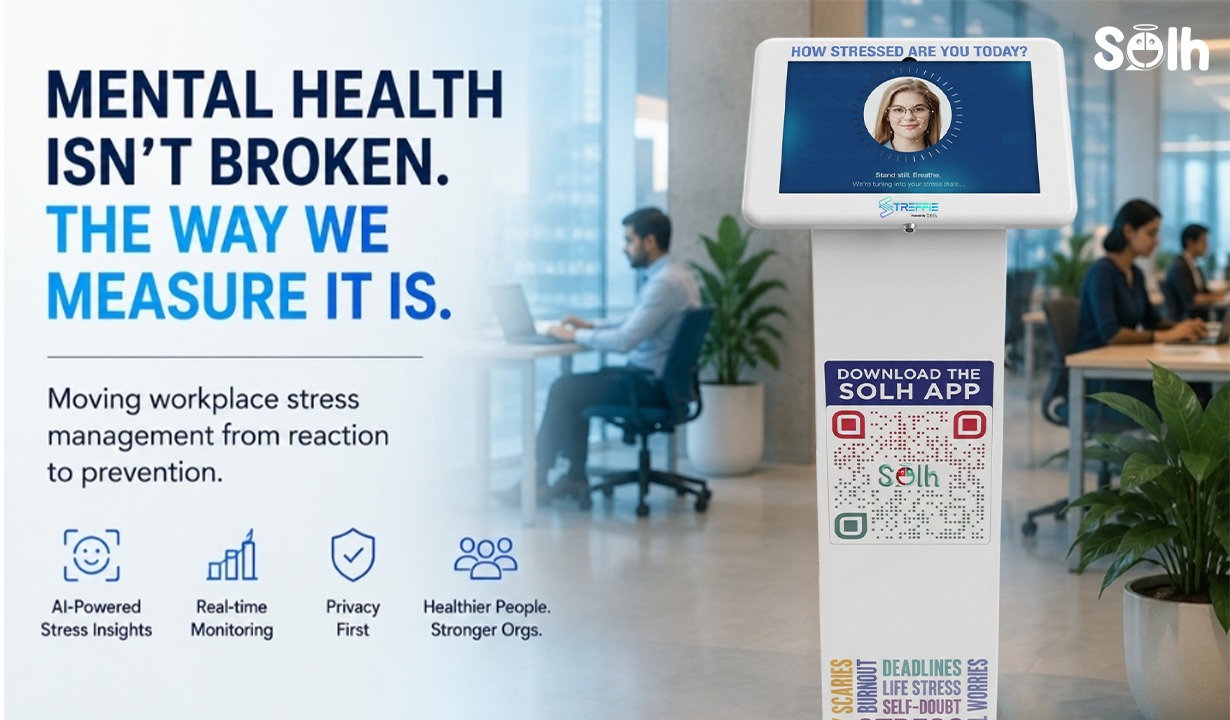
Streffie uses AI-driven facial analysis across 68 facial points to enable rapid stress measurement in seconds.
When stress becomes visible:
- denial drops
- awareness increases
- early intervention becomes possible
Hence, it always begins with stress measurement.
2. Solh App: Translating Stress Into Understanding
Measurement alone doesn’t build literacy.
Interpretation does.
The Solh App captures daily emotional and behavioural inputs — mood, energy, sleep impact, overwhelm — and contextualises stress patterns over time.
Solh - Product Overview Documen…
This teaches users:
- how stress fluctuates
- what triggers it
- how recovery actually feels
Stress stops being vague.
It becomes understandable.
3. Guided Plans: Turning Awareness Into Regulation
Most people know they are stressed.
They just don’t know what to do next.
Solh’s 7-, 14-, and 21-day Guided Plans convert awareness into daily action — built from a library of 1,000+ evidence-based stress management resources.
Solh - Product Overview Documen…
These plans:
- reduce cognitive overload
- create regulation habits
- build emotional resilience gradually
Stress literacy is not insight alone.
It’s applied regulation.
4. Solh Buddy: Everyday Stress Interpretation
Stress doesn’t appear neatly during office hours.
Solh Buddy is a human-supervised AI companion that supports users in real time — listening, nudging, and guiding during moments of everyday stress.
Solh - Product Overview Documen…
It helps users:
- name what they’re feeling
- normalise stress responses
- stay consistent with recovery practices
Literacy improves when reflection is constant, not occasional.
5. Smart AI Dashboard: Organisational Stress Literacy
At scale, it must extend beyond individuals.
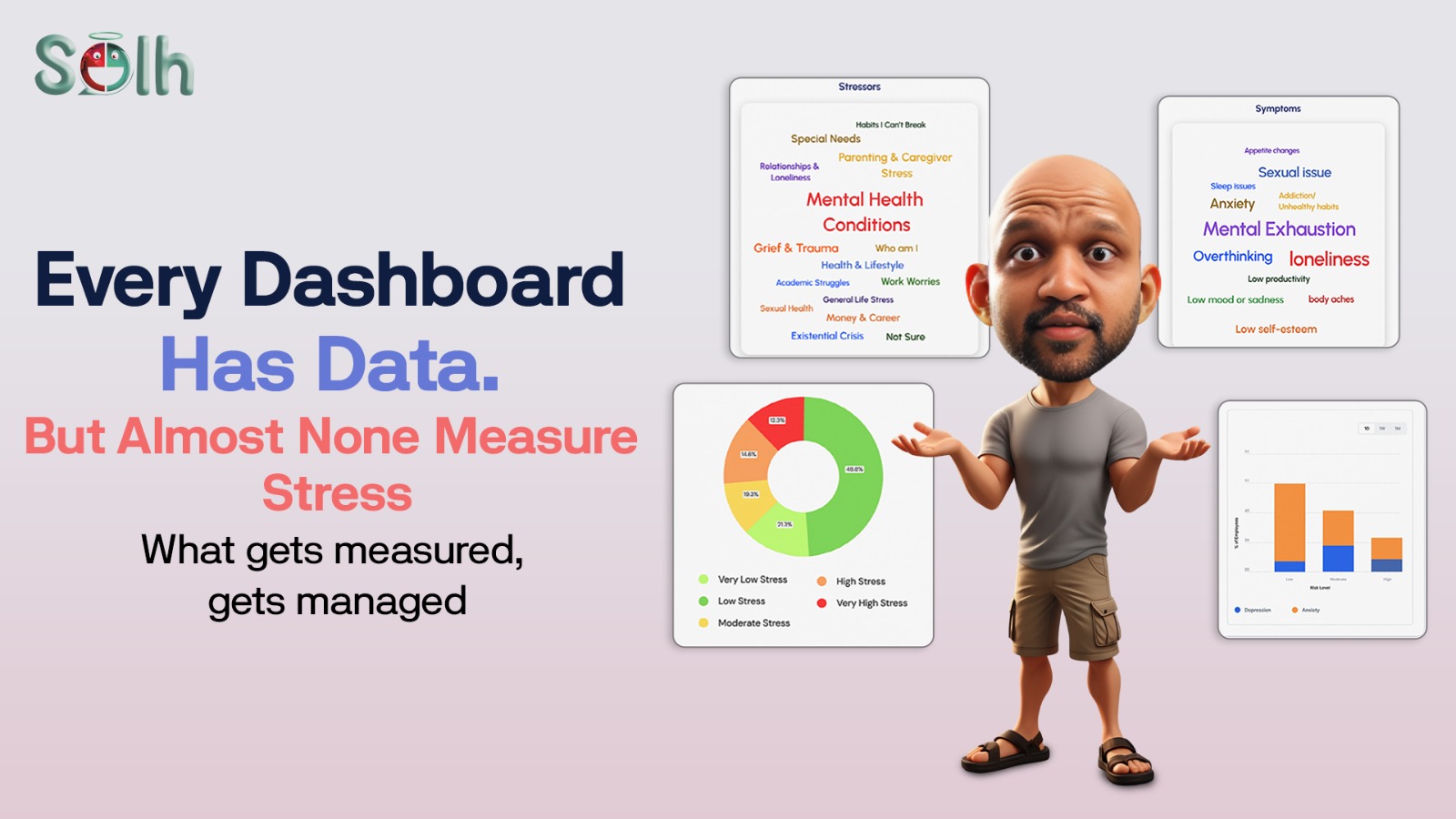
The Solh Smart AI Dashboard enables proactive AI stress management, offering leaders visibility into patterns without breaching privacy.
Solh - Product Overview Documen…
This allows organisations to:
- detect stress early
- intervene systemically
- stop burnout before exits happen
Stress literacy at the leadership level becomes the backbone of sustainable organizational stress management.
The Real Shift Ahead
The future of work will not reward:
- toughness
- endurance
- emotional suppression
It will reward:
- awareness
- regulation
- recovery intelligence
Stress literacy is not softness.
It is situational intelligence for high-pressure environments.
Those who learn to read stress early won’t just survive —
they will lead with clarity.
The Core Insight
The most dangerous person in the future workplace is not the stressed one.
It is the one who doesn’t know they are stressed.
It turns pressure into information.
Information into action.
And action into longevity.
That is the real survival skill.
FAQ (Frequently Asked Questions)
Q1. What is stress literacy?
Stress literacy is the ability to recognise, understand, and regulate stress before it leads to burnout or performance decline.
Q2. Why is stress literacy important for organisations?
Because unmeasured stress leads to disengagement, attrition, and burnout. Stress-literate organisations intervene early and sustainably.
Q3. How does Streffie support stress literacy?
By making stress measurable through facial biomarkers, allowing early awareness and prevention.
Q4. Can stress literacy be learned?
Yes — through continuous measurement, guided regulation, daily reflection, and supportive systems like the Solh ecosystem.