
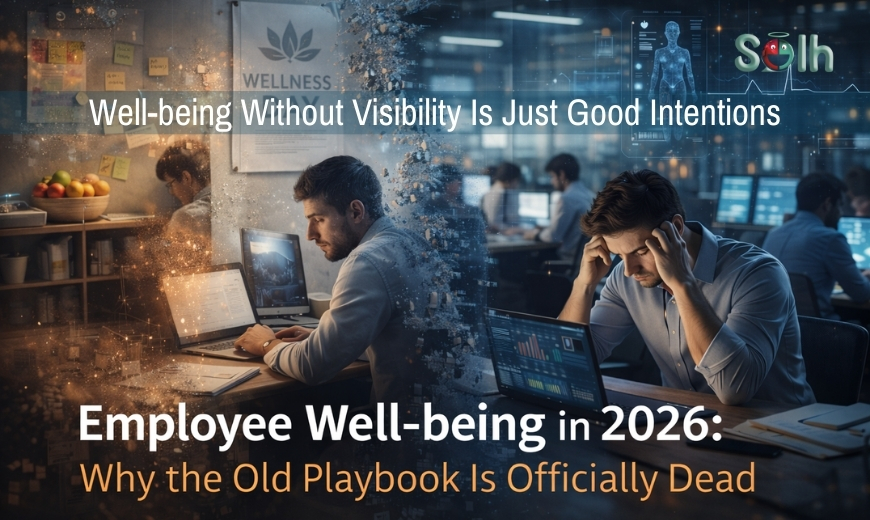
Employee Well-being in 2026: Why the Old Playbook Is Officially Dead
Employee well-being in 2026 will not be driven by good intentions, slogans, or policies.
It will be driven by whether organisations are willing to look at stress honestly.
Stress at work is no longer occasional.
It is constant.
And pretending otherwise is no longer sustainable.
The Lie We’ve Been Living With
For years, organisations told themselves a comforting story.
That people burn out because they’re weak.
That stress is personal.
That resilience is an individual responsibility.
None of that is true.
People are not failing at work.
Systems are failing people—quietly, repeatedly, and predictably.
Employee well-being was never a motivation problem.
It was always a visibility problem.
Why Stress at Work Has Become Permanent
Stress used to come in waves.
Now it hums in the background.
Always on.
Always present.
Notifications.
Targets.
Unclear expectations.
Emotional suppression dressed up as professionalism.
This is not pressure.
This is chronic work related stress.
And chronic stress does not motivate.
It erodes.
Which is why traditional employee wellness programs fail when they rely on motivation, awareness, and good intentions instead of structural change.
You cannot solve a structural problem with emotional language.
Awareness Didn’t Fail. Avoidance Did.
Mental health awareness at work increased.
Burnout increased alongside it.
That wasn’t coincidence.
Awareness without action does not reduce stress.
It only makes people more aware of how unsupported they are.
Stress management for employees cannot be a conversation anymore.
It has to be built into the system.
Otherwise, you are just naming pain and leaving people alone with it.
Employee Well-being in 2026 Will Be Measured—or It Will Be Fiction
In 2026, organisations will be asked questions they can no longer dodge:
- Where is stress building right now?
- Who is carrying more than they can recover from?
- Which teams are quietly deteriorating?
- What is the state of our organizational mental health—today, not last year?
If you cannot answer these, you do not have a well-being strategy.
You have a narrative.
That is why workplace stress monitoring and employee wellness tracking are inevitable—not because leaders want them, but because denial has become too expensive. Frameworks like the R.E.A.C.H. approach to workplace mental health exists precisely to make organizational stress visible, measurable, and actionable.
Why Systems Like Solh Exist
Solh Wellness exists because organisations reached a limit.
They realised that guessing stress doesn’t work.
That empathy without structure collapses.
That intention without data is just hope.
Solh is not a feature.
It is a response to a failure.
Streffie: Ending the Guesswork
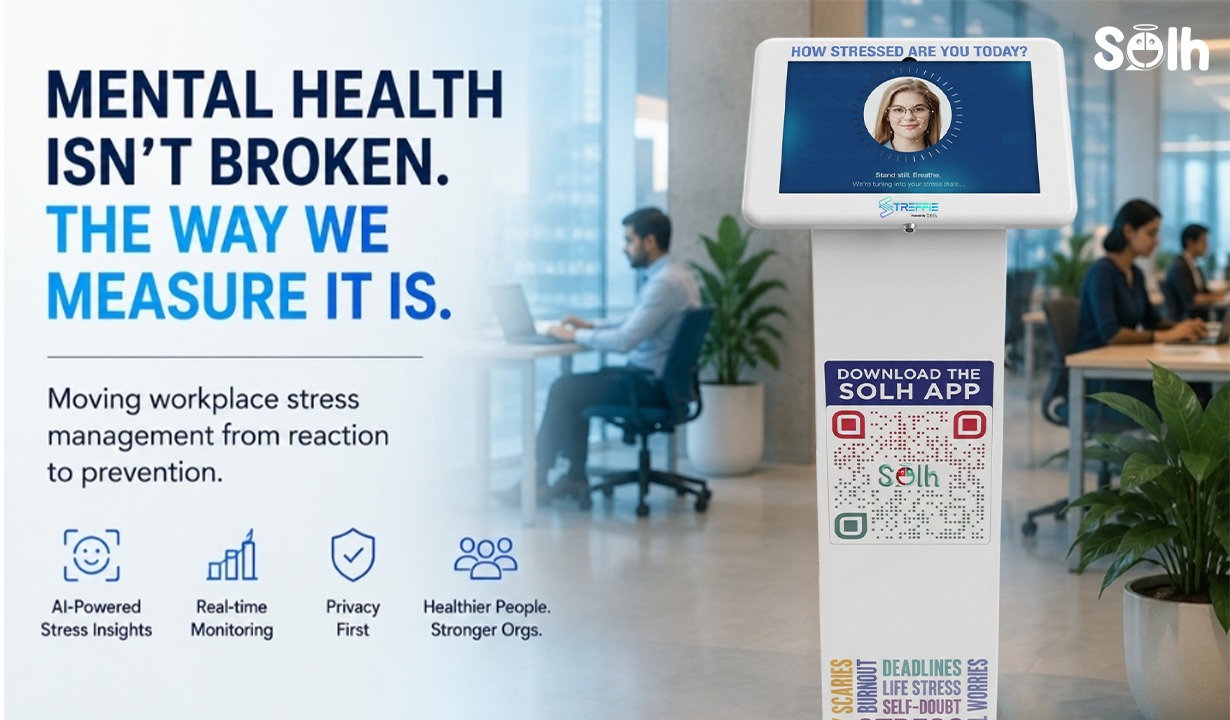
Streffie measures stress objectively.
Not opinions.
Not mood.
Actual physiological signals.
Because the first step in organizational stress management is admitting the truth:
You cannot manage what you refuse to see.
The Solh App: Teaching People to Read Their Own Stress
Most people don’t ignore stress.
They misunderstand it.
The Solh App helps employees see how stress shows up in their lives—daily, quietly, consistently.
That is what real stress management strategies look like.
Not advice.
Feedback.
Guided Plans: Structure Instead of Motivation
Stressed people don’t need encouragement.
They need structure.
Solh’s Guided Plans don’t inspire.
They stabilise.
That is what managing workplace stress actually requires.
Solh Buddy: Support Without Stigma
People don’t talk when stress starts.
They talk when it’s too late.
Solh Buddy exists in the gap—before collapse, before escalation, before silence turns into resignation.
This is AI stress management used for support, not surveillance.
Smart AI Dashboard: Responsibility for Leadership
The Smart AI Dashboard does something most leaders avoid:
It shows them the stress their systems create.
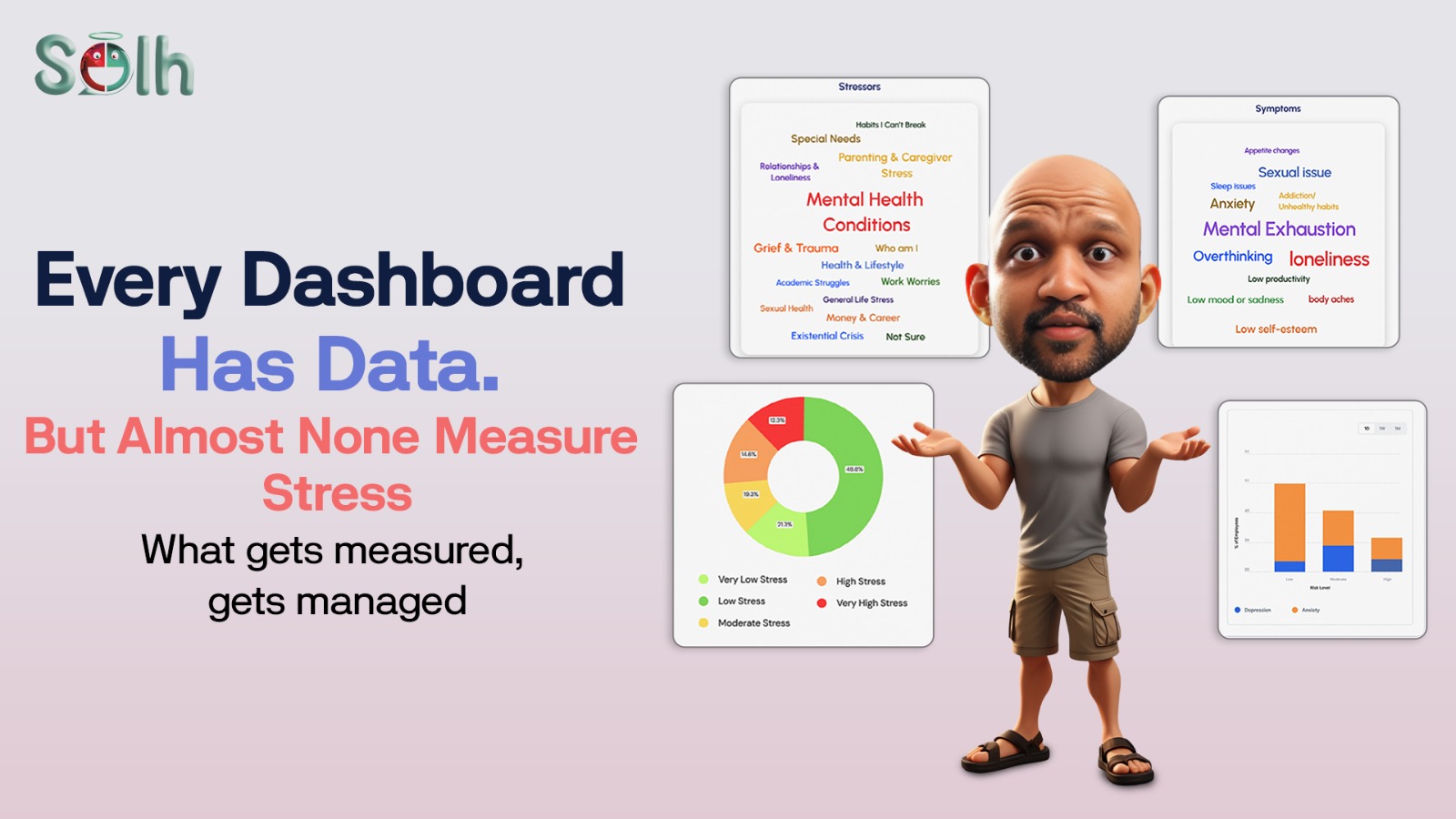
This is what a real corporate wellness platform does.
It doesn’t comfort leadership.
It confronts them.
Why AI Will Be Unavoidable in Well-being
Human support does not scale.
Stress does.
By 2026, AI-powered wellness apps and mental wellness platforms will not be optional tools.
They will be the only way to offer continuous support without collapse.
AI will not replace care.
It will expose where care is missing.
CSR Will Stop Being Cosmetic
Corporate social responsibility programs will face an uncomfortable reckoning.
You cannot speak about social good while exhausting your own people.
You cannot fund mental health externally while ignoring it internally.
Employee wellbeing
Q1. What will employee CSR programs will start at home—or lose credibility entirely.
FAQ SECTIONwell-being in 2026 really depend on?
Not intention. Not culture decks.
It will depend on whether organisations are willing to measure stress honestly and act on it early.
Q2. Why is stress at work no longer an individual problem?
Because most work-related stress is created by systems—targets, timelines, silence, hierarchy—not by personal weakness.
Q3. Why have traditional workplace stress management initiatives failed?
Because awareness without structure doesn’t reduce stress.
It only makes people more conscious of how unsupported they are.
Q4. How does AI fit into employee well-being without replacing human care?
AI doesn’t replace empathy.
It fills the gaps where humans aren’t present—early detection, daily support, pattern recognition.
Q5. What role will platforms like Solh play in organizational mental health?
They make stress visible, measurable, and unavoidable—turning well-being from intention into responsibility.
The Core Insight
Employee well-being in 2026 will not be about kindness.
It will be about honesty.
Honesty about stress.
Honesty about systems.
Honesty about what work is actually doing to people.
Organisations that choose visibility over denial will survive.
Those that don’t will keep losing people quietly—and blaming individuals for systemic damage.
Well-being was never about care.
It was always about responsibility.