
Tomorrow’s leaders won’t be evaluated by charisma, confidence, or quarterly speeches.
They’ll be measured by something harder to fake: how calm their teams feel under pressure.
This blog explores the real factors affecting employee well-being, why workplace stress is now a leadership problem, and how organisations must move beyond intent toward measurable stress management using systems like Solh Wellness.
What Are the Key Factors Affecting Employee Well-Being?
Employee well-being is not abstract.
It’s not emotional.
And it’s definitely not mysterious.
The real factors affecting employee well-being are structural:
- unmanaged workplace stress
- unclear expectations
- constant urgency
- emotional suppression
- lack of recovery
- leaders who create pressure but don’t absorb it
Employee well-being deteriorates not because people can’t handle work —
but because work never stops handling them.
The calm of a team is not accidental.
It’s designed — or neglected.
How Does Workplace Stress Affect Employees in the Real World?
Workplace stress doesn’t explode.
It accumulates.
First, focus drops.
Then sleep breaks.
Then irritability becomes normal.
Then silence replaces honesty.
This is how stress at work turns into work related stress that affects:
- decision-making
- emotional regulation
- creativity
- trust
- retention
By the time employee mental health is discussed openly,
the damage has already happened.
The economic cost of workplace stress only becomes visible once productivity, retention, and trust start eroding simultaneously.
Stress doesn’t announce burnout.
It predicts it.
Why Leaders Can No Longer Outsource Mental Health at the Workplace
For years, leaders delegated mental health at workplace to HR.
That worked when stress was episodic.
It fails now that stress is constant.
Because HR does not:
- set targets
- control urgency
- model calm
- decide recovery norms
Leaders do.
This is why workplace stress management has become a leadership competency — not an HR initiative.
A leader who cannot regulate pressure
cannot expect calm teams.
How Can Organizations Manage Workplace Stress Effectively?
Here’s the uncomfortable truth:
You cannot manage stress with motivation.
You cannot regulate teams with posters.
You cannot calm people with intention.
Workplace stress management requires systems.
Specifically:
- early stress detection
- daily regulation support
- structured stress management strategies
- leadership visibility into stress patterns
This is exactly where most organisations fail —
because they try to care without trying to measure.
This is why the future of workplace wellbeing depends on measurable stress management systems — not motivation, not messaging, but visibility.
Why Calm Teams Will Define Leadership Credibility
In the next phase of work, people will not ask:
“Is my leader inspiring?”
They’ll ask:
“Do I feel constantly on edge here?”
Calm teams:
- think clearly
- trust faster
- recover quicker
- perform longer
Chaotic teams don’t lack talent.
They lack stress containment.
Tomorrow’s leaders will be judged less by how loud they speak
and more by how safe their presence feels.
The Role of Solh Wellness in Building Calm Teams
Solh Wellness exists for one reason:
to turn stress from an invisible liability into a visible, manageable signal.
Not motivation.
Not therapy branding.
Infrastructure.
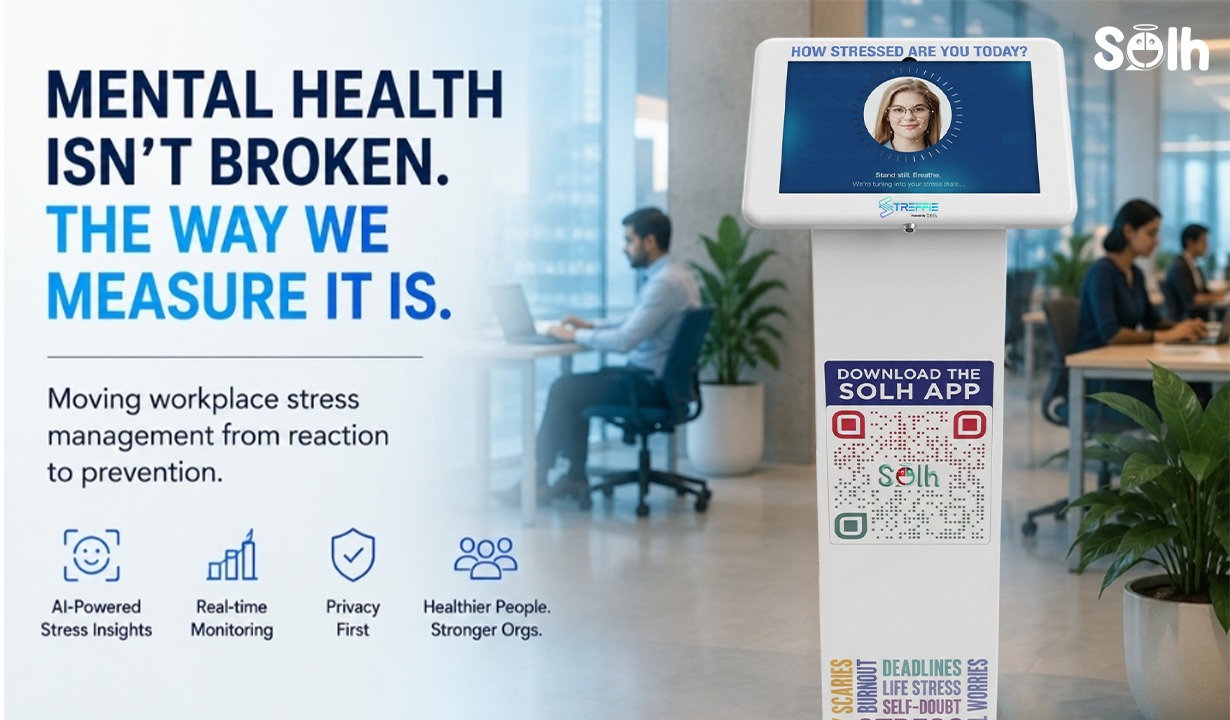
1. Streffie: Making Stress Visible
Streffie objectively measures workplace stress using facial biomarkers.
No opinions. No assumptions.
If leaders can see stress early,
they can stop burnout before it becomes behavioural.
2. Solh App: Daily Stress Awareness
The Solh App helps employees understand how stress shows up — daily, quietly, consistently.
This builds personal stress literacy,
which is foundational for stress management for employees.
3. Guided Plans: Structured Stress Regulation
Solh’s 7–14–21 day Guided Plans offer real stress management strategies — not advice, not theory.
Structure is what stressed minds need.
Not encouragement.
4. Solh Buddy: Everyday Emotional Support
Solh Buddy provides human-supervised AI support during everyday pressure moments —
before escalation, before silence, before breakdown.
This is digital wellness done responsibly.
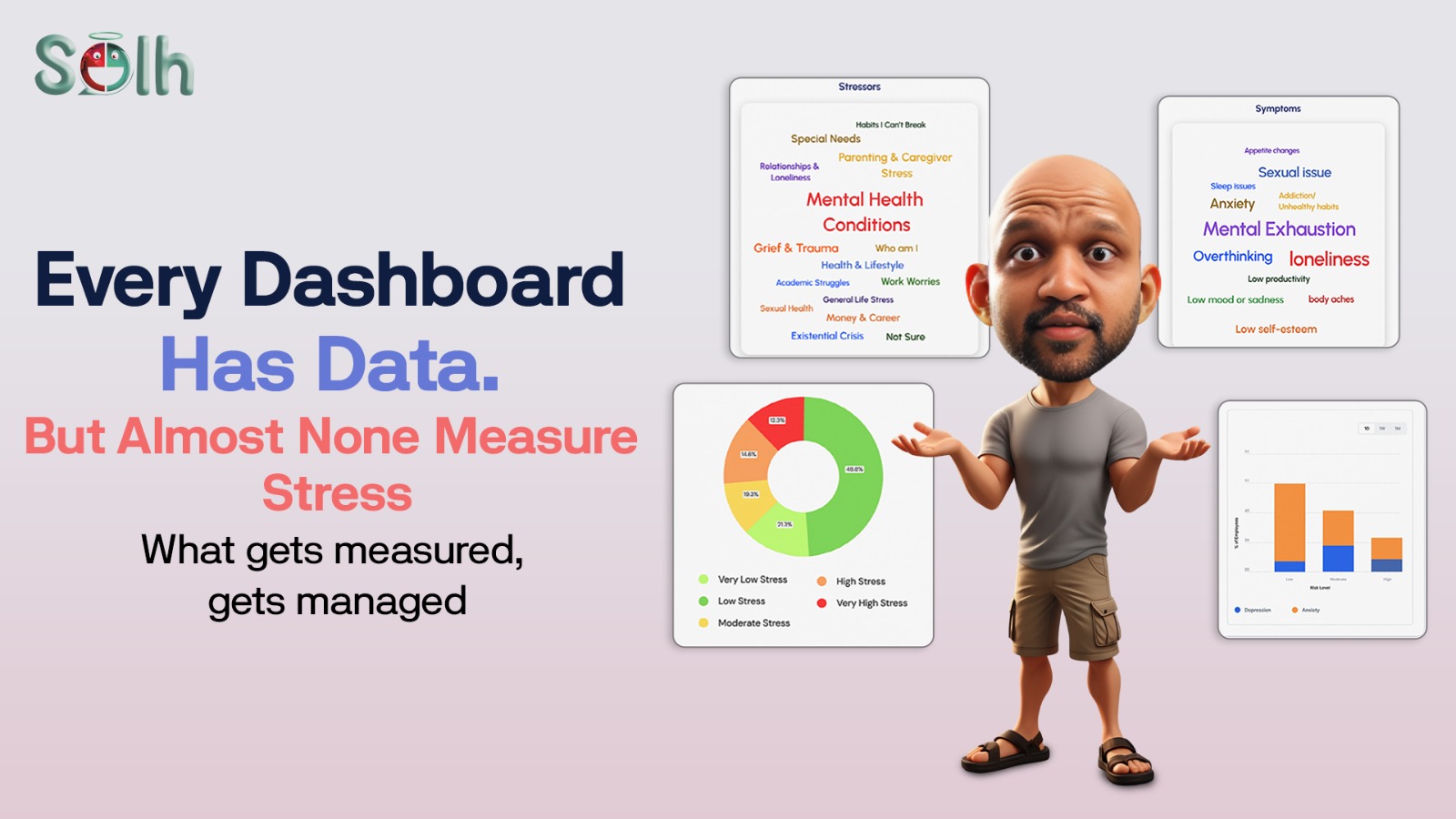
5. Smart AI Dashboard: Leadership Accountability
Solh’s dashboard shows leaders stress trends at the organisational level — ethically and anonymously.
This turns employee wellbeing solutions into leadership intelligence.
Because calm teams don’t happen by accident.
They happen by design.
The Core Insight
The future of leadership will not be loud.
It will be regulated.
Tomorrow’s leaders will be measured by:
- how calm their teams feel
- how early stress is addressed
- how safely pressure is held
Not because calm is soft —
but because calm is what allows people to last.
And leaders who cannot create calm
will not keep talent — no matter how ambitious their vision sounds.
FAQ
Q1. What are the main factors affecting employee well-being today?
Chronic workplace stress, lack of recovery, unclear expectations, and emotionally unsafe leadership.
Q2. How does workplace stress impact employee mental health?
It impairs focus, sleep, emotional regulation, and eventually leads to burnout and disengagement.
Q3. Why is workplace stress management now a leadership responsibility?
Because leaders create the conditions that cause stress — HR cannot regulate what leadership designs.
Q4. How can organisations manage stress at work effectively?
By measuring stress early, offering daily regulation tools, and using structured systems like Solh Wellness.
Q5. What role does Solh Wellness play in employee well-being?
Solh makes stress visible, manageable, and actionable — helping leaders build calm, sustainable teams.