
After spending a year closely observing the causes of workplace stress in India, one thing became impossible to ignore:
India does not have a motivation problem.
It has a stress blindness problem.
Stress at work here is not dramatic. It is quiet, internalised, and culturally disguised as adjustment.
By 2026, employee well-being will no longer survive as symbolism. It will be forced to become structural.
What Are the Real Causes of Workplace Stress in India?
If you ask most people, they’ll say long hours.
If you ask HR, they’ll say workload.
If you ask leadership, they’ll say attitude.
All of them are wrong.
The real causes of workplace stress in India run deeper:
- fear of job loss
- hierarchical silence
- power distance that discourages honesty
- emotional suppression dressed up as professionalism
- pressure to “adjust” instead of speak
- loyalty confused with endurance
This is why workplace stress in India rarely looks like panic.
It looks like compliance.
People don’t say they’re struggling.
They say, “It’s fine.”
That sentence is the most dangerous stress signal in Indian offices.
Why Does Work-Related Stress Escalate So Fast Here?
Because stress is rewarded before it is recognised.
In Indian workplaces:
- exhaustion is mistaken for commitment
- silence is mistaken for maturity
- burnout is mistaken for weakness
- pushing through is celebrated
- recovery is seen as laziness
This is how work related stress compounds silently.
By the time someone asks for help, they are already depleted.
By the time leadership notices, the exit has already been decided.
This is why managing workplace stress through awareness sessions fails.
The issue is not awareness.
It is permission.
The Signs Organisations Keep Missing (But Employees Feel Daily)
After months of observation across sectors, the signs repeat with disturbing consistency:
- emotional flatness that passes as professionalism
- irritability among high performers
- decision fatigue mistaken for incompetence
- sleep disruption normalised as “busy life”
- disengagement disguised as obedience
These are not attitude problems.
They are mental health problems leaking through behaviour.
But most organisations only react when output drops.
Never when stress begins.
This is the gap where organisational mental health quietly fails.
What the Patterns Reveal (If You’re Willing to Look)
Here’s what the data and ground reality keep showing:
- stress at work builds long before attrition
- employees feel symptoms months before they speak
- mental health awareness exists, but safety does not
- most organisations still don’t have real organizational stress management systems
India does not lack conversations around workplace mental wellness .
It lacks systems that respond before damage happens.
Why 2026 Will Redefine Employee Well-being in India
Not because organisations suddenly become compassionate.
But because the cost of denial is rising.
By 2026:
- burnout will be too expensive to ignore
- disengagement will be measurable
- attrition will no longer be cyclical — it will be chronic
- pretending will stop scaling
Employee well-being solutions will be forced to evolve from:
- posters to processes
- talks to tools
- intent to infrastructure
Mental health will stop being a CSR add-on
and start becoming risk management.
Where Solh Wellness Fits (Without Pretending to Be a Saviour)
India doesn’t need inspiration.
It needs visibility.
This is where Solh Wellness matters — not as therapy branding, but as a stress intelligence ecosystem.
Solh addresses what Indian workplaces avoid:
- early stress detection
- daily, stigma-free support
- structure instead of advice
- data instead of denial
Through:
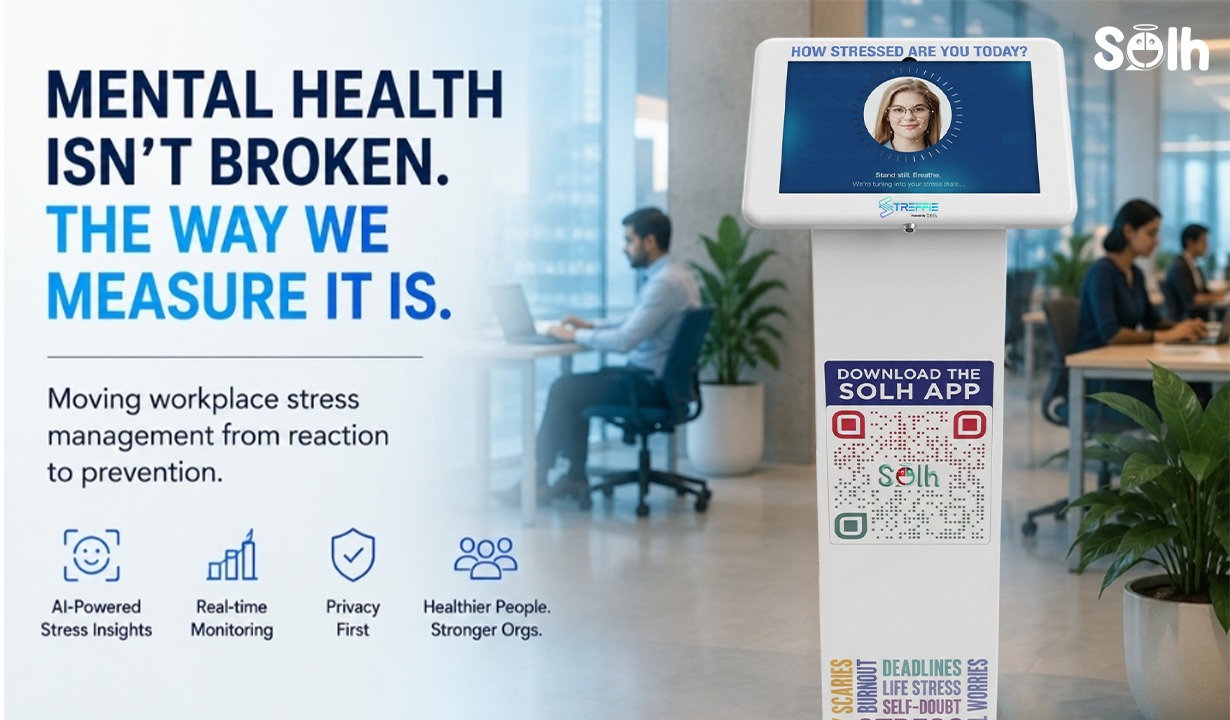
- Streffie , which objectively measures stress via facial biomarkers
- the Solh App, which builds daily emotional awareness
- Guided Plans, offering structured stress regulation
- Solh Buddy, supporting everyday emotional load
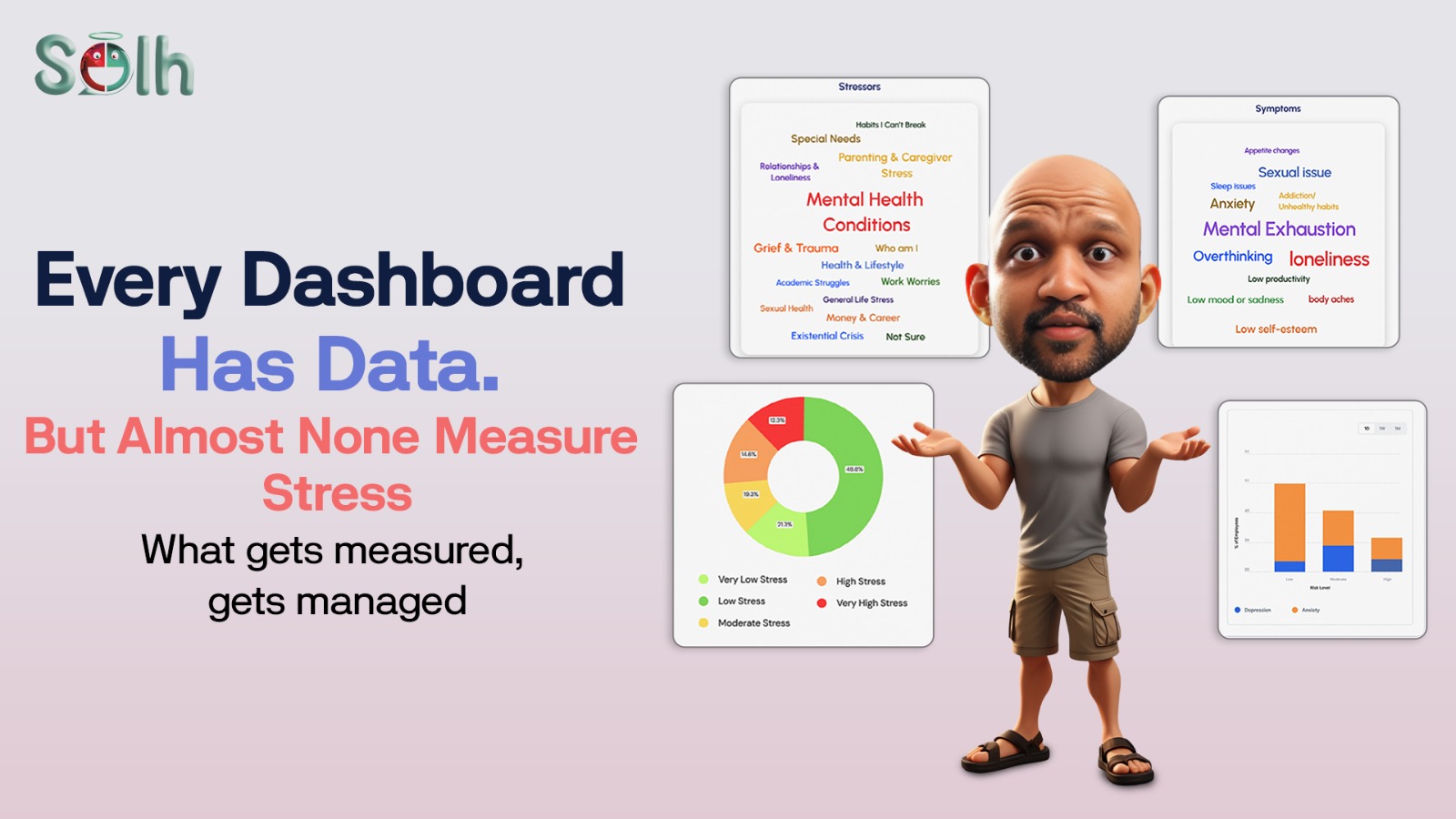
- a Smart AI Dashboard, showing leadership what’s actually brewing
Solh doesn’t fix people.
It fixes blindness.
And once stress is visible, responsibility becomes unavoidable.
CSR, Responsibility, and the Lie We’re Done Telling
Mental wellness in India will increasingly sit inside:
- corporate social responsibility programs
- structured CSR mental wellness programs
But CSR will no longer mean “doing good elsewhere.”
It will mean not doing harm internally.
The future will judge organisations not by how much they donate —
but by the emotional environments they create daily.
The Core Insight
After a year of watching India’s stress landscape up close, one truth stands firm:
People are not failing at work.
Systems are failing people quietly.
The causes of workplace stress in India are not individual fragility.
They are cultural habits, power structures, and long-standing avoidance.
2026 will not ask politely.
Employee well-being will either become real, measurable, and integrated —
or it will show up as burnout, exits, and silent collapse.
There is no third option.
FAQ
Q1. What are the main causes of workplace stress in India?
Hierarchical silence, job insecurity, emotional suppression, and normalised overwork.
Q2. Why is stress at work often hidden in Indian organisations?
Because speaking up is still culturally unsafe, and endurance is rewarded.
Q3. Why is managing workplace stress critical for organisations now?
Because unmeasured stress leads directly to burnout, disengagement, and attrition.
Q4. How can organisations improve workplace mental wellness?
By moving beyond awareness and adopting structured, measurable employee well-being solutions.
Q5. What role does Solh Wellness play in organisational mental health?
Solh makes stress visible, actionable, and manageable — before it turns into damage.