

Let me not sugarcoat this: stress addiction in workplaces is the new smoking—it’s glorified, normalized, and destroying organizations from the inside out.
I’ve seen it play out in boardrooms, universities, startups, and MNCs. Stress isn’t just an emotion anymore—it’s a lifestyle. And like every addictive lifestyle, it comes with a massive price tag: burnout, resignations, toxic cultures, collapsing health, and broken teams.
Stress Addiction: The Addiction Nobody Wants to Admit
Here’s the uncomfortable truth: stress behaves exactly like nicotine.
It gives you that false “high”—the adrenaline rush before a deadline, the thrill of crisis management, the applause for pulling all-nighters. It convinces you that you’re “thriving” when in reality, you’re just overdosing on cortisol.
I see people feeding the cycle every day:
- The founder who schedules meetings at midnight.
- The employee who checks email at 2 a.m.
- The student who thinks panic attacks are “normal” before exams.
This isn’t resilience. This is stress addiction in workplaces, and it convinces people that burnout is a badge of honor—fueling toxic work culture across industries.
Why Stress Is Harder to Quit than Smoking
Now let me clarify something. I’m someone who happily works 16+ hours a day. I enjoy it. I like people who can push, who can deliver, who can go the extra mile. I’m not here to preach a 4-hour workweek fantasy.
But here’s the difference: smoking is optional. Stress is inevitable.
You can throw away a cigarette pack. You can quit alcohol. But you can’t quit stress—it’s stitched into modern life, especially into ambitious workplaces. The question isn’t whether stress will show up. The real question is: Do you have the systems for workplace stress management before it manages you?
Without those systems, even the smartest people burn out. Even the most productive organizations collapse. That’s why stress is more dangerous than smoking—it hides under the label of “hard work” and slowly poisons both individuals and companies, leading to burnout in organizations.
The Cost of Stress Addiction in Organizations
Leaders love to talk about growth, profits, and productivity. But ask yourself:
What’s the cost of an employee resigning from burnout?
What’s the cost of a star performer suddenly disengaging?
What’s the cost of an entire team running on fumes, mistaking exhaustion for dedication?
The cost of stress addiction in workplaces is massive—burnout, absenteeism, disengagement, and declining stress and productivity outcomes.
- Productivity drops even when hours increase.
- Absenteeism rises because stress shows up as illness.
- Engagement tanks because stressed employees don’t innovate; they just survive.
And here’s the kicker: employees won’t tell you they’re drowning. They’ll keep showing up. They’ll keep nodding in meetings. Until one day, they stop.
That’s how companies lose people—not because of salaries, not because of competitors, but because of unmanaged organizational stress and silent employee burnout.
How Solh Breaks the Stress Addiction Loop
This is exactly why I built Solh Wellness—not as another “mental health” app buried in HR policies, but as a full-scale Stress Management Ecosystem for organizations focused on mental health at work. Our tools are designed to treat stress addiction the way you’d treat nicotine addiction—systematically, with data and support.
Here’s how we treat stress like the addiction it is:
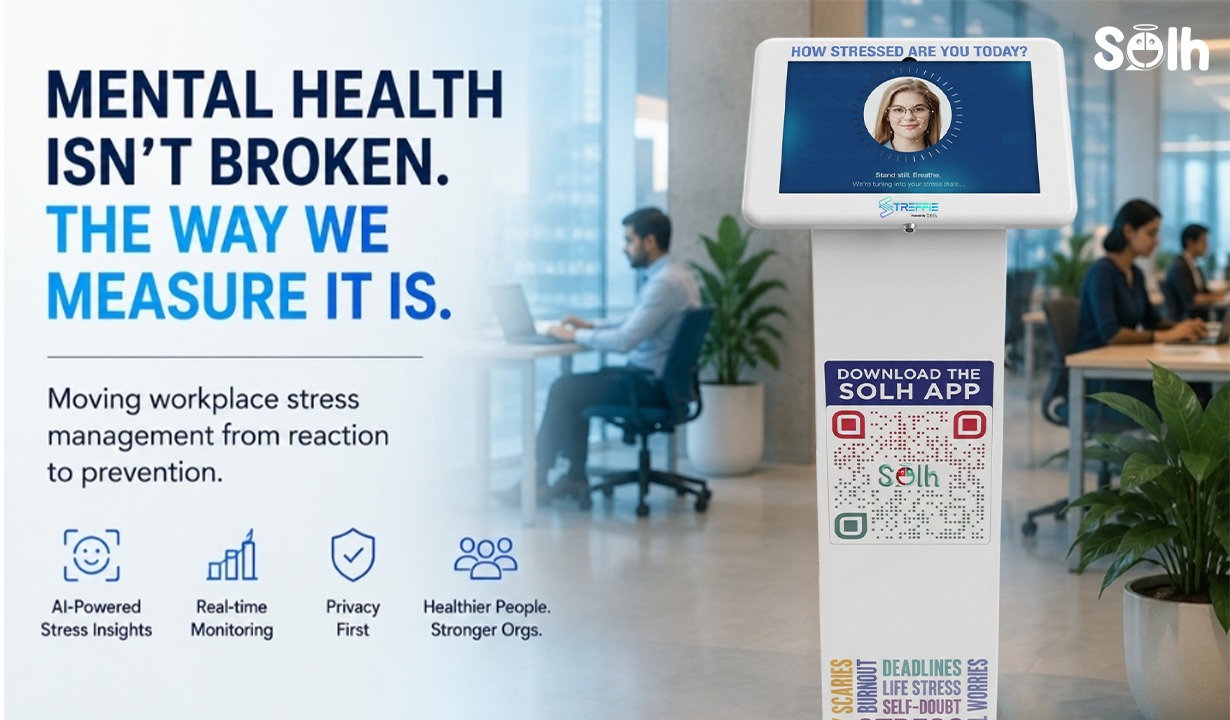
Streffie – The Stress Scanner
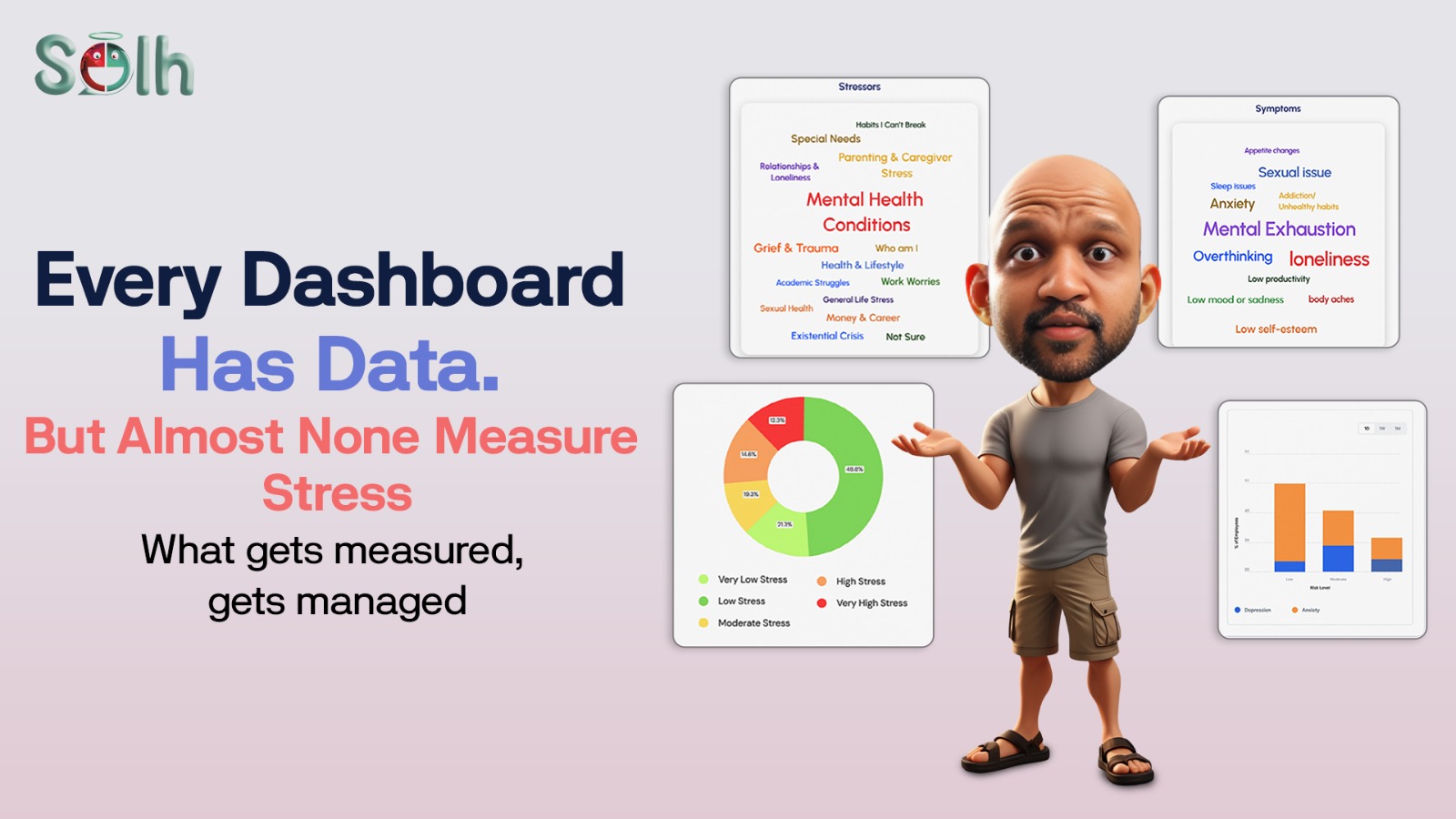
In seconds, Streffie tells you the real stress levels across your organization. Anonymous. AI-driven. Honest. No surveys. No stigma. Just data that leaders can’t ignore.
Solh Buddy – The AI Companion
Stress thrives in silence. Employees don’t want to talk to HR about panic attacks or burnout. Solh Buddy is their private, judgment-free space—available 24x7, listening, guiding, nudging.
Guided Plans
Think of them as structured detox journeys. 7–14 days, tailored to stressors like work worries, money, relationships, overthinking. Step-by-step, level-by-level, helping people break free from stress loops.
Prarambh Life – Digital Rehab
For when stress spills into addictions—alcohol, porn, gaming, social media. Prarambh Life gives employees affordable, tech-enabled recovery without leaving their job or hiding in shame—supporting sustainable performance at work.
This isn’t charity. This isn’t optional. This is infrastructure for every ambitious organization that wants sustainable growth.
Why Organizations Must Care
Here’s the brutal reality: your workforce isn’t addicted to Netflix or Instagram. They’re addicted to stress. Those other addictions are just symptoms.
If you don’t measure and manage stress, you’re not leading—you’re gambling with human capital.
Employees today don’t want yoga webinars and helpline numbers. They want privacy, personalization, and accessibility. They want tools that actually work, built into their workflow, not an afterthought in the CSR deck.
That’s what Solh delivers.
Stop Rewarding Stress. Start Managing It.
Imagine clapping for someone who just smoked 20 cigarettes in a row. Absurd, right? Yet we clap for the guy who pulled 20-hour shifts.
Stress addiction in workplaces is the only addiction we reward. And until leaders stop glorifying it, organizations will keep bleeding talent, money, and reputation.
At Solh, we’re rewriting the playbook:
- Making stress measurable, with AI.
- Making stress management accessible, at scale.
- Making sustainable productivity the new aspiration—not burnout.
My Challenge to Leaders
Stress addiction isn’t dedication—it’s destruction. The leaders who recognize this early will build healthier, stronger organizations.
I’ll leave you with this: I like working 16 hours a day. I like building at full throttle. I like people who can keep up.
But here’s the line: without stress management, that intensity collapses. Stress without systems isn’t dedication—it’s destruction.
So ask yourself, as a leader:
- Are you rewarding stress or managing it?
- Are you creating sustainable performance or glorified burnout?
- Do your people have real tools to fight stress, or just slogans?
Stress is the new smoking. And your organization is already addicted.
At Solh Wellness, we’ve built the tools to measure it, manage it, and break the cycle. The only question is—are you ready to quit glorifying stress and start leading differently?
👉 If you’re serious about transforming stress in your organization, connect with me directly at kapil@solhapp.com .
Frequently Asked Questions (FAQs)
1. What is stress addiction in workplaces?
Stress addiction in workplaces happens when constant pressure, urgency, and overwork become normalised and even rewarded, making burnout feel like dedication instead of a warning sign.
2. How does stress addiction affect employee productivity?
Stress addiction reduces long-term productivity. While short-term output may increase, chronic stress leads to employee burnout, disengagement, absenteeism, and declining performance over time.
3. Why is workplace stress harder to manage than other addictions?
Unlike habits like smoking or alcohol, stress is unavoidable in modern work environments. Without proper workplace stress management systems, stress silently accumulates and damages both employees and organizations.
4. What are early signs of stress addiction in employees?
Early signs include constant exhaustion, anxiety before work, inability to disconnect, normalising long working hours, declining engagement, and increased irritability or health issues.
5. How can organizations manage stress addiction effectively?
Organizations can manage stress addiction by measuring organizational stress, enabling early stress detection, offering confidential support tools, and building structured stress management systems instead of one-time wellness initiatives.