
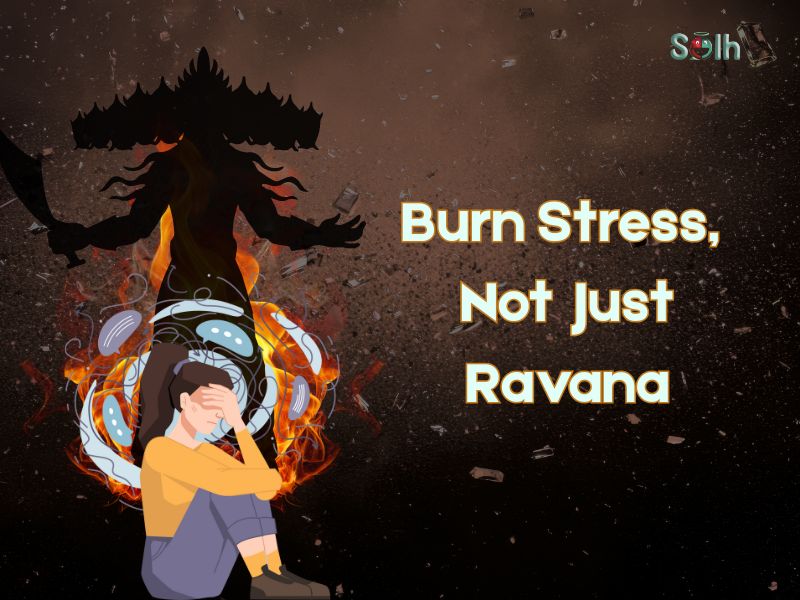
Every year, we celebrate Dussehra with fireworks, loudspeakers, and the grand burning of Ravana. We cheer when his ten heads go up in flames, as if we’ve collectively defeated evil itself. And yet, as the smoke clears, something uncomfortable remains. Because let’s be real, Ravana doesn’t live in Lanka anymore. He lives inside you.
No, I’m not talking about ten heads on your shoulders. I’m talking about stress inside the mind—the quiet, persistent force that shapes your thoughts, drains your energy, and slowly changes who you are. Ravana is no longer a man with a golden crown. He has sleepless nights. He’s anxious before a Monday meeting. He’s the low self-esteem that keeps you scrolling through other people’s achievements while doubting your own.
The Ravana outside burned once.
The Ravana inside? He resurrects every single day.
Stress: The Ravana With Too Many Faces
If Ravana had ten heads, inner stress has a hundred. It doesn’t shout “I’m here!”—it sneaks in. It wears disguises. One day it’s fatigue. Another day it’s the feeling that no matter how much you do, it’s never enough. Sometimes it looks like anger. Sometimes it looks like silence.
These are internal stress symptoms most people ignore until they become unbearable.
Let’s unmask a few of those heads:
- Overthinking and anxiety: The endless loop that makes you fight battles in your head before they even exist.
- Burnout: The exhaustion that makes you question why you’re even doing what you’re doing.
- Loneliness: The hollow silence even when you’re surrounded by people.
- Self-Doubt: The constant whisper that you’re not good enough, no matter how much you achieve.
- Anxiety: The irrational restlessness that grips you without reason.
This is what stress inside the mind really looks like. It doesn’t arrive as a monster from mythology—it arrives as your own thoughts turning against you.
Why We Don’t Talk About Our Ravana
We’ve been conditioned to fight our demons in silence. Society tells us to “stay strong,” as if strength means ignoring what’s breaking you from within. Workplaces hand you free coffee and a beanbag chair and call it wellness. Friends say, “Just chill.” Family says, “Don’t think too much.”
That’s the problem.
We treat stress like weakness, when in reality, mental health awareness teaches us that stress is a biological signal. It’s your body saying something is off. Pay attention.
But instead of listening, we hide it. We suppress it. And the longer we ignore stress inside the mind, the more power it gains.
Conquering Ravana: Not With Fire, But With Awareness
You don’t defeat stress with fireworks.
You defeat it with awareness.
You don’t fight stress by running away from it. You fight it by facing it—by listening to what it’s trying to tell you. Stress is not your enemy; it’s a signal.
This is where managing stress effectively becomes critical. Not through denial, not through toxic positivity, but through understanding.
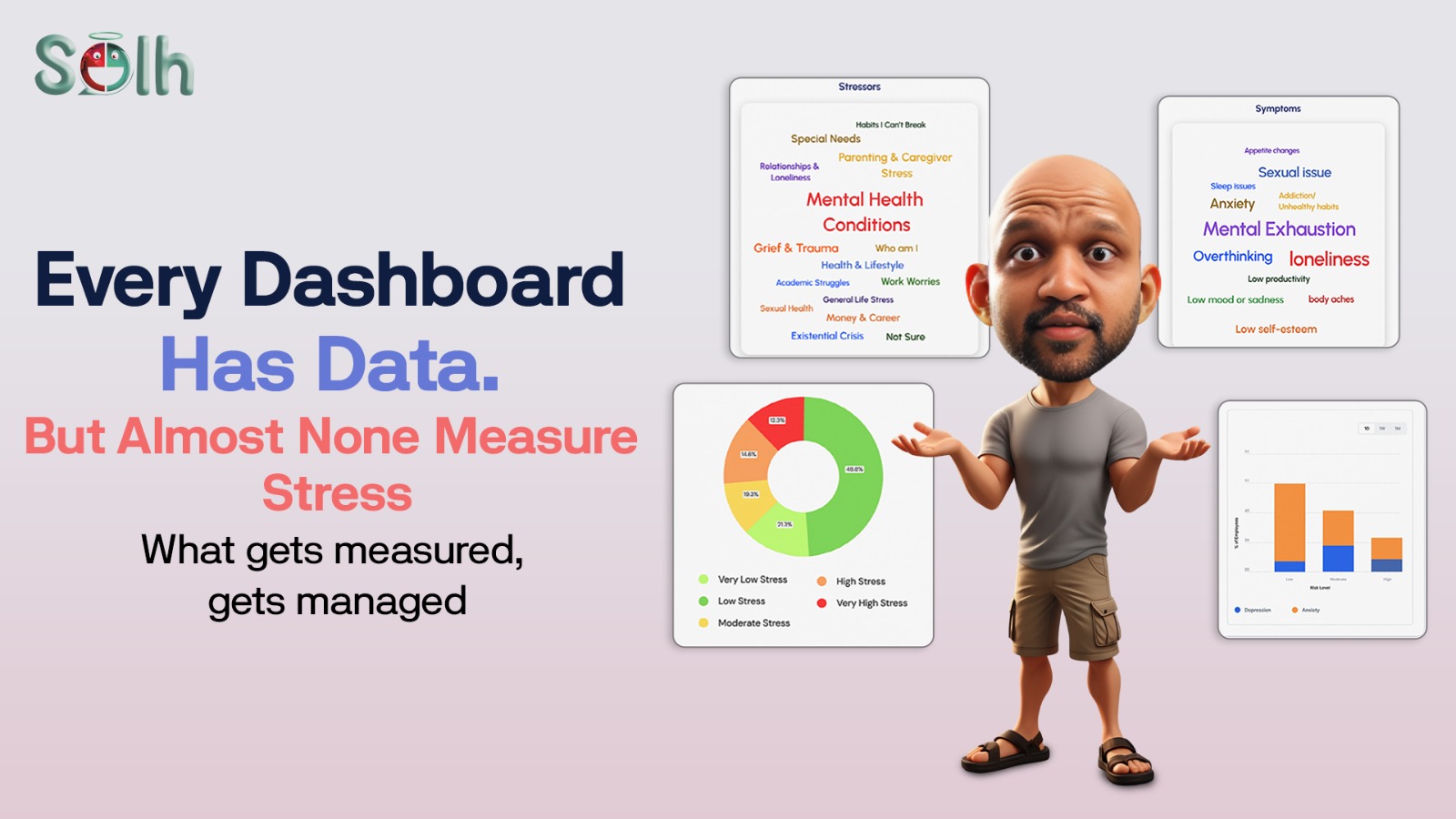
This is why we built Solh Buddy—not as a quick fix, not as motivational noise, but as a daily stress companion that helps you sit with your thoughts instead of drowning in them.
It helps you observe stress inside the mind, decode its patterns, and slowly begin conquering stress, one layer at a time.
The Real Victory of Dussehra
Burning an effigy feels powerful for a moment. But the real victory is quieter. It’s when your mind feels lighter. When sleep comes easier. When your thoughts stop attacking you at midnight.
That’s where Solh comes in—as an AI stress management platform designed to help you deal with modern stress, not escape it.
Because conquering your inner Ravana isn’t about suppression. It’s about using the right stress management tools at the right time:
- Solh Buddy: A 24/7 AI companion that listens without judgment and helps you process stress in real time
- Guided Plans: Structured pathways for overthinking, sleep issues, emotional overload, and burnout
- Therapist Connect: Access to real experts when self-guidance isn’t enough
- Community Groups: Safe spaces where shared struggles reduce shame and isolation
This Dussehra, don’t just light a bonfire. Light a habit.
Stress Is the New Ravana
If Ravana was the villain of yesterday, stress inside the mind is the villain of today. And the irony? We celebrate the myth while ignoring the reality playing out in our heads every single day.
But here’s the truth—this Ravana can be defeated. Not overnight. Not dramatically. But consistently, with awareness and support.
The Ravana outside was burned once.
The Ravana inside is a lifelong battle.
And acknowledging stress inside the mind is the first real act of courage.
Closing Thought
Ravana isn’t out there. He’s in here—inside your thoughts, your silence, your exhaustion. And if you truly want to celebrate Dussehra, don’t just look up at the fireworks.
Look within.
Because when you face stress inside the mind instead of running from it, that’s when real victory begins.
And at Solh, that conversation starts now.
FAQ’s
1. What are the most common internal stress symptoms?
Internal stress symptoms include constant overthinking and anxiety, sleep disturbances, irritability, lack of focus, emotional numbness, low motivation, and unexplained fatigue. These symptoms often appear even when life looks “normal” from the outside.
2. How is stress inside the mind connected to burnout and anxiety?
When stress inside the mind is ignored, it keeps activating the nervous system without relief. Over time, this leads to burnout and anxiety—where the mind feels overwhelmed, exhausted, and unable to recover, even after rest.
3. Why is mental health awareness important for managing stress?
Mental health awareness helps people recognize that stress is not weakness but a biological and emotional signal. Without awareness, people suppress stress instead of addressing it, allowing internal stress symptoms to grow into long-term mental and physical health issues.
4. How can someone start managing stress effectively?
Managing stress effectively begins with awareness and conversation. Naming what you’re feeling, understanding stress triggers, and using structured stress management tools helps break the cycle before stress turns into burnout or addiction.
5. Can overthinking and anxiety be signs of deeper stress?
Yes. Overthinking and anxiety are often surface expressions of deeper stress inside the mind. They usually indicate unresolved emotional pressure, fear of failure, or constant self-comparison that hasn’t been processed consciously.
6. What are modern stress management tools that actually work?
Effective stress management tools go beyond motivation or positivity. They focus on tracking stress patterns, building emotional regulation, guided reflection, and consistent daily support—especially when stress is internal and ongoing.